

Group travel has changed shape over the past decade. Guests expect more flexibility, quieter environments, and a guide they can actually hear — even in a crowded cathedral or a noisy market street. For travel agencies running multi-stop itineraries, that shift in expectations has turned tour guide systems from a nice-to-have accessory into a standard line item in the operations budget.
This article looks at the practical reasons agencies are making that investment, what the equipment actually solves on the ground, and what to weigh before adding it to a tour package.
The Problem Group Tours Keep Running Into
Anyone who has managed a group of 15 or more travelers knows the recurring friction points: guests drifting to the back and missing commentary, guides straining their voice across a full day, and the awkward bottleneck of everyone huddling around one person to hear a story about a painting or a building facade. In noisy environments — transport hubs, factory floors, open-air markets — a guide’s voice simply doesn’t carry far enough to keep a group together.
These aren’t cosmetic problems. They directly affect how guests rate the tour afterward, and repeat bookings are built on those ratings.
What a Tour Guide System Actually Changes
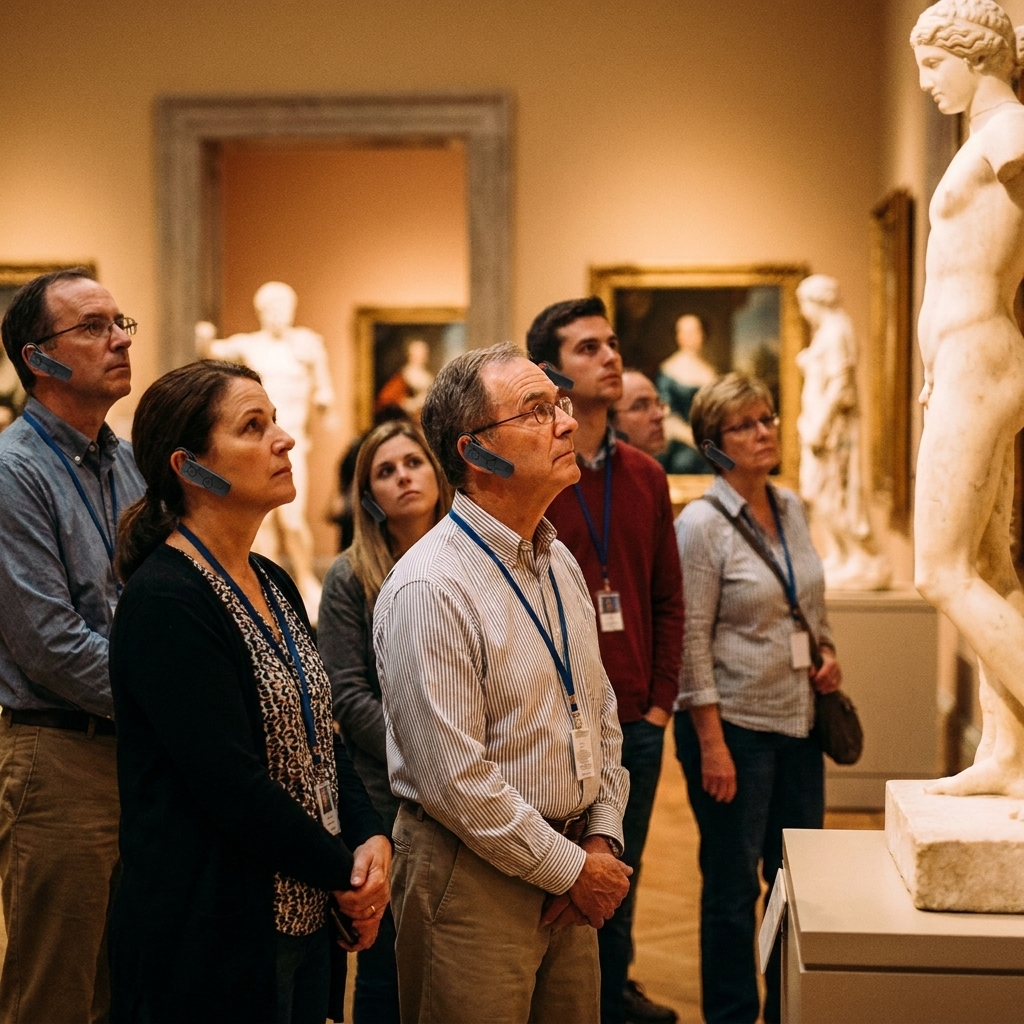
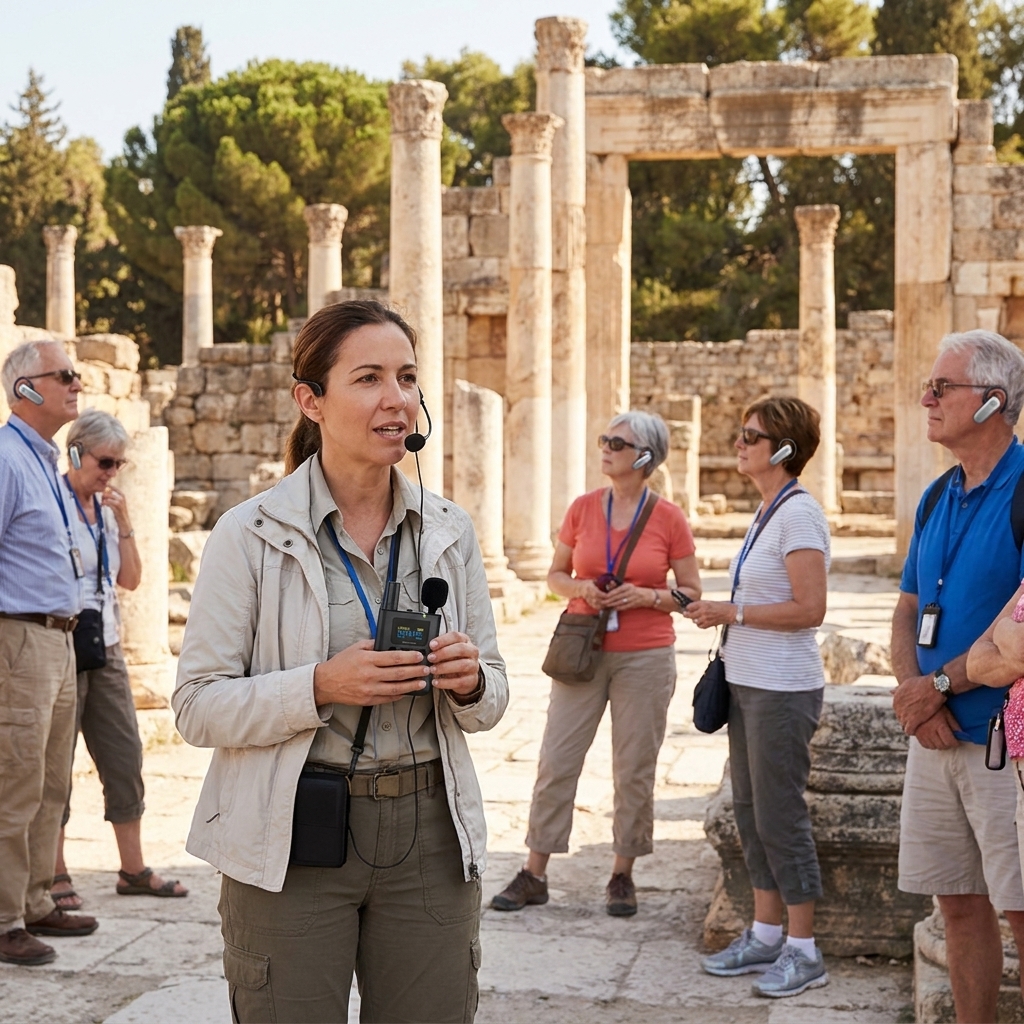
A wireless tour guide system gives each traveler a receiver and earpiece, while the guide speaks into a transmitter and microphone at normal conversational volume. The effect is straightforward: guests hear the same clear audio whether they’re standing at the front of the group or lagging a few meters behind to take a photo.
- Guests spread out naturally without losing the commentary, which matters at crowded attractions with limited standing room.
- Guides stop shouting, which reduces vocal fatigue on multi-day itineraries and keeps delivery more natural and engaging.
- Background noise stops competing with the guide, so commentary stays intelligible near traffic, construction, or ambient crowd noise.
- Groups can split and regroup more easily — useful for factory tours, large museums, or itineraries with optional side visits.
The Business Case Behind the Investment
Travel agencies don’t adopt equipment because it’s new — they adopt it because it changes the numbers. Three factors tend to drive the decision:
1. Guest Satisfaction Scores
Audio clarity shows up disproportionately in post-tour reviews. A guest who missed half the commentary because of wind, traffic, or crowd noise rarely blames the environment — they blame the tour. Removing that failure point protects star ratings on platforms where a single common complaint can suppress future bookings.
2. Group Size Flexibility
Without amplification, guide-to-group communication degrades past a certain group size, which forces agencies to cap tour sizes or split groups and pay for a second guide. A tour guide system extends the practical limit, letting agencies run larger groups per guide without sacrificing audio quality — directly improving the margin per tour.
3. Differentiation in Proposals
When agencies pitch corporate clients, DMCs, or repeat group organizers, equipment quality is part of the proposal. Agencies that can point to reliable, professional-grade audio equipment have an easier time winning multi-day, multi-group contracts where reliability matters more than price alone.

Where the Equipment Pays Off Most
| Scenario | Why Audio Systems Matter |
|---|---|
| Museum and gallery tours | Quiet-hours policies and echoing halls make unamplified narration hard to hear without disturbing other visitors |
| Factory and facility visits | Machinery noise and safety requirements often make it impossible for guides to be heard without amplification |
| Multi-language groups | Systems support simultaneous interpretation, so mixed-language groups don’t need to be split by language |
| Outdoor and heritage sites | Wind, traffic, and open space scatter a guide’s voice well before it reaches the back of the group |
| Large corporate or MICE groups | Bigger delegations require reliable audio across a wider physical spread without raising the guide’s voice |
What Agencies Should Evaluate Before Buying
Not every system fits every itinerary. Agencies weighing this investment typically look at a handful of practical factors rather than chasing the most feature-heavy option on the market:
- Battery life across a full touring day, since mid-tour charging isn’t realistic on a packed schedule.
- Ease of distribution and collection, especially for agencies handling groups that rotate daily.
- Signal range and reliability in the specific environments the agency operates in most — indoor venues behave differently than open streets.
- Hygiene and durability, particularly for earpieces used across many different guests.
- Support for group sizes the agency actually runs, rather than paying for capacity that’s never used.
Agencies serving international or multilingual clients often prioritize systems that support simultaneous interpretation channels, since it removes the need to run separate tours by language group — a detail covered in more depth in our piece on multilingual conference and tour interpretation.
Frequently Asked Questions
Do small travel agencies need a tour guide system, or is it only for large operators?
Group size matters more than company size. Even a boutique agency running groups of 10–15 in noisy environments — busy markets, transport hubs, factory visits — will see the same clarity benefits as a large operator running groups of 40.
How does a tour guide system handle mixed-language groups?
Systems built for interpretation allow a translator to speak on a separate channel while guests select their language on their receiver, so one guide-led tour can serve several language groups at once without physically splitting them.
Is the equipment difficult for guides to operate without training?
Most guides adapt within a single tour. The core operation — clip on a transmitter, speak normally, distribute receivers — doesn’t require technical training, though agencies typically do a short walkthrough before the first use.
Does using a tour guide system change how a guide should present a tour?
Guides generally lower their volume and rely less on physical grouping to be heard, which many find allows for a more conversational, natural delivery style compared to projecting their voice across a large group.