

Anyone who has taught a group riding lesson knows the particular challenge of instructing people who can’t easily stop what they’re doing to listen. Riders have their hands full — literally — managing reins, posture, and a horse that’s reacting to its surroundings. An instructor calling out corrections across an arena competes with hoofbeats, wind, and the natural spacing that happens when several horses are moving at once.
This is a communication problem specific to equestrian settings, and it’s why more riding schools and trainers have started using two-way wireless audio systems built for hands-free group instruction.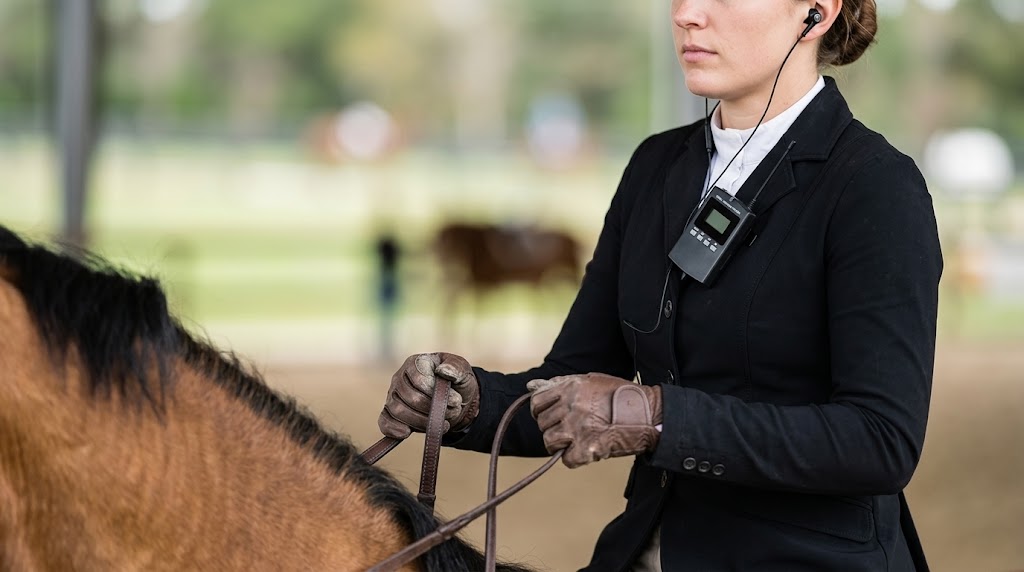
Why Riding Lessons Are Hard to Instruct by Voice Alone
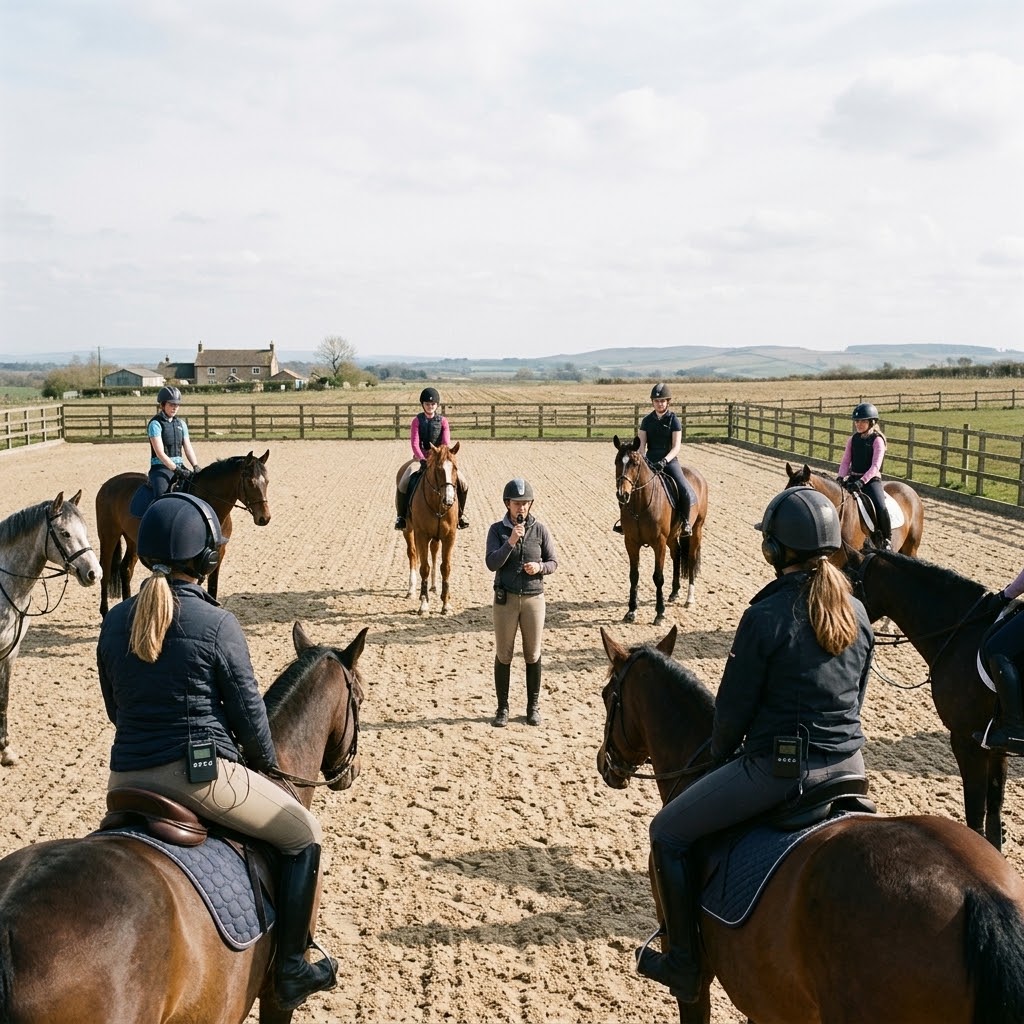
In a typical group lesson, riders are rarely clustered together — they’re spaced around an arena or spread along a trail, often moving at different gaits at different times. An instructor’s voice has to travel across that distance while competing with ambient noise, and a rider concentrating on their horse’s movement doesn’t always catch a shouted correction cleanly.
There’s also a safety dimension. Riders can’t raise a hand or step closer to ask a question without breaking focus on the horse, so questions often go unasked in the moment they matter — right as a rider is trying a new exercise or working through a correction.
Where Two-Way Audio Changes the Lesson
Hands-Free by Design
Because riders need both hands on the reins, any communication device used in the saddle has to work without requiring the rider to hold or operate anything. A worn transmitter and earpiece let a rider speak and listen without taking a hand off the reins or breaking their position in the saddle.
Questions Reach the Whole Group at Once
In a live lesson, one rider’s question is often relevant to everyone in the group — but if only the instructor hears it, the answer has to be repeated for the rest of the class. A two-way system lets any rider’s question be heard by the whole group simultaneously, so the instructor can answer once and everyone benefits from it, without breaking the flow of the lesson to repeat themselves.
A typical moment this solves
A rider midway through a canter transition asks a quick question about leg position. With a two-way system, the instructor and every other rider hear it in real time — the instructor answers once, and the whole group adjusts together instead of the lesson pausing while the question gets relayed.
Correction Without Interrupting the Group
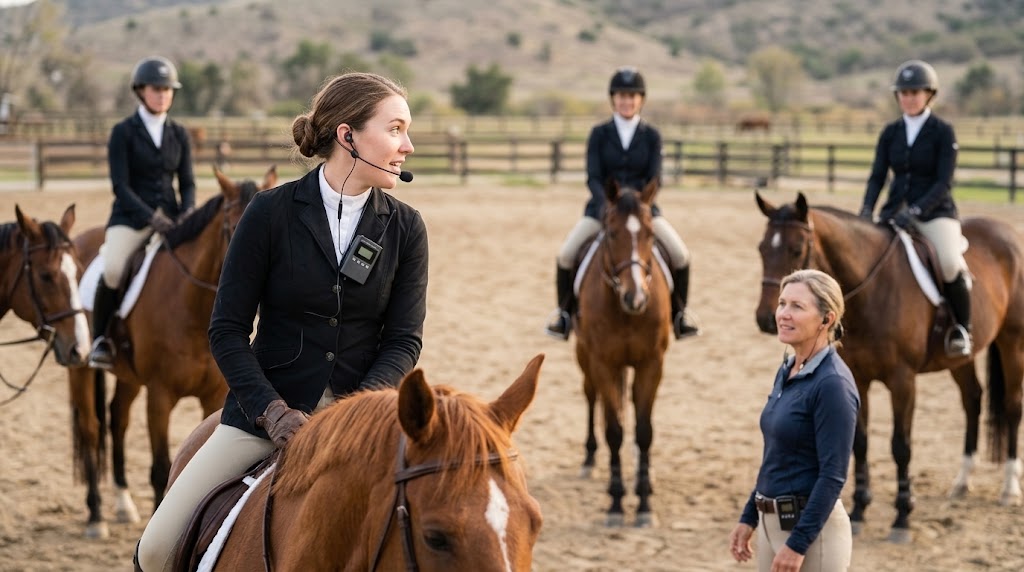
Instructors often need to give one rider individual feedback without stopping the whole class. A private or targeted channel lets an instructor address a specific rider’s position or technique while the rest of the group continues their exercise, rather than calling out a correction that everyone has to pause for.
Where This Matters Most
This is especially useful in mixed-level lessons, where beginners and more advanced riders are working on different exercises within the same session and need different levels of guidance.
The Equipment Behind It: YingMi’s 008B
YingMi’s 008B wireless two-way tour guide system is built around exactly this need — full two-way communication between the instructor and every rider in the group. When a rider asks a question, the whole group hears it, so the instructor doesn’t have to repeat the answer, and riders can keep moving rather than waiting for information to be relayed back to them individually. It’s worn hands-free, which fits the physical demands of being mounted and actively riding throughout a lesson.
For riding schools running back-to-back group lessons, this kind of two-way setup reduces the repetitive strain of shouting instructions across an arena multiple times a day, and it keeps beginner riders — who often need the most reassurance and the clearest real-time feedback — from missing corrections simply because they were too far from the instructor to hear clearly.
Beyond the Arena: Trail Rides and Outdoor Instruction
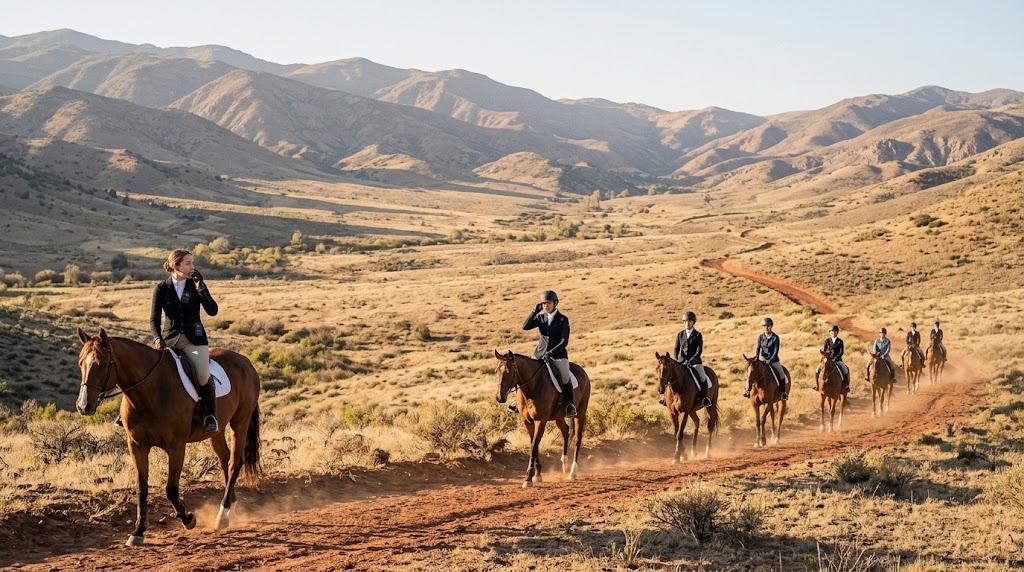
Outdoor and trail-based lessons add distance and unpredictable terrain to the communication challenge. Riders on a trail ride are often strung out in a line rather than gathered in a ring, and wind or tree cover can interfere with a voice carrying down the line. Wireless audio keeps the same two-way clarity available whether the group is working in an enclosed arena or moving along an open trail.
Frequently Asked Questions
Can a rider use a two-way audio system while actively controlling their horse?
Yes — the equipment is designed to be worn hands-free, so riders can speak and listen without needing to hold or operate a device while managing the reins.
Does a two-way system let riders talk to each other, or only to the instructor?
Typically the system is structured around instructor-to-group and rider-to-group communication for lesson purposes, rather than open rider-to-rider chat, keeping the channel focused on instruction.
Is this type of equipment suitable for outdoor trail rides, not just arena lessons?
Yes, wireless audio communication is used in both settings — arenas and open trail environments — since both involve riders spaced out and unable to easily hear a voice-only instructor.
Does a rider’s question interrupt the instructor’s ability to keep teaching the group?
With a two-way system, a rider’s question is heard by the whole group at the same time the instructor hears it, so the instructor can answer once for everyone rather than pausing to relay the question separately.