

A heritage site rarely has one story. A single building might carry construction history, the lives of the people who used it, the events that happened within its walls, and the reasons it was preserved at all. A single guide, working from memory in real time, can usually only deliver one of those layers clearly before a group’s attention starts to drift.
Audio technology doesn’t replace the guide’s role at heritage sites — it gives the storytelling room to breathe, letting sites layer historical depth in ways a live, unaided tour rarely can.
The Limits of Live-Only Interpretation
Heritage guides are often asked to do two jobs at once: keep a group moving safely through a site with physical constraints — narrow stairwells, fragile floors, restricted-access rooms — while also delivering historically accurate, engaging commentary. Under those conditions, most guides default to a simplified, general narrative that works for a broad audience but sacrifices nuance.
Visitors with deeper interest in a specific period or detail rarely get to explore it, and visitors who want a lighter overview often get more historical detail than they came for. A single live narration has to serve everyone at once.
What Audio Technology Adds to the Story
Layered Commentary by Depth
Many heritage sites now offer tiered audio content — a short overview track for casual visitors and an extended track for those who want architectural, historical, or archaeological detail. Visitors choose their own depth rather than receiving one version built for the average listener.
Example structure
A single stop might offer a 90-second overview, a 4-minute historical deep dive, and a separate track focused on restoration work — all accessible from the same physical point, selected by the visitor.
Voices Beyond the On-Site Guide
Recorded commentary can include historians, descendants of people connected to the site, archivists, or restoration specialists — voices that wouldn’t be practical to have present for every tour. This adds authority and texture to the narrative that a single generalist guide can’t always provide alone.
Protecting Fragile Spaces
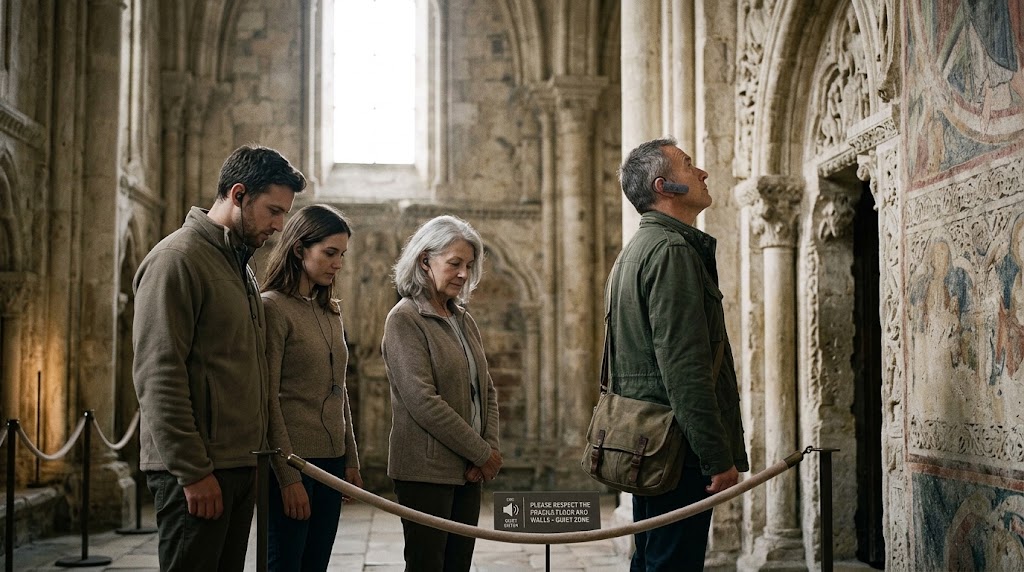
In rooms where large groups or lingering conversation risk damage to fragile surfaces, audio guides let visitors receive full commentary while moving through more quickly and in smaller clusters, reducing time spent gathered in sensitive areas.
Where This Applies Most
This matters most in spaces with climate-sensitive artifacts, worn original flooring, or rooms with capacity limits set by conservation policy rather than by visitor demand.
Preserving Authenticity While Modernizing Access
A common concern among heritage operators is that technology will make a historic site feel less authentic. In practice, well-designed audio interpretation tends to do the opposite — it removes the pressure to compress complex history into a single simplified script, and lets the site’s actual documented history carry more of the storytelling weight instead of a guide’s memorized summary.
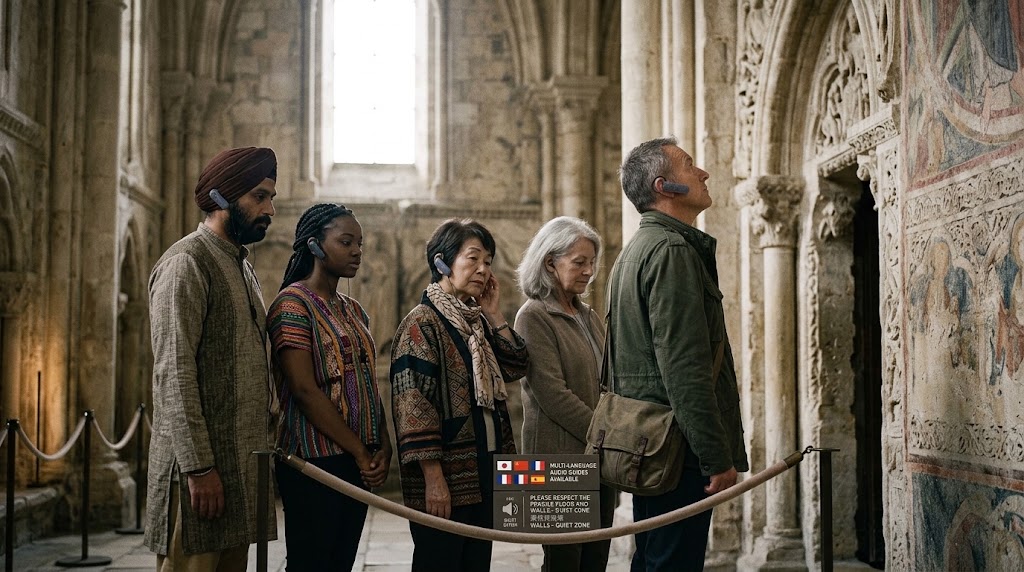
- Multilingual tracks allow international visitors to receive the same depth of story as local-language visitors, rather than a shortened version.
- Archival audio, oral histories, or first-person accounts can be incorporated directly into the narrative.
- Content can be updated as new research or restoration work changes what’s known about the site, without retraining every guide.
Frequently Asked Questions
Does adding audio technology reduce the need for live guides at heritage sites?
Not typically. Most sites use audio to extend and deepen what a live guide provides, rather than replace the guide — the two are often used together, with the guide handling group logistics and audio providing layered content.
Can heritage sites update audio content as historical research changes?
Yes. Recorded content can be revised or replaced without needing to retrain guides on a new script, which is useful for sites where ongoing research or restoration continues to inform the interpretation.
How does tiered audio content work for visitors with different interest levels?
Visitors typically select from a short overview or an extended track at the same stop, letting casual visitors get a quick summary while more curious visitors access additional historical depth on demand.
Can audio guides help protect fragile or restricted areas of a heritage site?
Audio commentary can let visitors receive full information while spending less time physically gathered in sensitive spaces, which supports conservation goals in rooms with fragile surfaces or capacity limits.