

Ask most visitors what they remember about a national park tour, and the answer is rarely the facts recited at each stop. It’s the moment they were allowed to stand quietly at an overlook a little longer, or wander off the main path to look at something that caught their eye, without losing the thread of what the guide was saying.
That tension — between structured commentary and the freedom to explore — is exactly what audio guide systems were built to resolve, and it’s why more parks and nature reserves are adopting them for both guided and self-directed visits.
Why Traditional Guiding Struggles Outdoors
Nature sites present a different set of problems than museums or urban tours. Wind, running water, wildlife sounds, and wide open spaces all work against a guide’s unamplified voice. A group standing at a scenic overlook or spread along a trail loses cohesion quickly — some visitors hear every word, others catch fragments, and a few give up trying to listen at all.
There’s also a pacing problem. Parks often have visitors with very different interests and physical abilities in the same group — some want to linger at every viewpoint, others want to keep moving. Traditional guiding forces everyone to move at one pace to stay within earshot.
How Audio Systems Change the Visitor Experience
Distance Without Disconnection
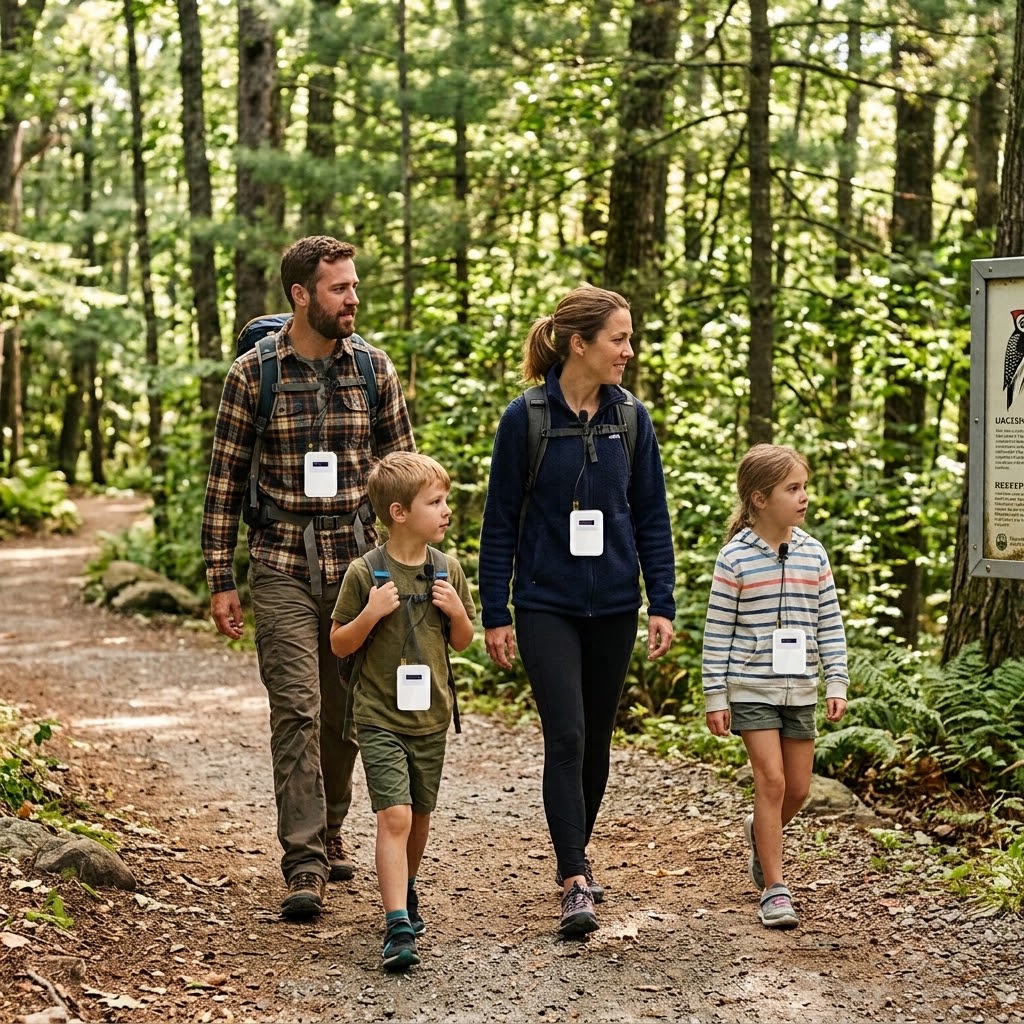
With a wireless receiver and earpiece, a visitor can stop to take a photo, help a child tie their shoe, or simply enjoy a view in silence — and still hear the guide’s commentary clearly when they catch up. The group no longer has to physically cluster to stay informed.
Self-Guided Trail Narration
Some parks use pre-recorded commentary triggered at marked points along a trail, letting visitors move entirely at their own pace without a live guide present at all. This works particularly well for trails that are open outside guided-tour hours or for parks with limited guiding staff.
Where This Fits Best
Self-guided audio works well for interpretive nature trails, historic ruins within a park boundary, and viewpoints where a live guide isn’t always staffed but visitor interest is steady year-round.
Multi-Group Coexistence
Popular trailheads often have several tour groups moving through the same stretch of path within minutes of each other. Audio systems keep each group’s commentary contained to their own channel, so groups can pass each other on a narrow trail without one guide’s voice bleeding into another group’s tour.
Practical Considerations for Park Operators
Outdoor deployment brings its own set of requirements that differ from indoor venues:
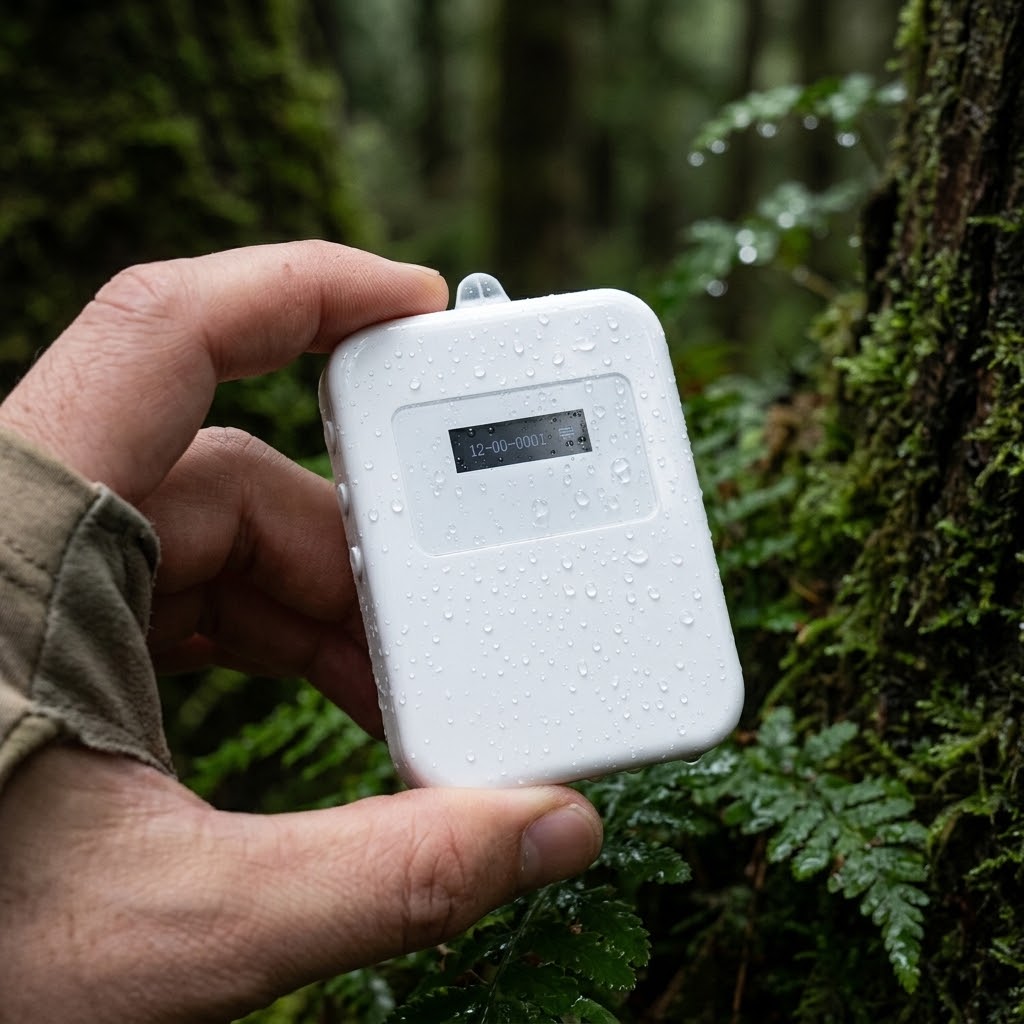
- Weather resistance — equipment needs to handle humidity, dust, and temperature swings across a full operating season.
- Extended range — trails and open landscapes require stronger signal coverage than a single gallery room or courtyard.
- All-day battery performance — full-day hikes and multi-stop park routes leave little opportunity for mid-tour charging.
- Simple guest handling — visitors picking up equipment at a trailhead kiosk need an intuitive, low-friction process, often with minimal staff supervision.
What This Means for Visitor Numbers
Parks that have introduced audio guiding for popular routes tend to see two related effects: guided tours can accommodate larger groups without a drop in comprehension, and self-guided audio options extend the visiting window beyond scheduled tour times. Both effects matter for parks balancing conservation limits with growing visitor demand — spreading visits across more of the day and more of the trail network reduces bottlenecks at the most popular stops.
Frequently Asked Questions
Can audio guide equipment handle rain and outdoor conditions?
Equipment designed for outdoor and trail use is generally built to tolerate humidity, dust, and moderate weather exposure, though operators should confirm specific durability ratings against the climate conditions of their site.
How far can a visitor wander from the guide and still hear commentary?
Effective range depends on the specific equipment and terrain — open landscapes and obstacles like dense trees or rock formations affect signal reach differently than a flat, open trail.
Do self-guided audio trails require a live guide to be present at all?
No. Self-guided systems typically use pre-recorded commentary triggered by proximity or manually selected by the visitor, allowing the trail to operate without staff presence at every stop.
Can a park run guided and self-guided audio experiences on the same equipment?
Many systems support both modes, allowing a park to use live guide narration for scheduled group tours and switch to pre-recorded content for open visiting hours on the same devices.