

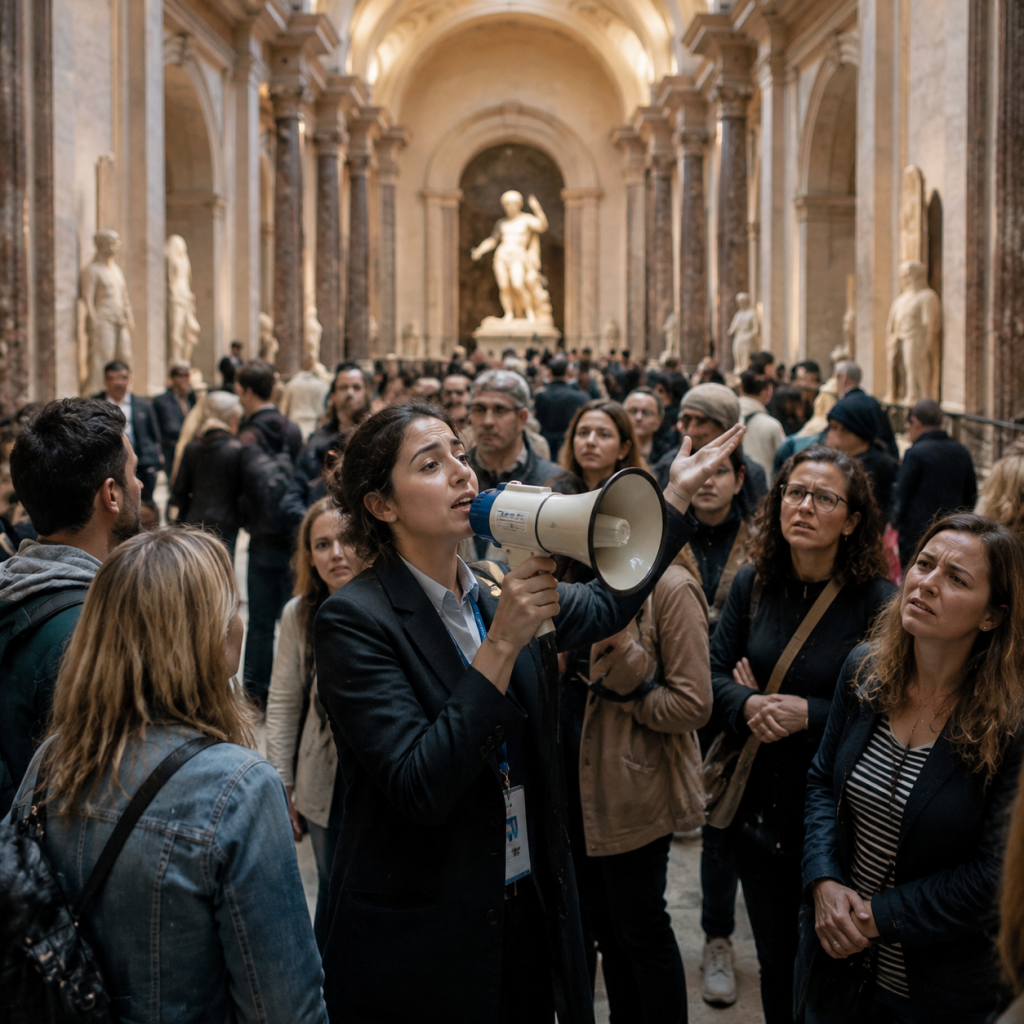
A guide’s voice is a limited resource. It carries clearly for the first tour of the day, strains by the third, and by closing time many guides at high-traffic museums and heritage sites are speaking in a near-shout just to reach the back of the group. This isn’t a training problem. It’s an equipment gap that a surprising number of cultural venues still haven’t closed, relying instead on handheld megaphones, basic FM radios, or simply raised voices to manage groups.
The venues that have moved away from this setup describe the change less in terms of technology and more in terms of what stopped happening: guides no longer losing their voice mid-season, visitors no longer drifting away because they couldn’t hear, and tour scheduling no longer bottlenecked by acoustic interference between adjacent groups.
The Problem With What Most Venues Already Own
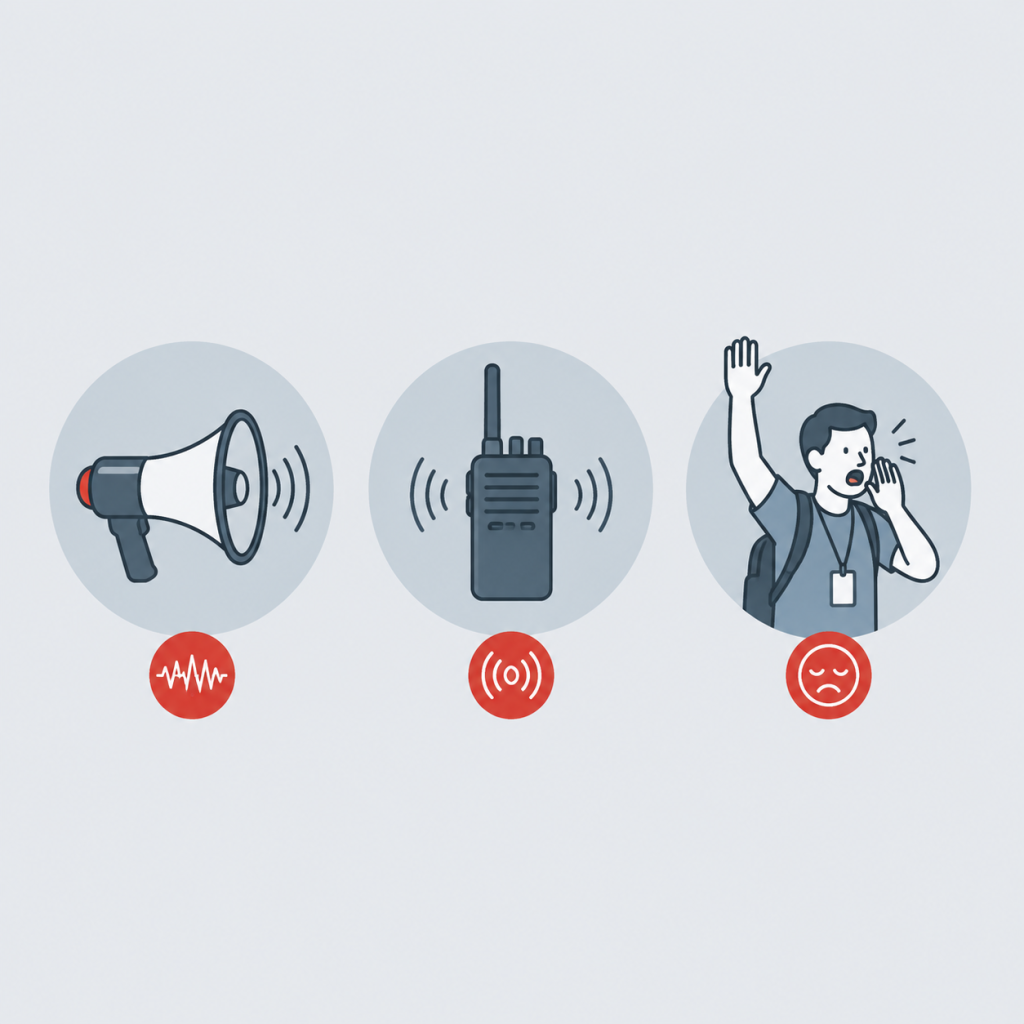
Three pieces of legacy equipment show up repeatedly in cultural tourism settings, each with a specific failure mode.
Megaphones amplify volume but not clarity. In a stone gallery, a colonnaded courtyard, or an open-air ruin, reflected sound turns an amplified voice into an echo that visitors strain to parse. Megaphones also broadcast to everyone nearby, not just the tour group, which becomes a liability the moment two groups are in the same space.
Analog FM tour radios solve the broadcast-to-everyone problem but introduce a new one: shared frequency bands. When a venue runs more than one or two simultaneous tours, analog systems bleed into each other, and nearby consumer electronics — routers, LED drivers, other radios — add static that gets worse as more devices are added to a building.
Raised-voice guiding — no equipment at all — is the default for many smaller sites and puts the entire burden on the guide’s physical stamina. Groups above roughly 15–20 people reliably start losing the people at the back, and multi-hour tours compound vocal fatigue in a way that shows up as guide turnover, not just a bad day.
What Changes With a Digital One-to-Many System
A digital tour guide system replaces all three failure points with a transmitter-and-receiver pair operating on 2.4GHz with frequency-hopping and encrypted channel separation. In practice, this means:
- Groups sitting a few meters apart don’t interfere with each other. Systems built around wide channel allocation — commonly 100 to 200 independent channels — let a museum run six or more simultaneous tours in adjacent galleries without crosstalk.
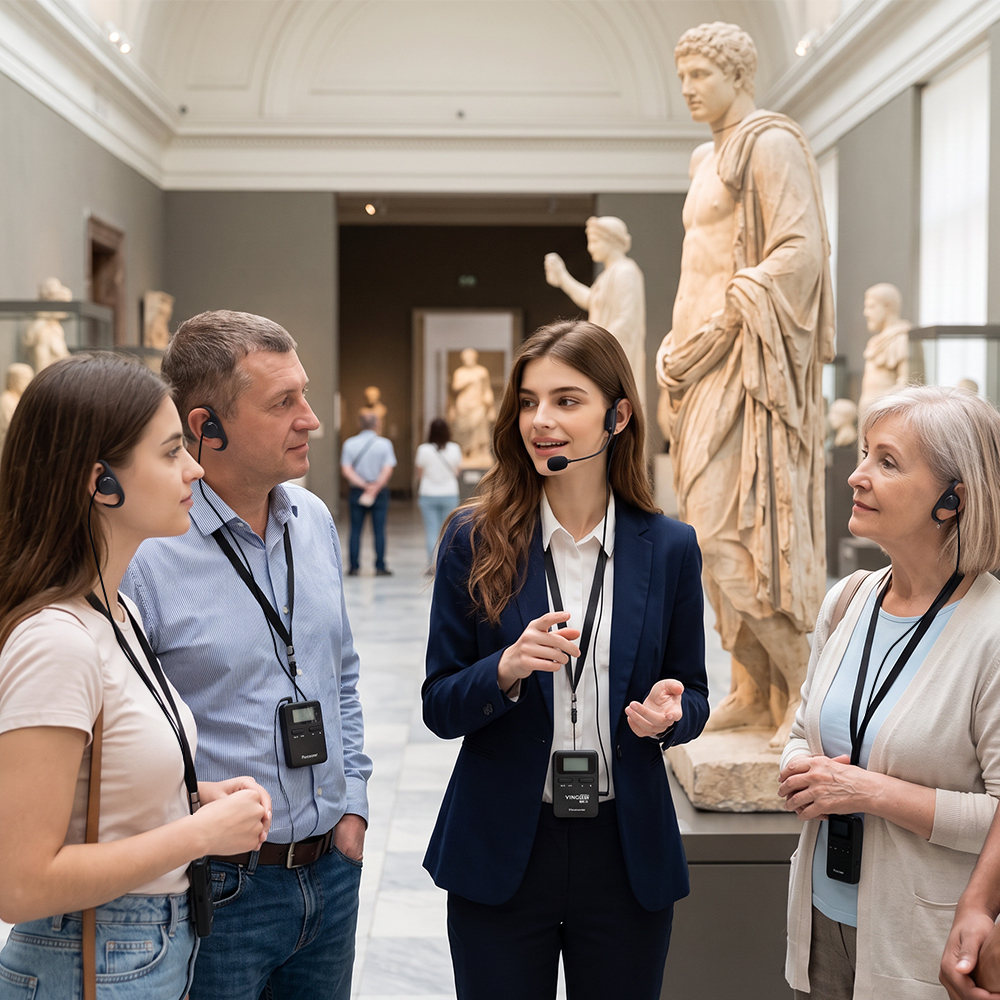
- The guide speaks at a conversational volume. Because the signal travels to a private receiver rather than filling the room, a guide narrating in a near-whisper is heard just as clearly by someone standing at the back of a 30-person group as by someone standing beside them.
- Interference from other electronics drops sharply. Digital modulation such as 4GFSK with CRC encryption is materially more resistant to Wi-Fi routers, lighting equipment, and other radios sharing the same space than an analog FM signal.
The Operational Costs Nobody Puts on the Purchase Order
Procurement conversations tend to focus on unit price, but the recurring costs of legacy equipment rarely make it into the comparison:
- Guide turnover and sick days tied to vocal strain, which is difficult to quantify but shows up consistently in venues with high daily tour volume.
- Lost group cohesion, where visitors drift out of megaphone range and either miss content or need the tour paused to regroup — a real cost in venues charging premium rates for guided experiences.
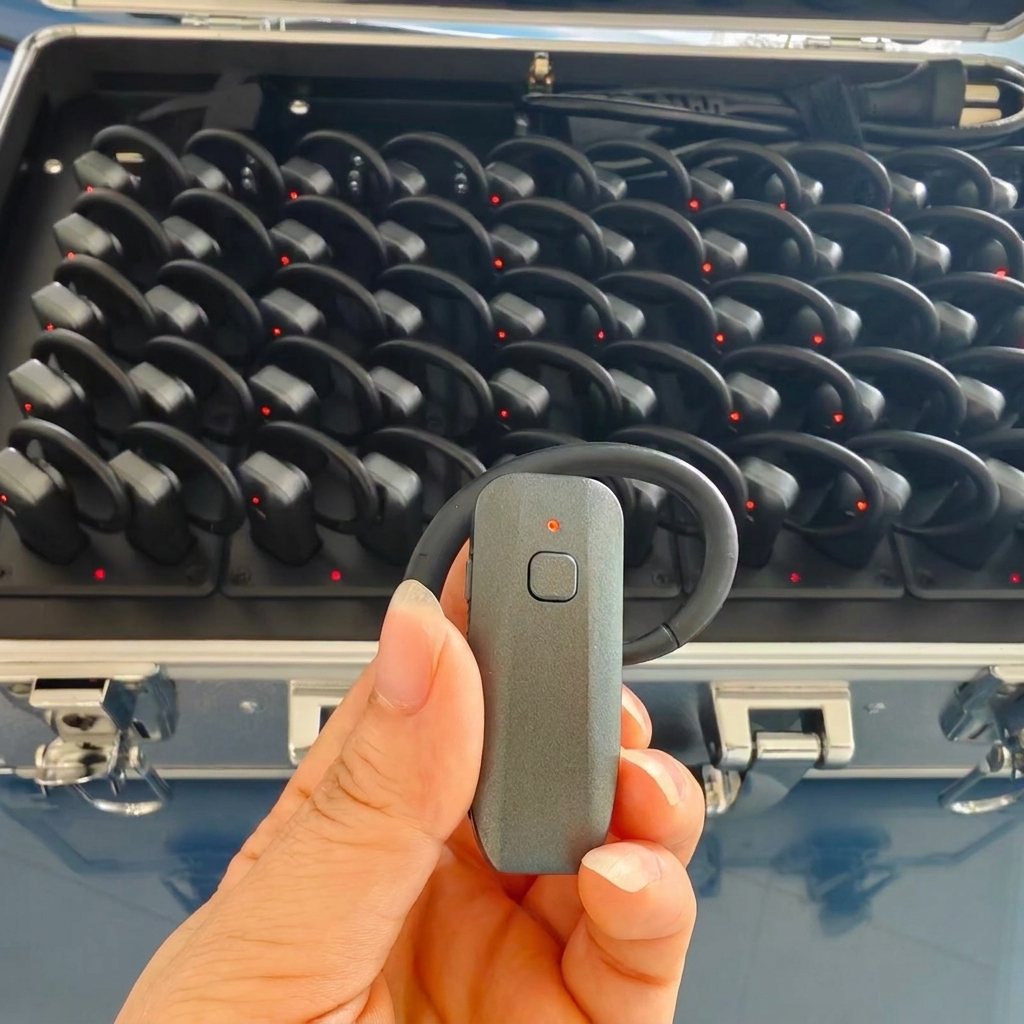
- Hygiene turnover between groups. Shared handheld microphones and megaphones pass between guides and, in some self-service setups, between visitors, without a clear cleaning step. Systems that pair receivers with a charging case built for UV disinfection between uses close this gap without adding staff time.
- Delegation-specific failures. International business delegations, government visits, and press tours are exactly the groups where audio failure is most visible — and most damaging to the impression a venue or company is trying to make.
A Real-World Example: University Exhibition Hall
A university science and life-sciences exhibition hall in Shandong Province had relied on traditional guiding methods that left it with uneven sound coverage and audio interference whenever multiple visiting groups — faculty, students, school tours, and visiting scholars — moved through at the same time. After evaluating its options, the university introduced the YINGMI Intelligent Wireless Tour Guide System, built around a digital transmitter, multi-channel receivers, and an intelligent charging case with UV disinfection. The hall reported that guides no longer needed to raise their voices even in crowded conditions, and that the one-to-many transmission mode let a single guide address dozens of visitors at once without the throughput bottleneck the previous setup created.
The pattern in this kind of deployment is consistent: the equipment change is straightforward, but the operational benefit — more groups moved through per day, fewer complaints about audio clarity — is what actually justifies the line item to a budget committee.
What to Ask a Supplier Before Switching
Venues evaluating a move away from legacy equipment get more useful answers by asking suppliers specific operational questions rather than requesting a general product overview:
- How many simultaneous tour groups can this system support in our building without channel interference?
- What is the receiver weight and expected battery life across a full operating day?
- Does the charging case include disinfection, and how many units does it hold?
- What certifications (CE, RoHS, or regional equivalents) does the equipment carry, and can documentation be provided directly rather than through a reseller listing?
- Can the same hardware support both live-guide and self-guided RFID or NFC modes, in case the venue’s tour format changes later?
A supplier who can answer these concretely, with documentation rather than marketing language, is generally a more reliable long-term partner than one who leads with price alone. Manufacturers like YINGMI, which has supplied wireless guide systems to venues ranging from national museums to university exhibition halls, typically provide this documentation directly rather than routing buyers through a marketplace listing — worth confirming regardless of which brand a venue is evaluating. For venues weighing a specific model, the YINGMI 008A is built for exactly the higher-noise, mixed-group scenarios described above, while the YINGMI L8 covers standard museum and gallery deployments as a single, CE- and RoHS-certified model rather than a multi-tier product line.
Making the Switch Without Disrupting Operations
Venues that have made this transition successfully tend to phase it rather than replace everything at once: piloting a digital system on the highest-traffic tour slot or the most complaint-prone gallery first, measuring whether guide fatigue and audio complaints actually drop, and expanding to the rest of the venue once the pilot data supports it. This avoids the common mistake of a full-site rollout that later turns out to be mismatched to the venue’s actual group sizes or acoustic environment.
For most museums, heritage sites, and cultural attractions still running on megaphones or analog radios, the equipment itself isn’t the hard part of this decision. The harder part is recognizing that the recurring costs of the current setup — guide strain, lost visitors, interference between groups — are costs the venue is already paying, just not on an invoice where anyone notices them.