

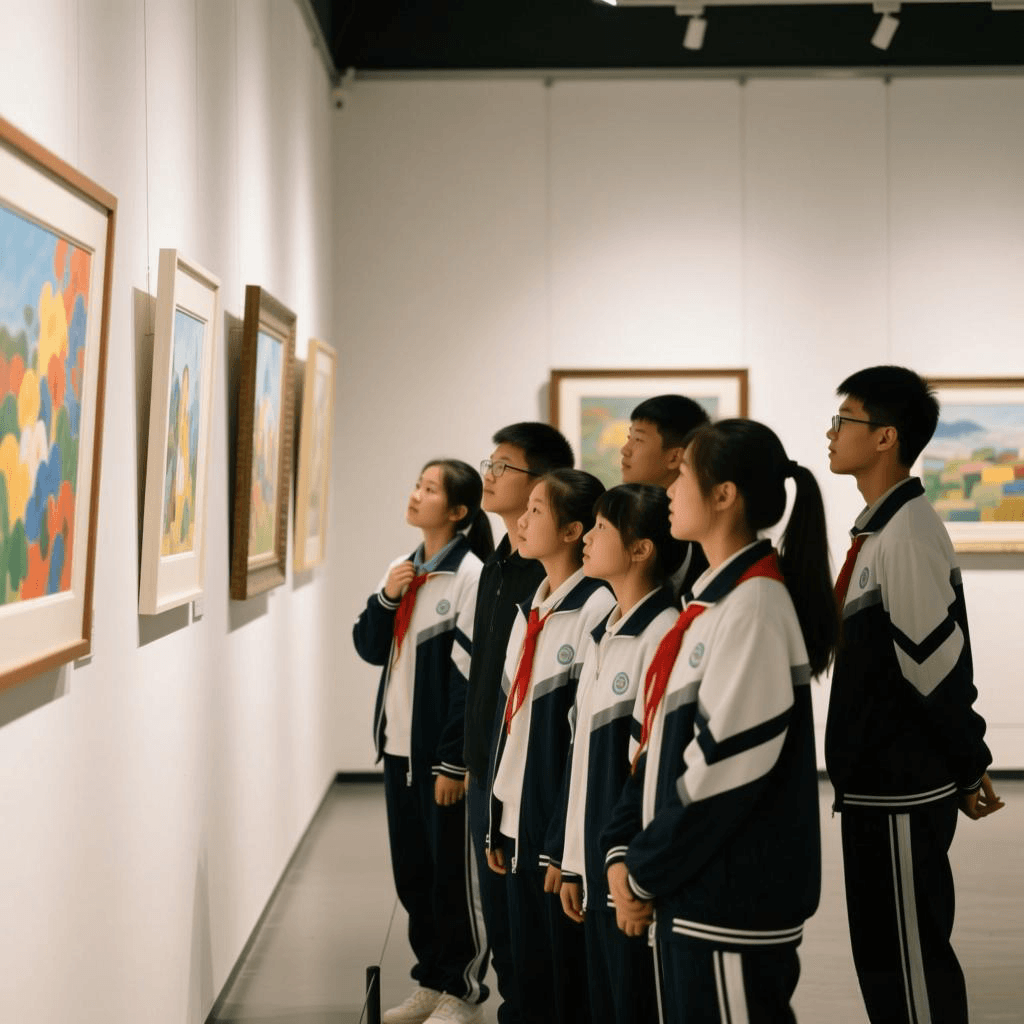
Today, overseas schools attach great importance to off-campus learning. Organizing students to visit museums has become a popular choice—it enables students to combine textbook knowledge with physical objects to deepen their understanding, and allows them to experience cultural heritage and develop a sense of historical responsibility. But when organizing dozens or even hundreds of students to visit, teachers always have endless concerns: the explanations are drowned out by noise, and students at the back cannot hear clearly. Multiple classes visit at the same time, and the sounds mix together in a chaotic mess. Students explore in a scattered manner, fearing they will fall behind or miss key points.
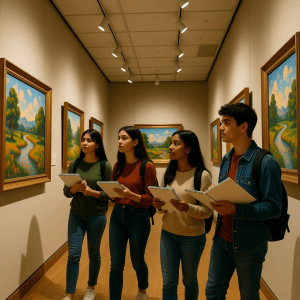
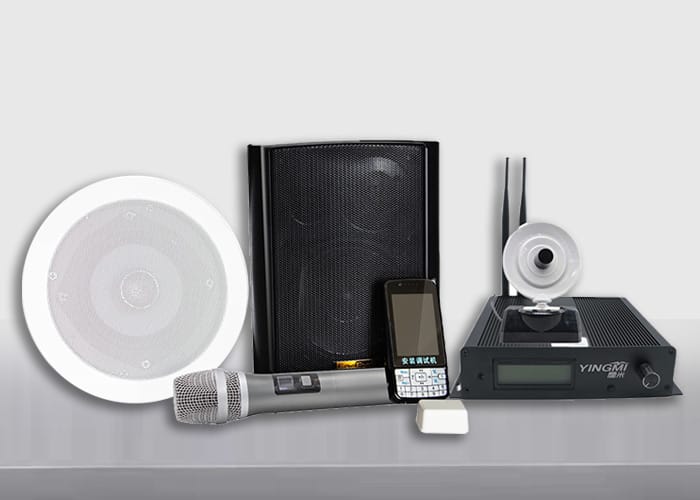
We at Yingmi have served many museum study tours organized by overseas schools and are well aware of the needs of both teachers and students. The MC200 zonal interpretation system acts like an “intelligent assistant” custom-made for off-campus learning at museums. It does not require students to wear any equipment. Students can hear explanations wherever they go without disturbances, making the learning journey both organized and rewarding.
Solving the pain points of off-campus learning
When overseas schools organize museum study tours, the most troublesome part is the various chaotic scenes. The zonal interpretation system can solve these problems and improve learning efficiency.
No need to shout; every student can hear clearly
Many students gather in the exhibition hall, with chatter and footsteps mixed together. The teacher explains using conventional amplification equipment, and the sound is easily drowned out. Students in the back row cannot hear clearly and need to push forward. Not only is the scene chaotic, but they might also bump into the exhibits. A teacher from an overseas middle school told us that in the past, when taking students to visit museums, his voice became hoarse by the end of the day, but some students still said, “I didn’t catch the key points clearly.”
The MC200 zonal interpretation system has completely changed this situation. The teacher wears a lightweight transmitter and only needs to explain softly. The sound is transmitted through speakers in the exhibition hall, allowing students in every corner to hear clearly. The system uses SOC embedded integrated digital noise reduction technology, which can eliminate environmental noise. Even if the exhibition hall is crowded and noisy, students can still clearly hear essential knowledge points such as “the historical background of cultural relics” and “scientific principles.” After the Henan Provincial Museum adopted this system for study tour groups, teachers no longer needed to shout loudly, and student attention improved significantly.
Multiple classes visit in parallel without disturbing each other
During peak periods for study tours to popular museums, it is common for several schools and multiple classes to visit simultaneously. In the past, without a zoning system, the voices of different classes mixed together. One class would talk over another, and students simply could not focus. Teachers also needed to struggle to maintain order. A European museum once received five study tour groups in one day, creating a chaotic scene. In the end, classes needed to take turns visiting, which wasted a lot of time.
The MC200 supports independent operation in multiple areas. Each class corresponds to a dedicated channel, and sounds from different channels do not interfere with each other. For example, first grade is in the “Ancient Egypt Exhibition Hall,” second grade is in the “Ancient Greece Exhibition Hall,” and third grade is in the “Science and Technology Exhibition Hall.” Each listens to their own explanations. Even if the paths cross, there will be no sound mixing. After the museum near Tianmu Lake in Jiangsu Province adopted this system, it could receive more than ten study tours simultaneously in a day, greatly improving efficiency and saving both teachers and museum staff a lot of trouble.
Students can explore freely without getting lost
Off-campus learning encourages students to explore independently, but teachers worry that students may wander too far to hear the explanations or get lost and fall behind. In the past, teachers could only make students follow the group closely, which limited the enjoyment of independent exploration. If students are allowed to move freely, there is concern that they may miss the key explanations.
The “sound when people arrive, silence when people leave” function of the MC200 solves this problem. The system has signal transmitters installed in each exhibition area. When a teacher leads students into a specific exhibition area, the audio system in that area automatically starts explaining. Students can move freely within the exhibition area, observe exhibits up close, and take notes. Even if they are somewhat farther from the teachers, they can still listen clearly. When leaving this exhibition area, the audio system automatically stops. It automatically switches to the explanation content again when walking to the next exhibition area. This model provides students with space to explore independently while ensuring they do not miss the core knowledge. Teachers do not need to keep a close eye on students constantly; they only need to patrol the exhibition area, making safety more assured.
Richer explanation content improves learning outcomes
The exhibits in the museum are rich in knowledge, but it is difficult to fully explain complex historical backgrounds and scientific principles through teachers’ oral explanations alone. The MC200 supports dual-mode switching between “manual explanation and pre-stored audio.” Teachers can flexibly adjust according to the situation: for basic content, oral explanation is provided; for complex knowledge points, pre-stored professional audio is played, combined with dynamic presentations of exhibits, making learning more vivid and easier to understand.
For example, when explaining “dinosaur fossils,” the teacher first verbally introduces the discovery process of the fossils, then plays audio and video of dinosaurs’ living scenes. Students seem to “travel back in time” to ancient times, and their understanding of the knowledge becomes deeper. When explaining “aerospace equipment,” the audio details the “launch principle of rockets,” and with the structural display of the equipment, students can quickly grasp the core knowledge points. An overseas study tour organization reported that after using this system, the number of students asking questions in class increased by 30%, and their memory of knowledge also became more solid.
Designed specifically for off-campus learning
Besides its core functions, the MC200 also features many thoughtful designs for students and teachers, making off-campus learning smoother and more effective.
Simple operation for quick teacher onboarding
Teachers in overseas schools come from different countries and may not understand Chinese or be familiar with electronic devices. The MC200 operation is simple. Both the transmitter and the control system have clear signs and multilingual labels. Channel switching is marked with a “number” symbol, and volume adjustment is marked with “+/-” signs. Teachers can understand at a glance and quickly start without complex training.
The control system also supports remote management. Teachers can adjust volume, switch channels, and play pre-stored audio in the exhibition hall without going to the equipment control room. Even if operational issues arise, they can be quickly resolved through 24-hour online technical support, ensuring that the study tour progress is not delayed.
Durable equipment suitable for student use
Students inevitably bump and knock equipment when using it. The transmitter and speakers of the MC200 are made from industrial-grade materials, which are sturdy and durable, and can handle the high-frequency use of student groups. The transmitter is compact. Teachers can hang it around their waists or put it in their pockets without affecting their movement. The audio system uses a wall-mounted design installed at a high position in the exhibition hall to prevent students from touching it, ensuring safety and stability.
The PUM power management technology ensures stable equipment operation 7×24 hours a day with an extremely low failure rate, so there is no need to worry about equipment failure affecting study tour activities. Even if there are occasional problems, there is a global warranty service for quick repair and replacement.
Multi-language support for international schools
Many international schools overseas have students of different nationalities. Language barriers can affect learning outcomes. The MC200 supports multi-language switching. It presets eight commonly used languages including Chinese, English, Japanese, Korean, French, and German, and can also be customized for niche languages such as Arabic and Spanish. Teachers can switch to the corresponding explanation language based on the nationality composition of the students, ensuring every student can understand.
For example, in study tour groups of international schools, there are students speaking Chinese, English, and Arabic. When the teacher switches to the corresponding language channel, students can listen to explanations in their native language and clearly understand the meaning of the exhibits. After an international school in the Middle East adopted this system, the learning satisfaction rate of students from different nationalities all reached 95%, and parents were full of praise for this thoughtful service.
Supporting cultural heritage protection
Most exhibits in the museum are rather fragile. When many students gather in front of them, breathing and touching may cause damage to cultural relics. The MC200 can effectively disperse the flow of people. Students can view at different locations within the exhibition area simultaneously, reducing pressure caused by crowds and indirectly protecting cultural heritage.
The system does not require students to wear any personal equipment, preventing the risk of device loss or damage, and also reducing environmental pollution caused by disposal of electronic devices. Teachers can take this opportunity to explain environmental management knowledge to students, cultivate their environmental awareness and cultural heritage protection awareness.
Practical results from overseas off-campus learning
Over the years, MC200 has successfully served the museum study tours of numerous overseas schools around the world, earning unanimous praise from teachers and museums.
Case study: European international school
This international school has students from over 20 countries, and language differences are the biggest obstacle to study tour activities. After introducing MC200, the school customized six languages: Chinese, English, French, German, Arabic, and Spanish. Students can choose channels according to their native language and listen to explanations clearly.
The multi-zone independent operation function enables students of different grades to visit different exhibition areas simultaneously without disturbing each other. The “voice activates when people arrive” function enables students to explore freely, greatly improving their enthusiasm for learning. After the study tour, students’ knowledge test scores improved by 25% compared to previous years. Many parents provided feedback: “The children can understand the explanations in their native language and truly gain knowledge. Such off-campus learning is particularly meaningful.”
Case study: Middle school in Southeast Asia
This middle school’s study tour activities emphasize “independent learning,” but previously, due to concerns about student safety and explanation effectiveness, students’ free activities were always restricted. After switching to MC200, students can freely explore the exhibition area, closely observe exhibits, and take notes. Teachers only need to patrol the exhibition area and no longer need to force students to follow the group closely.
The dual-mode explanation function makes learning more vivid. For example, when explaining “local folk cultural relics,” the teacher plays audio of folk activities, making students feel as if they were on the scene and enhancing their sense of identification with local culture. The school reported that after using this system, the quality of students’ study tour reports improved significantly, and their awareness of protecting cultural heritage was also enhanced.
Case study: Primary school in the Middle East
This primary school organizes over a thousand students to participate in museum study tours each year. Previously, due to chaotic organization and unclear explanations, the study tours were not very effective. After introducing MC200, the school managed by grade channels. Different grades visited different exhibition areas simultaneously, and order was well maintained. The teacher explained softly and the students could all hear clearly. There was no need to shout at the top of one’s voice anymore.
The museum reported that its reception efficiency improved by three times compared to before, and it can accommodate more students for visits at the same time. Teachers reported that student attention improved significantly, safety concerns decreased, and the organization of study tours became easier.
Yingmi service guarantee
Yingmi Technology provides full-process service support for overseas schools and museums to ensure the smooth operation of off-campus learning activities.
Customized solutions
Yingmi supports customizing special solutions based on student age, research themes, and museum layout. For example, simplify explanation content for lower-grade primary school students and add interesting stories. Add professional knowledge points for senior high school students to meet curriculum requirements. Adjust signal transmitter placement according to the exhibition area division of the museum to ensure accurate interpretation switching.
Full-chain supporting services
Yingmi offers full-chain service ranging from equipment installation and commissioning, recording of explanation content, teacher training to post-maintenance. A professional team records student-friendly audio explanations for the museum, ensuring content is accurate, vivid, and easy to understand. Technicians install and debug equipment on-site and guide teachers and staff in operation. Multilingual operation manuals and video tutorials help you quickly master system usage methods.
Flexible cooperation models
The budgets of overseas schools and museums vary. Yingmi offers different cooperation models such as sales, leasing, and joint ventures. Schools that regularly organize study trips can choose to purchase equipment to reduce long-term costs. Schools that occasionally organize activities can choose the leasing model. Leasing during peak periods can meet demand, and returning during off-peak periods can reduce costs. Museums can choose the joint operation model, which does not require a large initial investment and shares revenue with schools.
Conclusion
The core of off-campus learning at museums is “allowing students to learn through exploration and grow through experience.” The MC200 zonal interpretation system empowers education with technology, not only solving various problems in organization and management but also improving learning outcomes, making off-campus learning more organized, vivid, and rewarding.
From multi-class parallel visits without interference to students’ independent exploration without getting lost; from rich informative content to thoughtful operation design, every function of the MC200 is custom-made for off-campus learning, making it a trusted choice for overseas schools and museums.
How does the MC200 system enhance the role of a tour guide?
It amplifies the guide’s voice clearly across zones, reducing strain and allowing them to focus on engagement rather than shouting.
Can the system replace audio guides entirely?
While it offers similar benefits, the MC200 provides a more integrated, hands-free experience, making it a superior choice for group learning.
What makes the system suitable for international schools?
Multi-language support and customizable content ensure that students from diverse backgrounds can learn effectively without language barriers.
How does the system protect cultural heritage?
By dispersing student flow and reducing crowding, it minimizes physical contact with exhibits, preserving delicate artifacts.
What if we have a limited budget?
Yingmi offers flexible models like leasing or joint ventures, making the system accessible without large upfront costs.