

Anyone who has visited an overseas science and technology museum has probably had this experience: you want to focus on the scientific principles behind an exhibit, but the commentary from a nearby tour group drifts over and breaks your concentration. You want to spend a few extra minutes at a robotics display that interests you, but you worry about falling behind the guide and missing the rest of the tour. If you do not speak the local language, you are left reading text panels where complex formulas and principles make little sense without context.
Yingmi has spent 18 years manufacturing interpretation equipment and has served over 6,000 venues worldwide, from domestic science museums to overseas cultural institutions. We understand these frustrations well enough that we developed the MC200 zonal interpretation system specifically for science and technology museums. It works like an intelligent audio manager for each exhibition area, keeping commentary contained where it belongs and enabling seamless language switching. Here is how it makes visiting science museums more comfortable and productive.
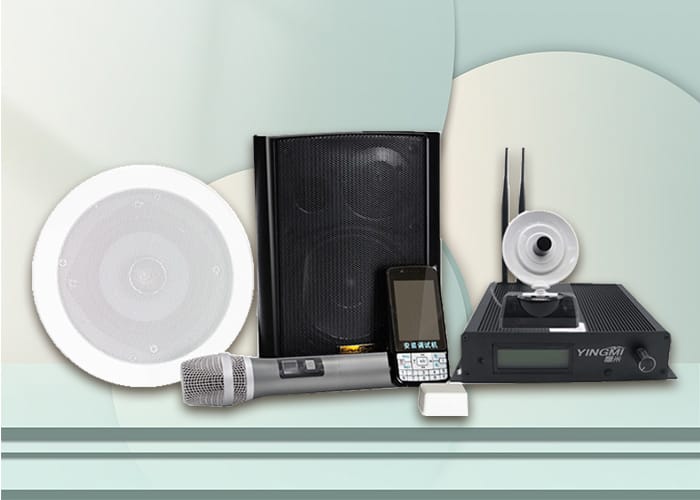
The real problems at overseas science and technology museums
Science and technology museums draw large, diverse crowds, and traditional interpretation methods have struggled to keep up. The MC200 was built to address each of these pain points.
Multiple tour groups no longer overlap
Popular science museums often host several tour groups at once. With conventional amplification, a Chinese group discussing mechanics principles and an English group covering optical experiments creates an unintelligible mix. Guides raise their voices to compete, the noise escalates, and the visitor experience deteriorates.
The MC200 turns each exhibition area into an independent audio zone. Different groups use different channels, and the audio stays contained. A Chinese group in the Aerospace hall and an English group in the Biology hall each hear only their own commentary. Even when groups pass each other in shared corridors, there is no sound bleed. After a science and technology museum near Tianmu Lake in Jiangsu Province installed this system, it went from hosting three groups at a time to eight, with reception efficiency more than doubling.
Visitors can explore at their own pace
Many visitors prefer to spend extra time at exhibits that catch their interest and skip past those that do not. Traditional guided tours force everyone to follow the guide at a fixed pace. Fall behind and you miss the next segment entirely.
The MC200 uses LD high-precision positioning to track where each group is located. When a guide leads the group into an exhibition area, the speakers there activate automatically. When the group moves on, those speakers turn off and the next zone’s commentary begins. A European tourist at the Suzhou Science and Technology Museum stood in front of a 3D printer for over 20 minutes and still heard the guide explain material selection clearly. There was no pressure to keep moving.
One-button language switching
Science museum visitors come from all over the world. Some speak English, others only Arabic or Spanish. When museums can only offer explanations in one or two languages, visitors who speak other languages get very little from their visit. A text panel that says “solar energy conversion” without explaining how or at what efficiency leaves people with photos but no understanding.
The MC200 supports multilingual switching with eight common languages preloaded and the option to customize niche languages. The guide does not need to speak multiple languages. Press a button to switch channels. After a Southeast Asian science museum adopted this system, visitor satisfaction among minority-language speakers rose from 60% to 95%. Many visitors said they could finally understand the science behind the exhibits.
Combined audio and visual explanations for complex content
Science exhibits often involve principles that are difficult to convey through speech alone. Explaining robot motion by mentioning “gear transmission” leaves most people without a clear picture. Guides who repeat the same content all day end up with hoarse voices and are prone to mistakes by late afternoon.
The MC200 supports switching between live teacher explanation and pre-recorded professional audio, combined with video demonstrations. When discussing robotics, the audio might say “The gear rotates at 300 revolutions per minute, driving the mechanical arm to move flexibly” while showing a video of those gears in action. The system also has noise reduction, so visitors hear every word even in a crowded exhibition hall, and guides no longer have to shout.
Design details that suit science museum environments
Precise positioning in complex layouts
Science museums often have winding corridors, multiple levels, and overlapping circulation paths. Earlier zoning systems sometimes failed to identify the correct position, leaving audio from a previous zone playing while the group had already moved on.
The MC200’s LD high-precision positioning collects signals from 360 degrees. It works reliably in multi-entrance, multi-level layouts, switching audio zones promptly and accurately. A European science museum with a deliberately complex exhibition area reported zero positioning errors after installing the MC200. A single zone covers up to 300 square meters, and zones can be added without modifying existing equipment.
Clear audio in noisy environments
Science museums get loud. Footsteps, children, and running exhibit equipment all contribute to background noise. If commentary is not clear, visitors stop paying attention.
The MC200 uses SOC noise reduction technology that automatically filters environmental sound and preserves the narrator’s voice. During weekend peak hours with crowded exhibition areas, visitors still hear specific details about invention processes and scientific principles. The system supports over 200 simultaneous channels, so multiple groups never experience audio overlap.
Simple operation for international staff
Staff at overseas science museums may not read Chinese. If equipment operation is complicated, training becomes a bottleneck. The MC200 uses a high-definition display screen showing device status, volume level, and current language. Button icons include a globe symbol for language switching and plus/minus for volume. Staff can operate the system by looking at the icons without needing to read Chinese labels.
Remote management lets staff monitor equipment status across exhibition areas and update commentary content from an office terminal. PUM power management keeps the system running 24 hours a day with very low failure rates.
Sound and light integration
Many science museums want to enhance the immersive quality of their spaces. The MC200 supports linking audio zones to lighting. When a group enters an exhibition area, the lights turn on automatically; when they leave, the lights turn off. In a Space exhibition zone, blue lights activate on entry and pair with the commentary to create an atmospheric experience.
The system can also connect to projectors and amplifiers. Guides can play videos and animations alongside their narration. Showing an animation of Earth revolving around the Sun while explaining orbital mechanics makes the science immediately accessible in a way that spoken words alone cannot.
Results from overseas deployments
Over the years, the MC200 has been installed at science and technology museums around the world with consistent results.
A European science museum that previously received frequent noise complaints from overlapping tour groups saw crosstalk disappear after channel-based management. Reception capacity doubled and visitor satisfaction rose from 70% to 92%.
A Middle Eastern science museum that customized Arabic commentary found that minority-language visitors could finally follow exhibit explanations. The museum received consistently positive feedback about the quality of the experience.
A Southeast Asian science museum with a complex, multi-level layout had struggled with inaccurate zone switching using a previous system. After switching to the MC200, zone transitions became precise regardless of how groups moved through the space. Staff no longer needed to manually adjust equipment, and management efficiency improved substantially.
What Yingmi provides for overseas science museums
Customized configurations
Yingmi customizes languages, zone counts, and lighting integration based on each museum’s specific needs. A Middle Eastern science museum gets Arabic added. A museum with a complex layout gets optimized positioning parameters.
Global after-sales support
Equipment carries a global warranty. Breakdowns are handled through local service points or returned for repair within 10 working days. Urgent situations can be addressed with spare equipment shipped in advance. Twenty-four-hour online technical support is available regardless of location.
Full-chain implementation
Yingmi records multilingual commentary, trains staff on equipment operation, and handles on-site installation and debugging. The museum receives a system that works from day one without requiring in-house technical expertise.
Flexible cooperation models
Budget-conscious museums can choose leasing or joint operation instead of purchasing. Equipment can be rented during peak seasons and returned during quieter periods. Joint operation models allow museums to avoid large upfront investments while sharing revenue.
The bottom line
Science museums exist to communicate the appeal and importance of science. But if visitors cannot hear the explanations clearly or understand them in their own language, even the best exhibits fall flat. The MC200 zonal interpretation system handles the practical problems that get in the way: interference between groups, language barriers, and rigid tour pacing. It lets every visitor hear the science clearly and explore at their own speed.
After 18 years in the industry, Yingmi continues to refine its equipment to make interpretation simpler and more effective. If your science museum needs better visitor experiences and smoother operations, the MC200 is worth a close look.