

If you’ve ever walked through a science and technology museum abroad, you probably know this feeling: you want to focus on understanding the science behind the exhibits, but the explanations from different tour groups keep drifting over to you, a mix of Chinese and English that makes concentration impossible. You might want to spend more time at the robot displays that really interest you, but you’re worried you’ll fall behind and miss the rest of the content. And if you don’t speak the local language, you can only stare blankly at the text descriptions. Those complex formulas and principles feel like locked doors no matter how you look at them.
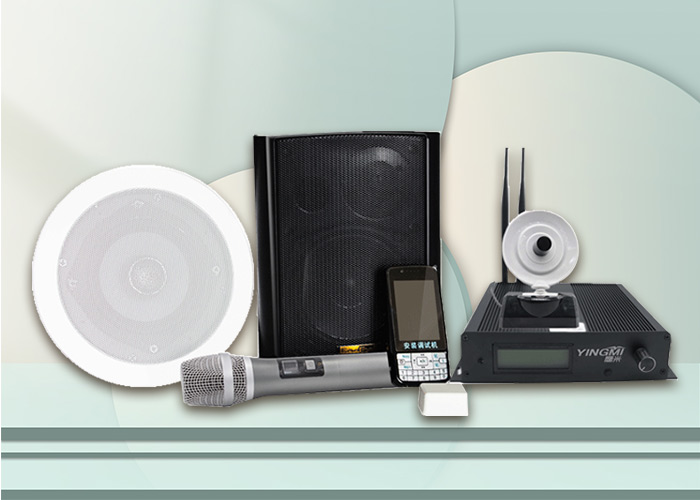
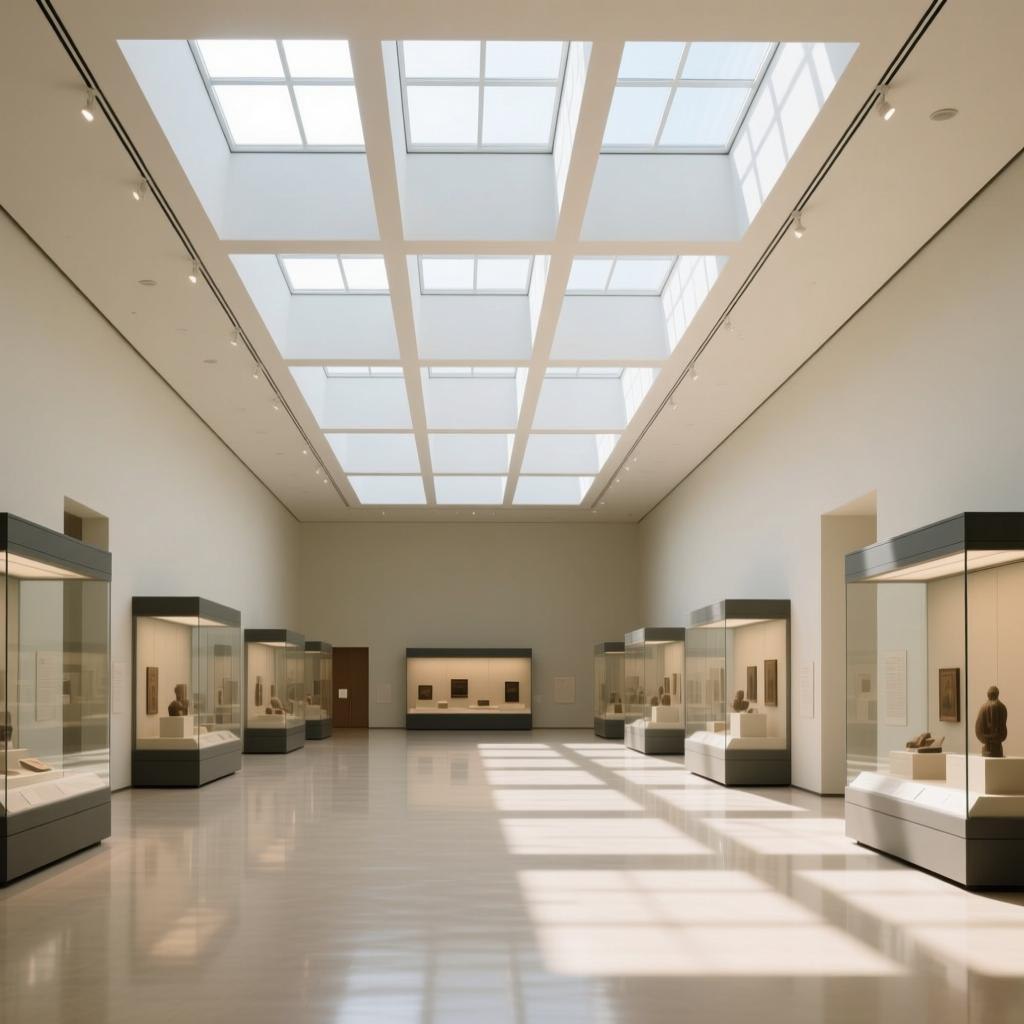
Yingmi has been making interpretation equipment for 18 years and has served over 6,000 venues worldwide, ranging from domestic science and technology museums to international galleries. We understand this situation only too well. That’s why we developed the MC200 zonal interpretation system specifically for science and technology galleries. Think of it as installing a “smart voice manager” at each exhibit zone, allowing interpretation audio to be heard exactly where it should be and enabling seamless language switching. Today, let’s talk about how this system makes visiting science and technology galleries much more comfortable and efficient.
Common challenges at international science and technology galleries
International science and technology galleries deal with high visitor volumes, diverse languages, and complex exhibit layouts. Traditional interpretation methods have struggled to meet these demands. The MC200 zonal interpretation system addresses these pain points one by one:
Multiple groups can tour simultaneously without audio mixing
Popular international science and technology galleries often host several groups at the same time. In the past, traditional amplification equipment meant the Chinese group would be hearing about “Principles of Mechanics” while the English group was at “optical experiments.” The sounds would blend together, leaving visitors completely confused. Guides had to raise their voices just to be heard, which only made the chaos worse.
The MC200 takes a different approach. It turns each exhibit zone into an independent “sound zone,” with different groups using different channels so their audio doesn’t interfere. For instance, the Chinese group can be in the “Aerospace Exhibit Zone” while the English group is in the “Biology Exhibit Zone.” Each group hears their own audio. Even when the two groups pass each other, there’s no sound disturbance. After a science and technology gallery near Tianmu Lake in Jiangsu Province adopted this system, they could previously handle only 3 groups simultaneously. Now they can manage 8. Visit efficiency has improved dramatically, and visitors no longer need to wait in long queues for interpretations.
Visitors can explore freely without “chasing the guide”
Many international visitors prefer to explore science and technology galleries at their own pace. If they’re interested in the space exhibit, they might linger longer. If they don’t care for mathematical models, they simply walk past. But traditional interpretation requires keeping close to the guide. Once you fall behind, you miss all subsequent content, which feels incredibly restrictive.
The MC200 has a particularly practical feature—”audio plays when you arrive, stops when you leave.” It uses LD high-precision positioning technology that can accurately determine where groups are located. As long as the guide leads the group into a specific exhibit zone, the audio in that zone plays automatically. When the group leaves, the audio stops immediately. The sound follows the person like a shadow. At Suzhou Science and Technology Gallery, a European visitor stood in front of a 3D printer for over 20 minutes and could still hear the guide clearly say, “How do we select materials for 3D printing?” No more worrying about keeping up with the group.
Language barriers? One button press for native language interpretation
International visitors come from all over the world. Some speak English, others only understand Arabic or Spanish. Previously, science and technology galleries could only offer English interpretations. Visitors speaking other languages had to rely on text descriptions. But how can complex scientific concepts be explained in just a few words? For example, when Middle Eastern visitors view the “New Energy exhibits,” the text might only say “solar energy conversion” without explaining how it works or what the efficiency rates are. They end up just taking a photo and moving on.
The MC200 supports multi-language switching, with 8 commonly used languages preset and custom languages available. Guides don’t need to speak multiple foreign languages. Just press a button to switch—when Middle Eastern visitors arrive, switch to Arabic. When European visitors come, switch to French or German. After a Southeast Asian science and technology gallery adopted this system, satisfaction among visitors speaking minority languages rose from 60% to 95%. Many people said, “Finally, we can understand the stories behind the exhibits.”
Simple interpretation that combines with audio for richer content
Most exhibits in science and technology galleries have complex principles. Visitors struggle to understand them from oral explanations alone. For instance, when discussing “the movement principles of robots,” if the guide only mentions “gear transmission,” people still have no idea what that means. Plus, guides repeat the same content over and over. By the end of the day, their voices are hoarse and they’re prone to errors or omissions.
The MC200 supports switching between “manual interpretation + pre-stored audio.” For straightforward content, the interpreter provides verbal explanation. For complex content, pre-recorded expert audio plays. It can also be combined with video presentations. For example, when discussing robotics, the audio might say, “The gears rotate at 300 changes per minute, which drives the mechanical arm to move flexibly.” Combined with video of the gears turning, visitors understand immediately. The system also has noise reduction. Even if the exhibit area is crowded and noisy, visitors can still hear every word clearly, and guides no longer need to shout at the top of their lungs.
These features of the MC200 are particularly suitable for international science and technology galleries
Beyond its core functions, the MC200 includes several thoughtful design elements specifically for international science and technology galleries, making it both reassuring and practical to use.
Positioning is highly accurate—you won’t get lost even in complex exhibit areas
The exhibit areas in international science and technology galleries are often very elaborate, with winding corridors and some with multiple levels of buildings. Previous zoning systems often “couldn’t find the right setting.” By the time a group reached the next exhibit area, the audio from the previous area was still playing, which was quite awkward.
The LD high-precision positioning technology in the MC200 solves this problem. It can capture signals 360°. Even in multi-entrance and multi-level exhibit areas, it can accurately determine where groups are and switch very quickly. There’s a European science and technology gallery whose exhibit area resembles a “maze.” After using the MC200, there’s never been a case of inaccurate positioning. Groups consistently say, “It’s so reassuring.”
Additionally, a single zone can cover an area of 300 square meters. Whether it’s a large exhibition hall or a small exhibit area, it can be adjusted. Zones can be added at any time without modifying equipment, giving it particularly strong scalability.
Audio quality is clear—even the noisiest sounds come through clearly
When science and technology galleries are crowded, the noise level is significant—footsteps, children’s laughter, and the sounds of equipment operation all blend together. If interpretations aren’t clear, visitors won’t be able to hear the content at all.
The MC200 uses SOC noise reduction technology that automatically filters out ambient sound while preserving the guide’s voice. Even during weekend peak hours when exhibit areas are packed, visitors can clearly hear “the technological process of this exhibit” and “the application examples of that principle.” It also supports over 200 channels for multiple groups to use simultaneously, ensuring audio never mixes and providing excellent privacy.
Operation is straightforward—international teams can master it quickly
Teams from international science and technology galleries might not understand Chinese. If equipment operation is complicated, training takes a very long time. The MC200 is remarkably easy to operate. It has a high-definition screen showing device status, volume level, and current language clearly. The buttons also have icons—globe icon for language switching, “+/-” for volume adjustment. Even without understanding Chinese, you can use it by following the icons.
It also has remote management capability. Staff can monitor equipment status at each exhibit area and update interpretation content from the office, without having to visit each area one by one, saving considerable effort. The equipment is also very durable. It uses PUM power management technology and can run 24/7 without issues. It rarely malfunctions and has very low maintenance costs.
Can connect to lighting, creating a strong sense of immersion
Many international science and technology galleries want to enhance visitor immersion. The MC200 supports “audio and light linking”—when groups enter an exhibit area, the lights turn on automatically. When groups leave, the lights turn off automatically. For example, in the “Space Exhibit Area,” as soon as visitors enter, blue lights come on, matched with interpretation audio, making it feel as if they’re in space. The experience is remarkable.
It can also connect to projectors, power amplifiers, and other devices. Guides can play videos and animations to assist interpretation. For example, when discussing “the Earth’s orbit around the Sun,” showing an animation of the Earth revolving around the Sun, combined with interpretation. Visitors understand immediately, which is much more engaging than listening to verbal explanations alone.
Real-world examples from international science and technology galleries have achieved excellent results
Over the years, the MC200 has been widely used in science and technology galleries worldwide, solving countless practical problems.
There’s a European science and technology gallery that used to be very noisy when hosting multiple groups and received many visitor complaints. After using the MC200, with channel-by-channel management, there’s no more crosstalk, volume has increased, and visitor satisfaction rose from 70% to 92%. There’s also a Middle East science and technology gallery that customized Arabic interpretations. Visitors speaking minority languages can finally understand exhibit principles. Many people say, “This is what real science tours should be.”
There’s a science and technology gallery in Southeast Asia whose exhibit layout is particularly complex, and the previous system’s overall positioning was inaccurate. After switching to MC200, no matter how groups move, zone switching is very accurate. Staff no longer need to manually adjust equipment, and management efficiency has improved significantly.
What can we offer international science and technology galleries?
Many international science and technology galleries worry that “they won’t know how to use the equipment they’ve purchased” or “nobody will handle any problems that arise.” We actually provide full-process solutions to ensure you don’t need to worry.
Customized to your needs
We can customize the languages you need, the number of zones, and whether you want to connect lighting or not. For example, if you’re a science and technology gallery in the Middle East, we’ll help you add Arabic. If your exhibit area is complex, we’ll optimize the placement parameters to ensure accurate switching.
International after-sales service—no need to panic if problems occur
We support international warranty. If equipment malfunctions, it can be repaired at a local service point or returned to us. Repairs and return happen within 10 working days. If there’s urgent need, we can also send replacement equipment first to avoid delaying tours. 24-hour online technical support is available. No matter which country you’re in, you can always find someone to help with problems anytime.
We’ll help you implement the entire chain
We record multi-language interpretations for you, train staff on equipment operation, and also provide on-site debugging and installation to ensure equipment is operational as soon as it’s received. You don’t need to understand technology. We’ll follow through the entire process and help you solve all your problems.
Flexible partnership—no wasted money
If the budget is large, purchase. If it’s small, rent. Rent equipment during peak season to handle demand and return it during off-peak times. Small science and technology galleries can also operate through joint ventures, without needing to invest a large sum upfront, sharing profits together. Do things as cost-effectively as possible. Don’t pay for features you don’t need.
The bottom line: letting the voice of science reach every international traveler
The core mission of international science and technology galleries is to “communicate the beauty of science,” but if there are problems with interpretation, no matter how wonderful the exhibits are, nobody will understand them. The MC200 zoned interpretation system acts like an “audio bridge,” solving problems like interference from multiple groups, language barriers, and limited rhythms, enabling every international traveler to clearly hear scientific stories and explore at their own pace.
For 18 years at Yingmi, we’ve always been working to make interpretation easier and more efficient. If you operate an international science and technology gallery and want to improve visitor experience and tour efficiency, give the MC200 a try. Let it help you truly communicate the beauty of science to every visitor.
Frequently asked questions
What is the main advantage of the MC200 zonal interpretation system over traditional audio guide systems?
The MC200 uses independent audio zones and channel-based management, preventing sound interference between different tour groups. Unlike traditional audio guides, it allows multiple groups to hear their own guide’s explanation simultaneously without crosstalk.
How does the MC200 handle language diversity in international museums?
The system supports multi-language switching with preset and customizable language options. The tour guide can switch between languages with a single button, allowing visitors who speak minority languages to hear explanations in their native tongue.
Can the MC200 be used in large and complex exhibition layouts?
Yes. The MC200 uses LD high-precision positioning technology, which works accurately even in multi-level or maze-like exhibition areas. Each zone can cover up to 300 square meters and can be expanded without hardware modifications.
How does the system improve the visitor’s freedom to explore?
The MC200 features “sound-follow” technology. When a group enters a zone, the audio automatically plays. When they leave, it stops. Visitors can linger at exhibits of interest without worrying about missing the tour guide’s explanations.
Is the MC200 difficult for museum staff to operate?
No. The system has an intuitive interface with icon-based controls and a clear display. Staff can manage zones, update content, and monitor equipment status remotely, minimizing the need for on-site adjustments.