

Recently, I have communicated with operation directors of many museums at home and abroad, and we all focus on one core question: how to provide a quiet, accurate and independent visiting experience for tourists with different languages and visiting habits at a lower cost. Many venues have tried manual guided tours, public broadcast systems, scan-to-listen commentary and other methods, but either the experience is greatly reduced or the management cost remains high. It was not until the introduction of professional audio guide devices that the long-standing guide problems were truly solved. As an analyst with years of in-depth experience in the audio guide industry, combined with the actual operation needs of museums, I will talk about the necessity of audio guide devices and professional choices suitable for cultural and museum scenarios.
I. Core Pain Points of Traditional Guide Modes in Museums
The core of museums is cultural communication and visiting experience, and traditional guide methods have irreparable defects in these two aspects, which are concentrated in four aspects:
High cost and extremely poor flexibility of manual guided tours
The number of professional commentators is limited with fixed tour schedules, so tourists cannot visit at their own pace. They have to wait in long queues during peak hours, while manpower is idle in off-peak seasons. Meanwhile, professional multilingual commentators are scarce, making it difficult to meet the needs of overseas tourists. Group tours also tend to cause crowds and damage the quiet order of exhibition halls.
Loud noise from public broadcasts and ruined immersive experience
Public broadcasts adopt full-coverage playback, and commentary content of different exhibition areas interferes with each other. Tourists cannot hear the core information clearly, and the solemn and quiet atmosphere of museums is broken. This mode is especially unsuitable for exhibition scenarios such as cultural relics and artworks that require immersive experience.
Cumbersome operation and unstable signal of scan-to-listen commentary
Scan-to-listen commentary requires manual operation by tourists, which is inconvenient for the elderly and children. The network signal is poor in some exhibition halls, leading to slow audio loading. It is also prone to mismatch between commentary content and exhibits, failing to achieve accurate matching and causing a sharp drop in experience.
Complex operation and maintenance management and low efficiency
The traditional mode requires special personnel to dispatch commentators or frequently update commentary content, resulting in high labor and time costs. It is difficult to realize standardized and intelligent management when large museums operate multiple exhibition areas simultaneously.
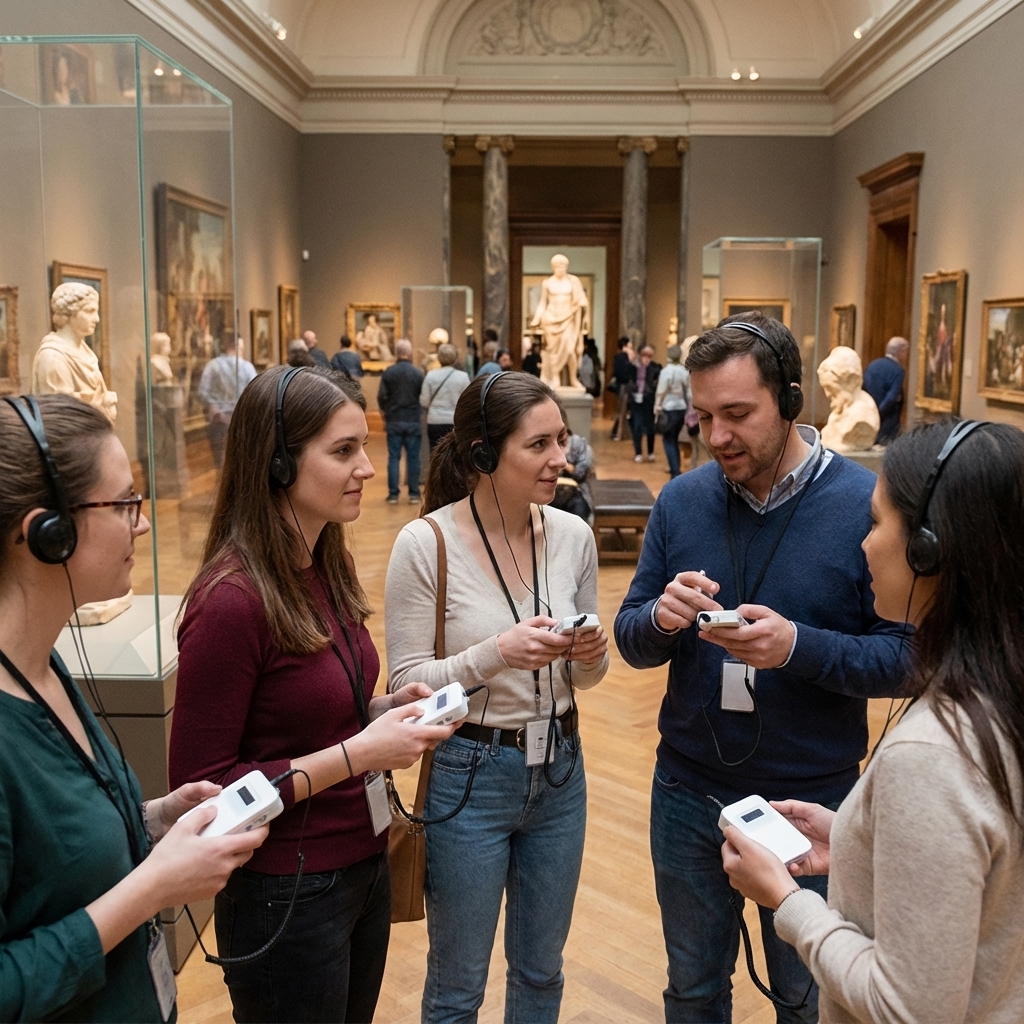
II. Audio Guide Devices: The Optimal Solution for Museum Guidance
The emergence of audio guide devices has completely broken the limitations of traditional guidance. With the core advantages of intelligence, independence, silence and multilingual support, they have become standard equipment for modern museums. Among them, automatic induction audio guide devices require no manual operation by tourists and can automatically play commentary when tourists walk to the corresponding exhibition areas. They not only retain the freedom of visiting but also ensure the accuracy of commentary, perfectly adapting to the operation needs of museums.
As a professional brand focusing on the R&D and production of audio guide devices for 19 years, YINGMI has launched the M7 Automatic Induction Audio Guide System, a professional device specially designed for museums and exhibition halls. Its functional design and performance adaptation are all tailored to the actual use needs of cultural and museum venues.
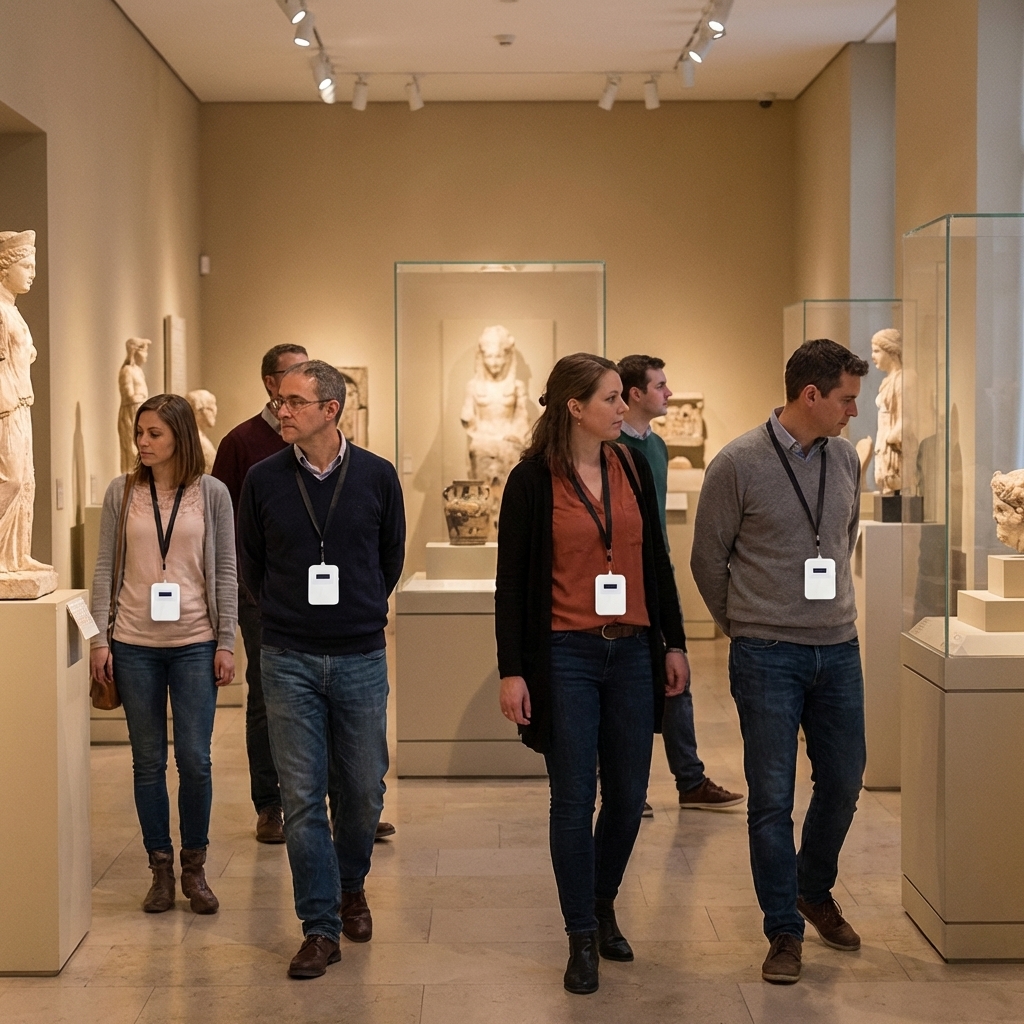
III. YINGMI M7: An Ideal Audio Guide Device for All Museum Scenarios
The YINGMI M7 Automatic Induction Audio Guide System has no redundant functions, and all its designs are centered on museum usage scenarios with outstanding core advantages:
RFID automatic induction, zero manual operation for convenience
Tourists wear receivers and headphones, and the device will automatically detect and play the commentary of corresponding exhibits when they walk to the RFID trigger points in the exhibition hall. There is no need for buttons or scanning codes throughout the process, making it easy for the elderly, children and overseas tourists to use, truly realizing “sound plays as you arrive, and stops as you leave”.
Super large capacity + multilingual support, covering global tourists
The device supports pre-storing up to 9,999 segments of audio explanations and is equipped with 8 languages, which can meet the language needs of different tourists at home and abroad. It completely solves the guidance barriers for multinational visitors in museums and can cope with daily opening and international exchange activities with ease.
Stable signal and clear sound quality, guarding quiet exhibition halls
The M7 adopts a 2.4GHz carrier frequency with stable signal transmission and a coverage range of up to 40 meters. It supports 16-level signal strength adjustment and has strong anti-interference capability, avoiding disconnection and noise. With headphone listening, it creates an exclusive silent commentary environment without disturbing other tourists, in line with the atmospheric requirements of museums.
Lightweight, portable and long battery life, adapting to all-day operation
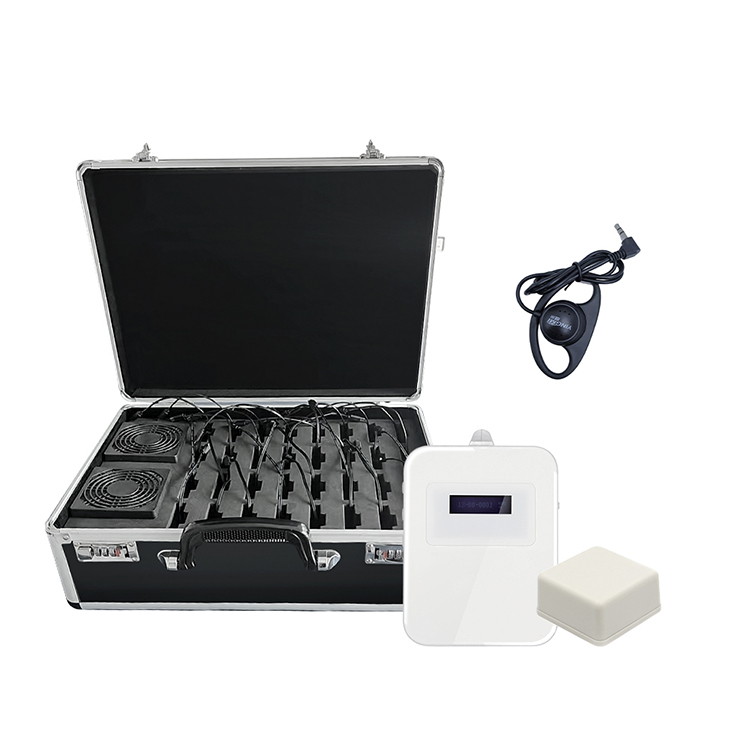
The receiver weighs only 50g with dimensions of 82mm×59mm×12.5mm, lightweight and compact without wearing burden. The 800mAh battery provides a battery life of ≥16 hours, meeting the all-day opening needs of museums. The transmitter weighs only 27g with a battery life of more than 15 months, eliminating frequent charging and greatly reducing operation and maintenance pressure.
Support OEM/ODM customization, fitting venue characteristics
Museums can customize exclusive logos, carrier frequencies, battery capacities, appearance materials and personalized functions, making the audio guide devices perfectly match the venue’s brand image and exhibition layout, and improving the professionalism and recognition of the venue.
IV. YINGMI M7 Adapts to Various Segmented Museum Scenarios
The YINGMI M7 has strong scenario adaptability and can cover all types of exhibition needs of museums:
- Natural History Museums: The commentary is automatically triggered when tourists approach fossil and specimen exhibition areas, allowing them to clearly understand species origin and geological changes, and providing multilingual services for overseas study tour teams.
- Art Museums & Galleries: It accurately plays the creation background and art appreciation content for paintings, sculptures and other artworks, enabling tourists to slow down and experience the charm of art immersively.
- Historical Relics and Heritage Sites: It avoids broadcast noise interference, conveys the history of cultural relics through precise induction commentary, guards the solemn atmosphere of the venue, and enhances the effect of cultural communication.
- Modern Science & Technology Museums: It supports rapid update of commentary content, adapts to high-frequency and multilingual usage needs, and meets the flexible adjustment of science popularization exhibitions and temporary exhibition areas.
In addition, the M7 is equipped with complete hardware including transmitters, receivers and a 32-slot integrated charging box. Devices can be distributed in batches, charged uniformly and managed centrally, further simplifying the venue’s operation and maintenance process.
Table: Comparison of Traditional Guide Methods vs. YINGMI M7 Audio Guide System
| Feature | Manual Guided Tour | Public Broadcast | Scan-to-Listen | YINGMI M7 Automatic Induction |
| Operation | Fixed schedule, need to wait | Full-coverage, no selectivity | Manual code scanning, unstable signal | Fully automatic, zero manual operation |
| Visitor Experience | Crowded, disrupts quiet order | Loud noise, ruins immersion | Mismatched content, poor network | Silent, accurate, “sound plays as you arrive” |
| Multilingual Support | Scarce professional guides | Usually single language | Dependent on app updates | 8 languages pre-stored |
| Management Cost | High (labor & scheduling) | Low but poor experience | Medium (content update & maintenance) | Low (centralized charging, long battery life) |
| Signal Stability | N/A | Interference across areas | Affected by dead zones | 2.4GHz, 40m range, 16-level adjustable, anti-interference |
| Typical Battery Life | N/A | N/A | Depends on phone | Receiver ≥16h, Transmitter >15 months |
| Ideal for | Small, static groups | Emergency announcements | Tech-savvy individuals | All museum types (history, art, science, heritage) |
V. Professional After-sales Support for Peace of Mind
When choosing audio guide devices, after-sales service is as important as product quality. YINGMI provides comprehensive after-sales support for the M7: all main units come with a 2-year warranty, 24/7 online response service with a 2-hour fast reply, and an English-speaking technical team to solve debugging and troubleshooting problems for overseas customers. In addition, the brand promises long-term supply of spare parts and free firmware updates to ensure long-term stable operation of the device and support the long-term operation of venues.
For museums, guide service is the bridge connecting exhibits and tourists, which directly determines the effect of cultural communication and tourists’ visiting experience. The pain points of the traditional guide mode are exactly the core value of audio guide devices. With 19 years of industry technical accumulation, the YINGMI M7 Automatic Induction Audio Guide System has become the preferred solution for museums at home and abroad with its intelligent, stable, convenient and customizable features. If your venue is troubled by high guide costs, poor experience and difficult management, you may choose this professional audio guide device suitable for cultural and museum scenarios, optimize services with technology, and let every tourist immerse themselves in the cultural charm of the museum.
FAQs
- What makes traditional guided tours inefficient for museums?
Manual tours have fixed schedules, limited multilingual guides, and high labor costs, while public broadcasts create noise and ruin the immersive experience.
- How does the YINGMI M7 automatic induction audio guide work?
It uses RFID technology: when a visitor wearing the receiver approaches an exhibit’s trigger point, the device automatically plays the corresponding commentary – no buttons or scanning required.
- Can the YINGMI M7 support multiple languages and large exhibits?
Yes. It pre-stores up to 9,999 audio segments and supports 8 languages, making it ideal for both local and international visitors.
- Is the device easy to maintain for all-day museum operations?
Absolutely. The receiver has a 16‑hour battery life (800mAh) and the transmitter lasts over 15 months. The 32‑slot charging box enables batch charging and centralized management.
- What after-sales support does YINGMI provide for the M7?
YINGMI offers a 2‑year warranty on main units, 24/7 online support with 2‑hour response, an English‑speaking technical team, long‑term spare parts supply, and free firmware updates.