

These days, whether visiting international museums, factories or participating in study tours, one can constantly see the presence of self-service tour guides. The circumstances that formerly relied on manual descriptions are progressively being replaced by these smart tools that “talk anywhere you go”—they don’t need a dedicated individual to accompany, support multi-language switching, and can also help venues save a lot of labor costs. No wonder more and more international users are paying for them.
We, Yingmi, have been engaged in the production of audio guide devices for 18 years. We have observed the self-service audio guide equipment develop from being able to merely play audio in the early days to now being capable of automated sensing and intelligent management. We have served over 4,000 international customers worldwide, ranging from the British Museum to Huawei’s overseas manufacturing facilities. We understand the potential of this sector. Today, let’s talk with friends internationally about why the self-service tour guide market has risen and what opportunities are still worth taking in the future.
These days, self-service audio guides are no more just “capable of listening to audio”
The self-service tour guide market has undergone significant changes recently. The products have become increasingly straightforward and can be adjusted to more and more circumstances. They are no longer the large and troublesome ones they were in the early days.
The product is getting increasingly more thoughtful, and its features are so thorough that they exceed expectations
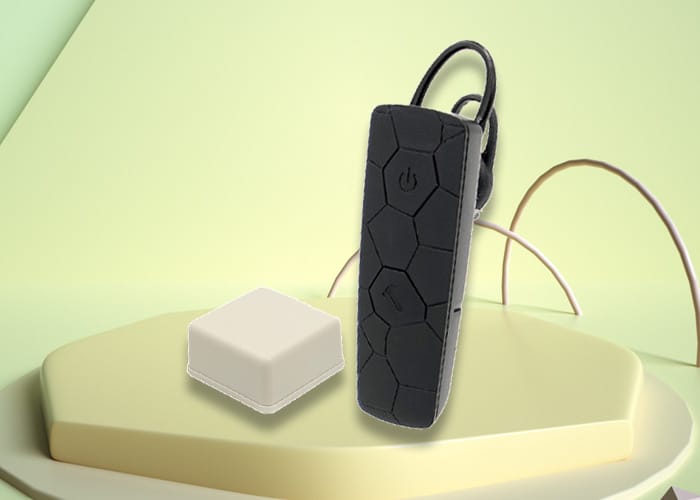
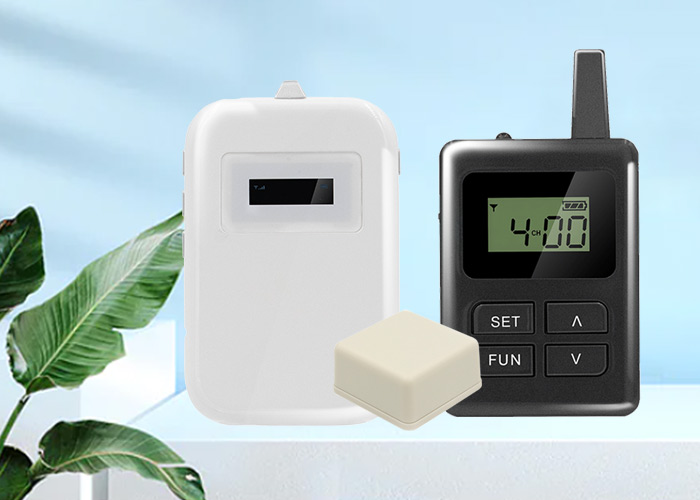
These days, self-service tour guides are no longer of a single kind. You can pick according to your needs: if you want to save trouble, pick the automated sensing versions (such as M7 and i7 designs). With RFID technology, you can talk anywhere you go. When visiting scenic places or museums, you don’t need to run them manually. For exhibition halls with a high concentration of displays, pick the touchpoint version (such as C7S). Simply touch the NFC tag with the device and you can precisely listen to the descriptions with no material being mixed. If you need both group function and individual visitors, pick the M7C hybrid version. The automated sensing and manual explanation modes can be switched at any time, achieving two goals simultaneously.
The functional upgrade is also extremely practical: the battery life has improved from 4 to 6 hours to 10 to 16 hours. The M7 neck version can last an entire day on a single charge. The number of languages supported has increased from 2-3 to over 8. Small languages can also be customized. Middle Eastern travelers can listen to Arabic, and Latin American travelers can switch to Spanish. The anti-interference capability has also been improved. With 2.4G or UHF high-frequency transmission, even if there are lots of people in the event hall, there will be no “crosstalk” trouble, and the audio can be heard clearly.
Not just can it be used in scenic places, but it is also being used in numerous fields
Self-service tour guides have long exceeded the social and tourist circle. Now, “anywhere you need a tour guide, there it is.”
There’s no need to discuss the galleries in scenic places. Popular tourist attractions like Gulangyu Island in Xiamen and Taihu Lake in Suzhou are all using them. Private visitors don’t have to wait for tour guides and can discover them in depth by themselves.
Enterprises also love to use it. For some overseas factory visits and product launches, they depend on it to explain the manufacturing process and product benefits to international customers, without needing to consistently locate multilingual guides.
Institution study tours are much more important. Beijing Foreign Research College takes pupils abroad for examination and uses it as a mobile classroom. Students learn anywhere they go, and the multilingual descriptions can also help them understand professional knowledge.
Even in government functions and international conferences, it can be used. At the SCO International Judicial Meeting, it became a “secret weapon” for multilingual interaction, ensuring accurate information transmission without deviation.
The international market is selling exceptionally well and the demand has been regularly climbing
With the recovery of international tourist and the increase in cross-border exchanges, international markets have long become highly desired for self-service tour guides. Our products have passed international certifications such as CE and ROHS and are exported to several places in Europe, America and Asia. Popular international destinations like the British Museum and Zhouzhuang Gallery are all using them. The demand is the highest in Southeast Asia, the Middle East and Europe. Besides, there are many international travelers and hands-on guides are expensive. Self-service guides simply address these pain points, and normally, more and more people are purchasing them.
Why have self-service tour guides become so popular? Several core reasons
The improvement of self-service tour guides from “niche tools” to “essential items” is no accident. It is the outcome of the joint efforts of policies, markets, and technologies, each of which has hit the demands of international users.
Policy support and a very favorable development environment
Many countries around the world are promoting the upgrading of cultural tourist and encouraging venues to become digital and smart. For instance, China has combined the Ministry of Culture and the National Tourist Management to strongly develop digital cultural tourist. Several European countries have introduced “smart cultural tourist plans” to provide support for the introduction of smart devices in venues. Southeast Asian countries are also investing greatly in upgrading tourist facilities, and self-service tour guides have become an important selection for upgrading scenic places.
Moreover, international trade is becoming increasingly convenient these days. Products that have passed CE and ROHS certifications can be exported smoothly without getting stuck at the access stage. We started our international trade business in 2016. Throughout the years, thanks to favorable policies, our overseas sales have been increasing year by year. Our goal for 2024 is to include 8 million in sales. The prospects are undoubtedly great.
Users need to solve practical problems
Both venue drivers and visitors can benefit from the self-service tour guide, which naturally makes them popular.
For travelers, they can play at their own pace, without needing to rush into an excursion group. They can stay longer before the displays they like and pick their native language to listen to the descriptions, without needing to guess the meaning with translation software. For instance, the i7 ear-hanging version weighs only 20 grams. You can wear it all day without getting tired. The language can also be automatically saved, and you can switch directly the next time you use it. It’s extremely thoughtful.
It can save a huge amount of money for venues and enterprises. Human tour guides not only have high incomes, but it is also hard to hire multilingual tour guides. Self-service tour guides can be purchased once and used for a very long time, and the subsequent maintenance costs are also low. After an overseas gallery adopted it, the cost of hands-on descriptions went down by 60%, while the function efficiency increased by 50%. It is truly a “cost-cutting and efficiency-boosting useful tool.”
Technical upgrades, providing an increasingly outstanding experience
Technical progression has made self-service tour guides significantly straightforward. They are no longer the basic tools that could only listen to sounds as they were in the early days.
The Internet of Things (IoT) technology streamlines management. Venue personnel can see the battery level and location of each device behind the scenes without needing to count them one at a time. The streamlined charging boxes can also be used for set charging and ultraviolet sanitation, saving a lot of manpower.
AI and AR/VR technologies have also been included. In the future, real-time translation and voice Q&A will be possible. Travelers can directly ask questions in their native language, and the device will answer them. Simply by scanning the social antiques, 3D models and historic animations can be produced, which is much more interesting than just listening to descriptions. It is said that in the following 5 years, the market pertaining to AR/VR descriptions can reach 15 to 20 billion yuan, with huge potential.
Don’t miss these opportunities internationally. There are business opportunities in various venues and circumstances
The international market is so huge that not all venues and circumstances are the same. Only by finding the right direction can you avoid detours. These opportunities are worth paying very close attention to:
Regional opportunities: these places have the highest demand
Europe: There are many cultural venues, travelers have high demands for experiences, and labor costs are incredibly high. Self-service tour guides are virtually standard tools in venues. The British Museum is an example, and there will be many upgrade needs in the future.
In Southeast Asia, the tourist market is just recovering, and scenic places are all active upgrading their facilities. Self-service tour guides, as affordable and reliable tools, are especially popular, particularly the waterproof and portable versions, which are extremely suitable for island and outdoor scenic places.
In the Middle East, there are an increasing number of international travelers, and the need for multilingual solutions is especially strong. Moreover, they have high demands for the appearance and quality of devices, and there are many customized needs. By succeeding in these two aspects, they can get a business grip.
Scene opportunities: these “new tracks” have great potential
Along with traditional scenic place galleries, many other circumstances are growing:
- Industrial tourist: Overseas factory visits and industrial park functions are becoming increasingly common. Enterprises need professional devices to explain the manufacturing process to customers. Huawei’s overseas factories use our E8-GT primary audio speaker, which can not just be explained by hand but also play pre-stored audio, making it especially convenient.
- Study excursion education: International study excursion projects are becoming increasingly frequent. Institutions need devices that are easy to operate and manage. The i7 version has anti-theft alarms and return suggestions. Educators don’t need to monitor students constantly, which is carefree.
- VIP function: For high-end events and business VIP functions, customized devices are needed, such as printing brand logos and pre-recording special descriptions. Cars do this, which can significantly boost the function level.
Future development trends: these directions will become increasingly popular as they are pursued
The self-service tour guide market is not a flash in the pan. It will grow bigger and bigger in the future. These trends need to be closely watched:
More immersive experience: AI and AR/VR play new methods
In the future, self-service tour guides will become increasingly “smart.” AI real-time translation will enable travelers to communicate with the device in their native language, answering any questions they ask. AR technology can scan social antiques to produce 3D models and restore historic scenes, much like “traveling back in time” to the past. VR can even produce online event halls, allowing visitors to explore without needing to visit the site personally, and the experience is directly optimized. We are currently setting out these technologies, aiming to make the descriptions more interesting and immersive.
More flexible model: rental and sharing, no need to invest a lot of money
Not all venues can afford the devices, and the leasing and sharing models will become increasingly popular. Visitors can rent by scanning the code and return it directly after use. The venue doesn’t need to invest a lot of money at once and can also be managed easily. Our self-service shared tour guide rental system supports mini-program payment and data management. It is widely used in many small and medium-sized venues and temporary events and is especially popular.
More thoughtful service: we’ll take care of the whole process for you
International users are most afraid that no one will take care of the devices they have purchased. In the future, the competition will not just be about products but also services. From the initial phase of customizing services for you and recording material in multiple languages, to the mid-term on-site installation and commissioning, employee training, and then to the later phase of maintenance and technical upgrades, the full-process service will become the core competition. We provide global warranty. If the device breaks down, it will be repaired within 10 working days. We can also send an extra device first. We simply don’t want our customers to worry.
Cross-border integration: binding with other industries, there is higher space
Self-service tour guides will accept more industries. For instance, they will join hands with tourist systems to enable the purchase of both tickets and tour guides at the same time. Work together with colleges to develop specialized content for study tours and create a “device plus content” package. Even integrate into smart cities and connect with the city’s tourist system to make it easier for travelers to visit. The more cross-border cooperations there are, the more opportunities there will be and the larger the industrial space will become.
The bottom line: the self-service tour guide market has a promising future
The current self-service tour guide market is experiencing its best period of development. With policy support, market demand, and advanced technology, the international market is a large blue sea. From product upgrades to scene developments, from technical innovations to design optimizations, every action is creating new opportunities. It not only helps venues and enterprises reduce costs and increase efficiency, but also enables travelers to have a more enjoyable time. It is a truly “win-win sector.”
For 18 years, Yingmi has been dedicated to making self-service tour guides more straightforward for international users. Whether it’s scenic places, enterprises or colleges, everyone can find a suitable solution for themselves. In the future, we will continue to increase investment in technology, integrating new features such as AI and AR/VR to make our products more straightforward and thoughtful.
If you are an international venue driver, a business function manager, or an instructor in a university and want to improve your service and save costs with self-service tour guides, don’t hesitate to contact us. Yingmi will help you customize a tailored solution and seize this development opportunity.
Frequently asked questions
What is a self-service tour guide?
A self-service tour guide is an electronic device, often an audio guide, that provides automated, multi-language commentary to visitors at museums, scenic spots, factories, or events without the need for a human guide.
What are the main advantages of using an audio guide?
Audio guides offer several advantages: they save on labor costs, provide consistent information in multiple languages, allow visitors to explore at their own pace, and can be used in various environments from museums to industrial tours.
How does a typical self-service tour guide work?
Modern devices often use technologies like RFID or NFC for automatic content triggering when a visitor approaches an exhibit. Some models also support touchpoint activation or manual control, with content delivered via headphones or speakers.
Where can self-service tour guides be used?
Beyond traditional museums and tourist attractions, they are widely used in factory visits, study tours, educational institutions, international conferences, corporate receptions, and any scenario requiring multilingual, automated guidance.
Why is the international market for these devices growing so rapidly?
Key drivers include the recovery of international tourism, high labor costs in many regions, increasing demand for multilingual services, government support for digital tourism, and continuous technical improvements that enhance user experience.