

The global tourism market has been recovering steadily, and international visitors now expect a higher standard of travel experience. The shortcomings of traditional wireless tour guides have become harder to ignore: limited functionality, an outdated user experience, and labor-intensive equipment management. Whether at overseas tourist sites, museums, or international conference venues, the same problems keep coming up. Not enough multilingual guides. Personalized services that tourists want but cannot get. Equipment maintenance that costs too much time and money.
Yingmi has tracked these demands closely. Drawing on years of field experience and technical development, we see the direction clearly: by applying AI, AR, and Internet of Things technologies, the next generation of wireless audio guides will adapt to individual visitor preferences, deliver immersive experiences, and manage themselves with minimal human intervention. The goal is to remove the barriers of language and geography from cultural communication.
Core technology directions for the next generation
The upgrade from basic audio playback to a genuinely useful visitor tool depends on integrating AI, AR, and IoT in ways that solve real problems rather than adding gimmicks.
AI-driven personalization
Artificial intelligence will shift audio guides from a one-size-fits-all broadcast model to one that adjusts based on who is listening. In the future, visitors will select a simple profile on the device, such as “Family Tour,” “Cultural Deep Dive,” or “Leisure Sightseeing,” and the system will automatically adjust the depth and tone of the commentary.
In a test at a heritage park in Cairo, visitors with children heard engaging stories at each stone statue stop, like “In ancient Egypt, children would play hide-and-seek beside these statues.” Those who selected the in-depth tour heard professional interpretation, including details about newly discovered inscriptions and their historical significance. The same exhibit delivered different content based on the visitor’s stated preference.
Multilingual translation will also become more nuanced. Beyond supporting real-time switching among more than 16 mainstream languages, systems will adapt to regional accents. English can shift between British, American, and Australian variants. Chinese can cover Mandarin, Cantonese, and Minnan dialect. An Australian tourist who tested this feature said that hearing explanations in a familiar accent felt like chatting with a local. The system can also detect elderly visitors and automatically slow the speaking rate for clarity.
AI will make commentary content adaptive over the course of a visit. If a visitor spends more than five minutes at a particular exhibit, the system might proactively push supplementary details about that artifact or related historical events, going beyond pre-recorded content to deliver something more responsive and relevant.
AR combined with wearable devices
Overseas customers have told us that the ideal tour guide system is one visitors forget they are wearing but would miss if it were gone. The future points toward hands-free, immersive experiences through wearable devices and AR technology.
Wearable integration is already taking shape. Yingmi is collaborating with a hiking site in New Zealand where tourists wear a smartwatch. Reaching a viewpoint triggers a gentle vibration, and commentary about the snow-capped mountain plays through wireless earbuds. At a fork in the trail, the watch vibrates to indicate the correct direction with a brief audio cue. Visitors keep their hands free and their eyes on the scenery.
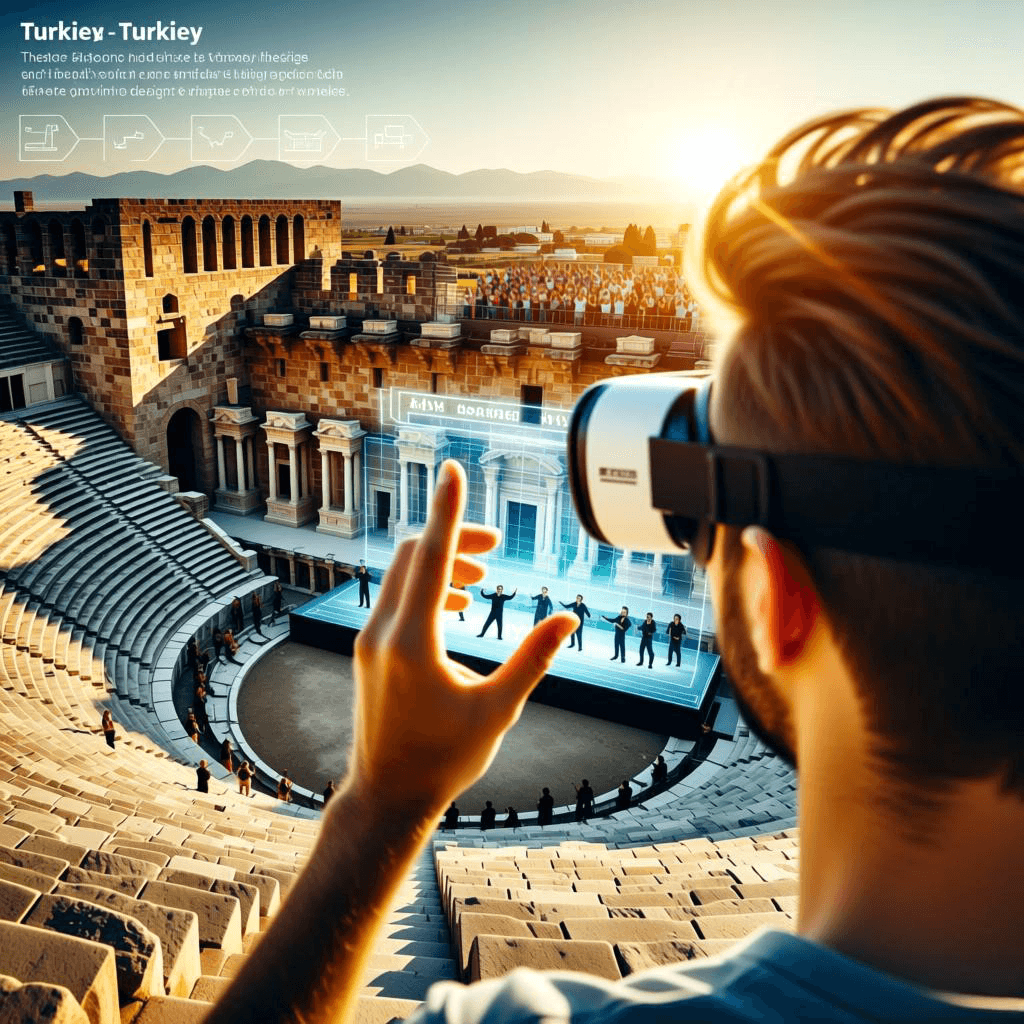
AR technology can overlay virtual content onto physical locations. At an ancient Roman theater in Turkey, visitors point their phone or AR glasses at the ruins and see a reconstruction of actors performing on stage while an audience watches from their seats. The synchronized audio explains the acoustic design that allowed a performer’s voice to reach the back row without microphones. This kind of experience turns passive listening into something closer to being present at the original event.
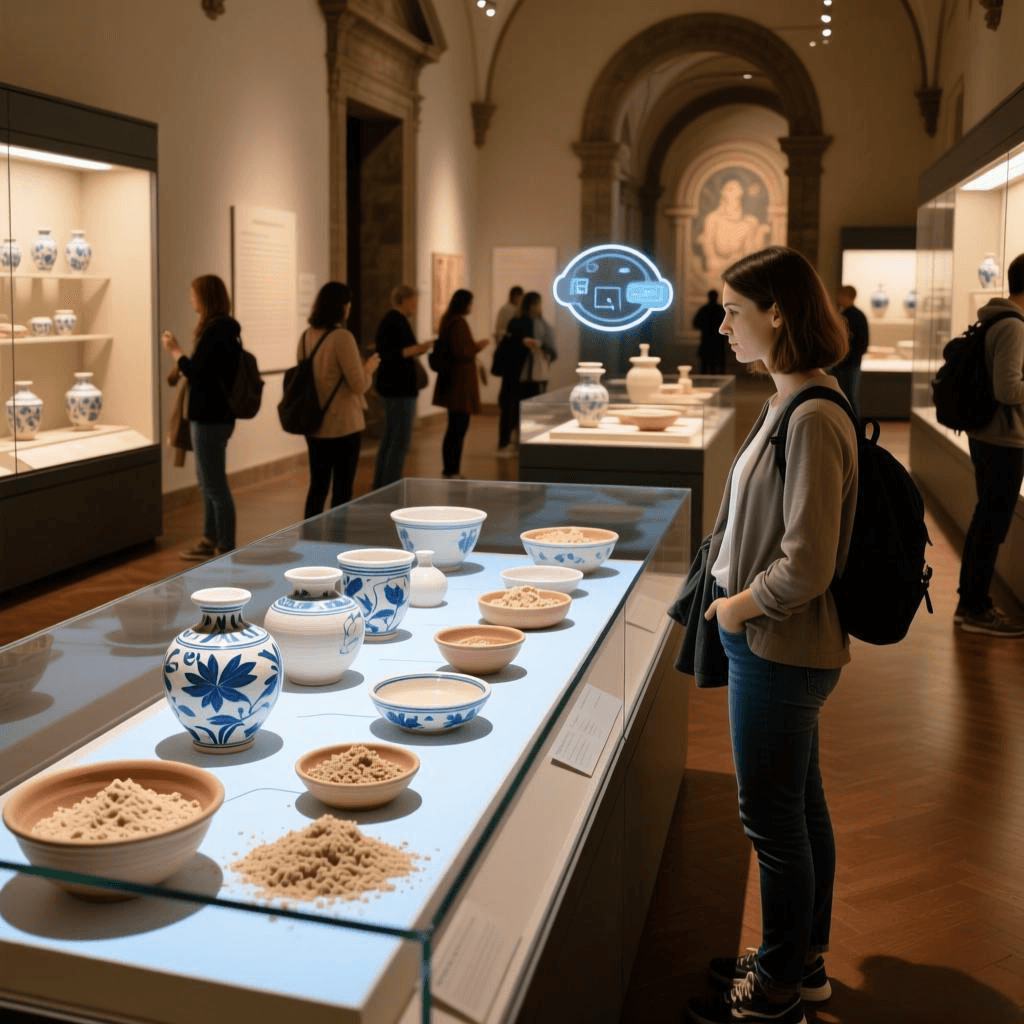
In museums, AR allows visitors to interact with exhibits in ways that audio alone cannot. At the Ceramic Museum in Florence, visitors can see through AR how ceramics are fired, from raw material mixing through to pattern application, each step rendered visually. That visual layer makes complex processes immediately understandable.
IoT and cloud management
Tourist sites and museums with large numbers of devices spread across wide areas have traditionally struggled with maintenance. The IoT and cloud integration will automate most of this work.
Real-time equipment monitoring means operators can check, from a central dashboard, where each device is located, its battery status, and any fault conditions. A chain of European art galleries monitors equipment across five venues from a single headquarters. At a glance, staff can see which devices need attention without visiting each location.
Content updates that previously required connecting each device to a computer individually will happen through the cloud. Upload new audio, text, or video in the back-end, and every device updates automatically. At a mountainous scenic area in Chiang Mai, Thailand, updating locally recorded legendary stories now means changing an audio file in the back-end, and visitors hear the new content the same day.
Usage data helps operators make better decisions. A museum in France noticed through its data dashboard that Spanish-language usage had increased by 30% year over year. Adding Spanish commentary led to a measurable improvement in feedback from Spanish-speaking visitors. This kind of data-driven adjustment makes service improvements targeted and effective.
How these upgrades apply in practice
Museums and cultural sites
At the Egyptian Pyramids, visitors wearing AR-enabled audio guides can point at the entrance and see a reconstruction of ancient Egyptians transporting materials, with synchronized narration about the funerary beliefs behind the construction. The system can also display interior photographs taken by archaeological teams, showing details like a secret passage discovered in 1922 that still contained pharaonic jewelry. This multi-layered explanation is more memorable and engaging than a simple date-based description.
Accessibility will improve as well. For visually impaired visitors, haptic feedback on exhibit models triggers synchronized audio descriptions of texture and dimensions. For hearing-impaired visitors, AR glasses display real-time subtitles and can switch to sign language animations. An accessibility upgrade Yingmi completed for a museum in London received recognition from the local tourism authority.
Tourist sites and theme parks
Large venues face visitor complaints about navigation, queuing, and repetitive experiences. A theme park in Tokyo is testing dynamic route recommendations that display real-time wait times for each attraction and suggest optimized itineraries. After testing, visitor complaints dropped by 40%.
Location-based recommendations can also benefit on-site businesses. When visitors have been walking for a while, the guide might suggest a nearby cafe with a brief story about its specialty items. After a Southeast Asian scenic area added this feature, revenue at cooperating restaurants increased by 25%.
International conferences and business visits
At a tourism industry forum in Germany with participants from 12 countries, Yingmi provided real-time simultaneous interpretation. The speaker delivered remarks in English while participants switched their receivers to Chinese, Japanese, Spanish, and other languages. After the session, participants downloaded meeting minutes and audio replays through the system. This kind of efficient communication setup has proven particularly valuable for multilingual business events.
Yingmi’s commitment to practical innovation
The future of wireless audio guides is about solving real problems, not showcasing technical capabilities for their own sake. Yingmi will continue to invest in three areas.
Regional customization means building products suited to specific markets: improved heat and water resistance for tropical sites, cost-effective solutions for niche European museums, and AR content that accurately reflects local cultural traditions for Middle Eastern heritage sites.
Technology integration means continued development in AI personalization, AR scene rendering, and IoT data analytics to keep products useful and efficient.
Global service expansion means strengthening overseas marketing and establishing offices and technical support centers in key markets so that international customers can purchase equipment and get service without logistical barriers.
Looking ahead
The path forward for wireless audio guides runs through the intersection of technology and human experience. With 15 years of industry experience, Yingmi is applying AI, AR, and IoT to build products that offer personalization, immersion, and intelligent management. From cultural heritage sites to scenic parks to international conferences, the future wireless audio guide will serve as a bridge between visitors and the culture they came to see, and between operators and the market they serve.
YINGMI is ready to work with overseas partners to advance these technologies and adapt them to real-world venues, making every visit more informative and every cultural story more accessible.