

Overseas clients from museums, scenic spots and exhibition halls often consult me about the same issue: they have bought audio guide devices, yet frequent problems arise during peak visitor flow — cross-talk and intermittent signals occur when multiple devices are used at the same time, and visitors have to manually press buttons to switch commentaries. This not only fails to improve the visitor experience but also lowers the reception reputation. As a professional with 19 years of experience in the audio guide device industry, I clearly understand that the core competitiveness of audio guide devices is never fancy functions, but anti-interference performance, stability and ease of use. Today, I will clarify the key points for selecting anti-interference audio guide devices in an easy-to-understand way, and recommend the perfectly adaptable YINGMI i7 automatic induction audio guide device combined with practical scenarios.
I. Common Pain Points of Audio Guide Devices: Are You Also Troubled by Them
Severe signal interference, frequent cross-talk and signal interruption
This is the most experience-impairing problem. In crowded scenic spots and exhibition halls with numerous surrounding electronic devices, ordinary audio guide devices are prone to frequency interference and signal transmission failures. They may fail to play commentary at designated spots or play wrong content, and the commentary is even inaudible in noisy environments, making the devices completely lose their guiding function.
Cumbersome manual operation, high usability barrier for visitors
Many devices require visitors to manually select spots and switch languages via buttons, which is difficult for the elderly and foreign tourists. In time-sensitive visiting scenarios, visitors often give up using the devices, leaving them unused.
Limited storage and language support, failing to meet international reception standards
Small-sized devices have limited commentary storage and only support 2-3 languages, which cannot meet the explanation needs of overseas visitors and are unsuitable for large venues and international scenic spots.
Unbalanced portability and battery life, high operation and maintenance costs
Some devices are heavy and uncomfortable to wear for a long time, while others have short battery life and run out of power quickly. Frequent charging and battery replacement increase the workload of operation and maintenance and affect visitors’ continuous use.

II. 5 Core Criteria for Choosing Anti-Interference Audio Guide Devices
Prioritize RFID automatic triggering to avoid interference fundamentally
The core of anti-interference is a stable triggering method. RFID induction technology realizes offline automatic triggering, which does not rely on networks or conflict with other signals. The device plays commentary automatically when visitors reach preset spots, avoiding manual operation errors and solving signal interference fundamentally — this is the most effective anti-interference technical solution at present.
Choose a dedicated stable frequency band to ensure signal transmission
Frequency band is the key to anti-interference. Devices with a dedicated industrial frequency band must be selected to avoid signal congestion in public frequency bands. Dedicated frequency bands ensure more stable transmission, with no cross-talk or disconnection even when blocked or used by multiple devices simultaneously, delivering clear and smooth sound transmission.
Large capacity + multi-language support for international scenarios
For overseas clients, devices should support massive commentary storage and multi-language switching, capable of pre-storing thousands of commentary segments and covering 8 or more languages. This meets the guiding needs of visitors from different countries without repeated content updates.
Lightweight design + long battery life, balancing comfort and practicality
Receivers should be lightweight for comfortable long-term wear; battery life should meet the needs of a full-day visit, and transmitters should have long-lasting battery life to reduce battery replacement frequency and lower later operation and maintenance costs.
Complete after-sales service + customization capability for long-term use assurance
Overseas clients value after-sales response more. Brands with 24/7 online support and English technical support should be chosen. Meanwhile, OEM/ODM customization is preferred, allowing adjustment of appearance, functions and parameters according to venue needs to adapt to different usage scenarios.
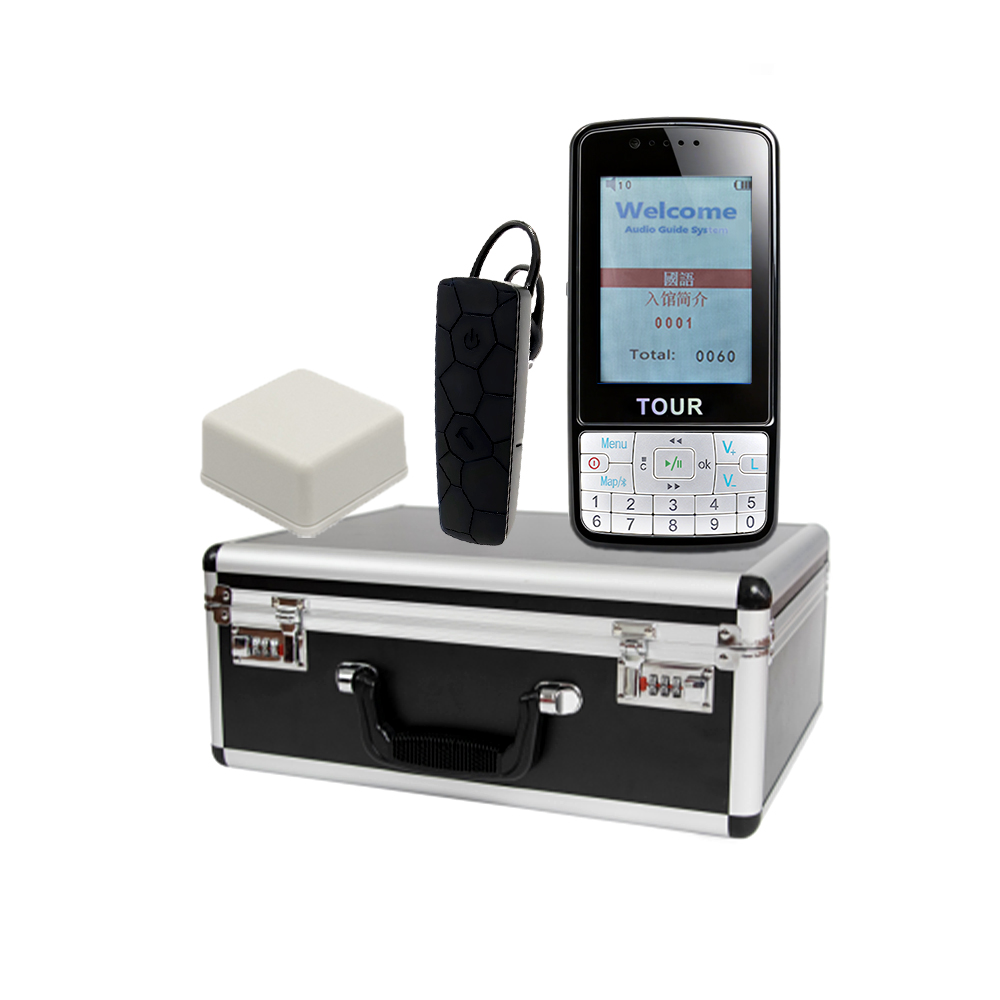
III. YINGMI i7: The Scenario-Optimized Choice for Anti-Interference Audio Guides
Based on the above criteria, the YINGMI i7 automatic induction audio guide system launched by YINGMI, a brand with 19 years of experience in audio guide devices, is an excellent choice with outstanding anti-interference performance and high scenario adaptability, fully meeting the needs of various overseas venues and scenic spots.
Natural/history museums and art galleries
Museums feature dense exhibits and multiple walls, requiring high anti-interference performance. The i7 adopts RFID automatic triggering — the receiver plays corresponding commentary automatically when visitors approach exhibits. With a dedicated frequency band of 860MHz-870MHz, no cross-talk occurs even when multiple devices are used simultaneously. It supports 8 languages and can store up to 9,999 commentary segments, satisfying the visiting needs of domestic and foreign tourists. The receiver weighs only 17g, bringing no wearing burden at all.
Historical and cultural sites, cultural relic protection units
Such scenarios are mostly open-air with complex terrains, where signals are easily interfered by the environment. The i7 transmitter has a coverage radius of 40 meters and 16 adjustable signal levels, ensuring stable transmission in ancient architectural and mountain forest scenarios. Automatic triggering requires no manual operation, avoiding noise interference from public broadcasting and allowing visitors to immerse themselves in cultural connotations.
Science and technology museums, corporate exhibition halls
Science and technology museums and corporate exhibition halls have numerous electronic devices and complex interference sources. The i7 has strong anti-interference performance and supports fast commentary updates, adapting to high-frequency and multi-language reception needs, clearly conveying exhibit and brand information to enhance the professionalism of visits.
Automobile showrooms, brand experience centers
Accurate exclusive commentary is needed for new car launches and VIP visits. The i7 can pre-store model-specific commentary, which plays automatically when visitors reach the corresponding exhibition area without manual guidance, improving the experience and highlighting brand professionalism.
Tourist vehicles such as sightseeing buses and cruise ships
During sightseeing tours, visitors move along the route. The i7 switches commentary automatically according to location without manual operation, with a battery life of 7-8 hours to meet full-day sightseeing needs, providing visitors with a smooth guiding service throughout the journey.
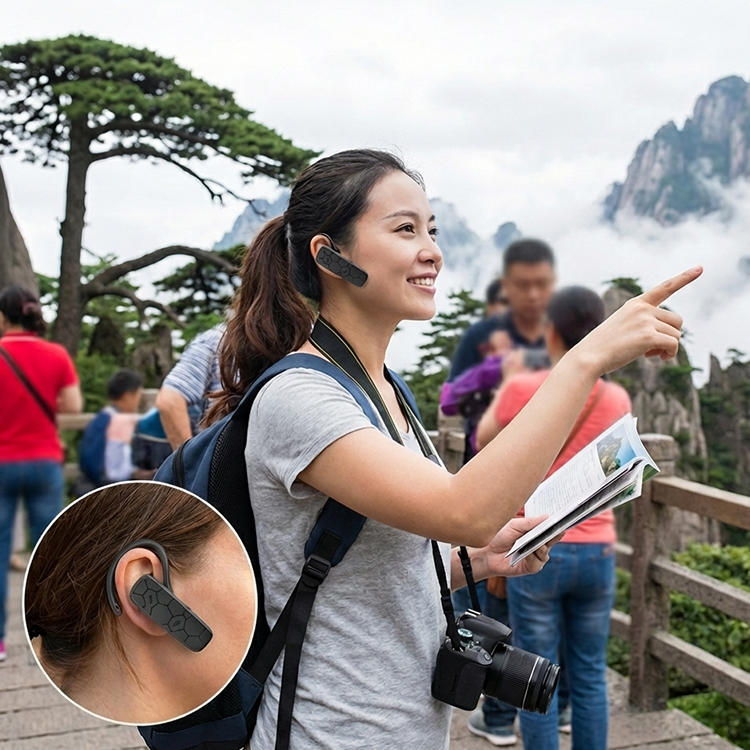
Table: Anti-Interference Audio Guide – Common Problems vs. YINGMI i7 Features
| Problem Area | Common Pain Points | YINGMI i7 Solution |
| Signal interference | Crosstalk, disconnections, wrong commentary in crowded or electronic-dense environments | Dedicated 860-870MHz frequency band, 16 adjustable signal levels, 40m coverage – stable transmission without interference |
| Triggering method | Manual button pressing – high error rate, difficult for elderly & foreign tourists | RFID automatic induction – plays commentary when approaching exhibits, zero manual operation |
| Language & storage | Only 2-3 languages, small storage – cannot serve international visitors or large venues | 8 languages + up to 9,999 audio segments – meets multinational and large-scale needs |
| Portability & battery | Heavy devices cause fatigue; short battery life requires frequent charging | Receiver 17g, 7-8 hours battery; transmitter >12 months battery – lightweight and all-day use |
| Scenario adaptability | Poor performance in open-air, complex terrain, or high-interference areas | Works in museums, heritage sites, tech halls, auto showrooms, sightseeing buses, cruise ships |
| Customization & after–sales | Standard products only; slow or no English support | Full OEM/ODM (logo, frequency, materials, functions); 2-year warranty, 24/7 English tech support |
IV. Quick Deployment: Let Anti-Interference Audio Guide Devices Empower Reception
Choosing the right device is only the first step; easy deployment and use are the key. The YINGMI i7 comes with a complete hardware configuration including receivers, transmitters, charging boxes and debugging devices, enabling quick deployment out of the box. It has a clear customization process with efficient communication from requirement confirmation, sample production to testing and mass production. In terms of after-sales service, the main units come with a 2-year warranty, 24/7 online English technical support with a 2-hour fault response time, and long-term firmware updates and spare parts supply.
For overseas clients, there is no need to struggle with complex parameters when choosing anti-interference audio guide devices. The core focuses are four points: triggering technology, anti-interference capability, scenario adaptability and after-sales guarantee. With 19 years of industry technical accumulation, the YINGMI i7 balances anti-interference, automation and portability, perfectly adapting to full scenarios such as museums, scenic spots, exhibition halls and sightseeing transportation. It not only solves current usage pain points but also meets long-term reception needs.
If your venue or scenic spot is troubled by guide interference, cumbersome operation and other problems, you may focus on the i7 anti-interference audio guide device. With stable performance and attentive service, it will enhance visitor experience and build professional international reception services.
FAQs
- What causes signal interference in ordinary audio guide devices?
Crowded scenic spots and exhibition halls with many electronic devices can cause frequency interference, leading to crosstalk, disconnections, or failure to play the correct commentary. - How does RFID automatic triggering solve interference problems?
RFID induction does not rely on networks or public frequencies. It triggers commentary offline when visitors approach preset spots, avoiding manual errors and fundamentally eliminating signal interference. - What frequency band is best for anti-interference performance?
A dedicated industrial frequency band (e.g., 860-870MHz) is recommended. It avoids congestion in public bands, ensuring stable transmission without crosstalk even when many devices are used simultaneously. - Which scenarios benefit most from the YINGMI i7 anti-interference audio guide?
The i7 is ideal for natural/history museums, art galleries, heritage sites, science & technology museums, auto showrooms, and sightseeing vehicles – any environment with dense exhibits, complex terrain, or many electronic devices. - What after-sales support does YINGMI offer for the i7?
YINGMI provides a 2-year warranty on main units, 24/7 online English technical support (2-hour response), long-term spare parts supply, and free firmware updates.