

As a reporter who has been working in the audio guide industry for ten years, I have conducted on-site observations at science and technology museums in over twenty countries worldwide. But when I walked into the London Science Museum again in the autumn of 2025, I was still attracted by the silver-white terminal of the interpretation equipment at the entrance—the presentation system. A traveler from Australia was carefully touching the screen with his fingertip, selecting the “English—Industrial Revolution Exhibition Area” mode. A few seconds later, the device automatically pushed a dedicated visiting route, even noting “The 18th Century Steam Engine Exhibition Area has fewer visitors today. It is recommended to visit first.”
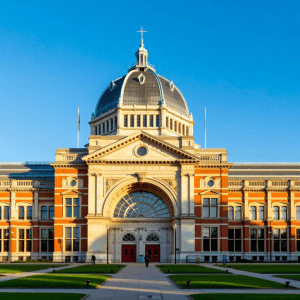
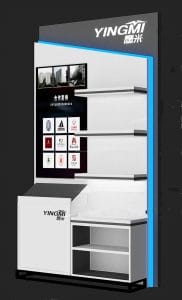
This scene perfectly mirrors the upgrading of the exhibition and interpretation system at the Science Museum in London over the past three years. This “International Science and Technology Palace” with 70 exhibition rooms, 200,000 exhibits, and an 8-acre area, from the 14th-century bronze bell to the 20th-century lunar module, from the friction coefficient slide in the wonder laboratory to the lightning simulation room—how is it explained through a smart presentation system? Can international visitors of different languages and ages understand the development of human technical history? Today, from a market perspective, we will explore the value behind this presentation system.
The interpretation challenge of the century-old science and technology museum
Before we talk about the current smart systems, we must go back three years—when I visited the Science Museum in London for the first time, I happened to meet a group of middle school students from Canada. They gathered in a circle in front of the display of Watt’s improved steam engine from the 18th century, but could only stare at the textual description. The teacher in charge said helplessly, “The manual explanation will take half an hour and only in English and French. The children want to know the working principle of the steam engine, but they cannot find a suitable way.”
This is not an isolated example. As one of the top three science and technology museums in the world in terms of visitor volume, the Science Museum in London welcomes over 3 million visitors every year, 60% of whom are international visitors from around the world. Before the smart interpretation system was implemented, the three major “interpretation crises” it faced were common problems for all international science and technology museums.
The gap between exhibit eras and explanation depth
The exhibits in this museum span a timeline of 600 years: from the copper clock used for astronomical monitoring in the 14th century, to the Newcomen steam engine in the early 18th century, and then to the lunar module and re-entry module of Apollo 10 in 1969. Traditional manual explanations are either “general” or can only cover a few popular exhibits—for example, the first general-purpose computer that many international travelers come to see specifically, but often due to the long line for explanations, they can only take a photo and leave.
The problem of multilingualism and real-time interaction
The most headache-inducing problem for international travelers is the language barrier. Previously, although the museum had audio guides in English, French, and German, the content was fixed and not interactive. For example, in the lightning simulation area of the “Wonder Laboratory,” after the staff demonstrated the experiment of “simulating lightning striking a steel rod,” some Japanese travelers wanted to ask, “Why does lightning strike sharp objects first?” However, due to the language barrier, they could only gesture and thus missed the opportunity to gain deeper understanding.
Z1 system: adapting exhibits to international visitor habits
In the “Digital Innovation Exhibition Area” of an international science and technology museum, I saw the practical application of the Yingmi Z1 system—before a display cabinet showcasing the first general-purpose computer (ENIAC), there was a 21-inch high-definition LCD screen embedded. A tourist from Singapore picked up the “interactive sensing board” beside the case, and the screen instantly popped up an animation of the working principle of ENIAC. He asked in English voice, “What’s the difference between ENIAC and modern computers?” The system provided a concise answer within one second, along with a comparison chart.
“This Z1 system is a tailored modification we made based on the habits of international visitors,” Thomas, the head of the museum’s technical department, told me. From a market perspective, the reason the Z1 system can meet the needs of international science museums lies in its solution to the problem of “how exhibits can communicate effectively with international visitors,” and there are three key designs behind this.
Multi-mode interaction without thresholds
International visitors come from different cultural backgrounds and have varying levels of experience with operation interfaces. The Z1 system offers three interaction methods: “touch + voice + light sensing.” For example, in the “Friction Coefficient Slide” exhibition area of the “Wonder Laboratory”—there are mini slides made from wood, plastic, and metal. Children can observe the speed differences by sliding the small balls. On the Z1 terminal beside it, you can either touch the screen with your finger to select the explanation of “The principle of friction coefficient” or say in English, “Why do the small balls on the plastic slide run the fastest?” The system will automatically match the corresponding content. Even when the child places the small ball on top of the slide, the light-sensing device will trigger an explanation, “This is the battle between gravity and friction.” This “learning by doing” mode is particularly popular among international families with children.
From viewing exhibits to enjoying various services
Many international travelers are interested in the museum’s peripheral products when visiting—such as mini models of 18th-century steam engines and cultural and creative products with the theme of lunar modules. When the Z1 system is explaining the exhibits, an entry for “Related Products” appears at the bottom of the screen. After clicking on it, you can see the price and product, and also choose between “in-store pickup” or “International Express delivery.” Thomas showed me data: Since the Z1 system was launched, international orders for museum-related products have increased by 40%. “Many visitors, upon seeing the model on the audio guide, found it convenient and placed an order directly without having to look for a shop.”
Using data to improve exhibit appeal
As a market reporter, I pay particular attention to the “back-end capabilities” of the presentation system—the Z1 system can record the “number of visits,” “interaction duration,” and “key questions” of each exhibit. For example, data shows that the average interaction time of international travelers with the “lunar module” is 8 minutes, and the most frequently asked question is “How do astronauts survive in the re-entry capsule?” However, the copper bells from the 14th century, although visited by many people, had a lower interaction rate. Based on this data, the museum has adjusted the content of its explanations: it has added videos of “details of astronauts’ lives” to the lunar module and supplemented the story of “how it influenced the timing of navigation at that time” to the bronze bell, making the less popular exhibits also attract international travelers to stay.
More importantly, the “customization capability” of the Z1 system perfectly matches the characteristics of the exhibition areas in international science museums. For example, in the “Industrial Revolution Exhibition Area,” the display cabinets are customized according to the size of the steam engine. The Z1 display is installed on the side of the display cabinet, which neither blocks the exhibits nor makes it convenient for visitors to view. In the “Wonder Laboratory,” considering the large number of children, the Z1 terminal was designed with rounded corners and made from scratch-resistant ABS plastic. “Even if it is accidentally bumped by a child, it won’t break,” Thomas said with a smile.
Zoned explanation methods
The Z1 system has solved the problem of “communication between exhibits and visitors,” truly solving the industry’s difficult problem of “simultaneous explanations in multiple areas”—this is also what I believe is most worthy of recommendation for international science and technology museums.
Three years ago, when I was visiting the “Agricultural Machinery Area” of the museum, the clear voice of the explanation from the “Computer Area” next door came through. An engineer from Germany complained, “I wanted to listen carefully to the story of the tractor’s development, but I was always interrupted by the computer’s explanation.” Now, this situation has completely disappeared—because the system adopts UWB ultra-wideband positioning technology, with a positioning accuracy of ±10cm, which can precisely determine the area where travelers are located.
“When you enter the ‘Steam Engine Exhibition Area,’ the system will trigger an explanation within 0.5 seconds after you enter the area. When you reach the edge of the exhibition area, the explanations will naturally fade in and out, without suddenly interrupting or sounding out.” Thomas took me on an experience: from the steam engine area to the combine harvester area, the content of the explanation smoothly transitioned from “Watt’s process of improving the steam engine” to “How the combine harvester changed agricultural production,” the volume gradually dropped from 60 decibels to 0, and then rose to 60 decibels in the combine harvester area, without any sense of abruptness. This “0.8-1.2 seconds adjustable fade-in and fade-out” is exactly the key indicator for evaluating the “acoustic performance” of the zonal presentation system in the industry—it avoids the embarrassment of conventional systems making loud noises as soon as they enter the area, and is particularly suitable for the behavior of international travelers to “walk slowly.”
The more core aspect is the “independent audio zone” technology. The exhibition areas of the Science Museum in London are quite close to each other. For example, the “Computer Area” and the “Lunar Module Area” are only separated by a glass wall. However, with the dual noise reduction of “physical isolation + digital algorithm,” the explanations in both areas will not interfere with each other. I conducted a test: when the explanation was playing in the computer area, standing on the other side of the glass wall in the lunar module area, I could barely hear any sound. And vice versa. This kind of “non-interference” experience is particularly important for international travelers—most of them want to concentrate on the exhibits before them and not be disturbed by other sounds.
The “stability” of the system has also been tested in real situations. During peak hours daily, the Science Museum in London sees thousands of international visitors using the guided tour system at the same time, covering multiple languages such as English, French, and Spanish. However, the system supports multi-user parallel operation and there is no “frequency crossover”—for example, if you select an English explanation, French content will never suddenly appear. Thomas said, “Last summer, we received 23,000 visitors a day and the system ran without any errors. This was something we never tried to imagine before.”
In addition, the “scalability” of the system also leaves enough room for the future. For example, at the beginning of this year, the museum added a new exhibition area called “AI and Future Technology.” By simply setting up a few UWB positioning base stations in the new exhibition area, the existing system can be connected without having to rebuild the whole set of equipment. “For international science and technology museums, exhibition areas are frequently updated and systems can be flexibly expanded, so there is no need to repeatedly invest funds.” This point has been mentioned by most of the heads of international science and technology museums I have interviewed—scalability is a key consideration for them when selecting a presentation system.
The presentation system becomes a good assistant for visiting the museum
During the one-week interview at the Science Museum in London, I randomly interviewed over 20 international travelers. Their evaluations of the interpretation system may be more convincing than technical specifications.
Lily, a high school student from New York, USA, came to visit with her “Science and Technology History Project.” “Before, I had to hold a notebook to record the information of the exhibits. Now, the audio guide will send the key points to my email and mark the contents that require in-depth research.” She opened her phone and showed me: In the explanation of the lunar module, she noted “thermal protection materials for the re-entry capsule,” and the system also automatically recommended related popular science articles. “This is so helpful for my research.”
The Yamada couple from Tokyo, Japan, visited the “Wonder Laboratory” with their 5-year-old son. The child was particularly interested in the coefficient of friction of the slide. The system demonstrated with an animation “Why plastic slides are faster than wooden ones,” and he understood it immediately. Mrs. Yamada said that in the past, when she took her child to visit the science and technology museum, the child always asked “why?” and she could not answer. Now, the audio guide has become a “temporary teacher,” “and it can even switch to Japanese. It’s so convenient.”
Pierre, an engineer from Paris, France, most appreciated the “peace” of the zonal presentation system. “The last time I came here, there were explanations everywhere, but this time there’s none at all. I can listen carefully to the story of each exhibit, such as the detailed explanation of the development process of the first computer, along with the interview videos of the designers. This is very valuable to me.”
These authentic experiences confirm the success of the upgrade of the interpretation system at the Science Museum in London—it is no longer a “cold device” but a “bridge connecting exhibits with international visitors.” As Thomas said, “We hope that every international visitor, regardless of their country or language, can understand the technical stories behind these exhibits and feel the power of human progress.”
Choosing a presentation system that matches your needs
As a reporter with ten years of market experience, I am often asked by the directors of international science and technology museums, “How should we choose a display and presentation system that matches us?” It is not about pursuing the most expensive technology, but rather about “meeting the characteristics of one’s own exhibits and the needs of visitors.”
First, it is necessary to clarify the “core demand.” The core demands of the Science Museum are “serving international visitors, solving crosstalk problems, and achieving interactive experiences,” so it has selected the Z1 system + UWB zoning technology. If it is a small science and technology museum with few exhibits and mostly local visitors, such a complex system may not be necessary. A basic Bluetooth audio guide can meet the needs.
Second, attention should be paid to “user behavior.” Most international travelers prefer “independent operation and flexible interaction,” so the system should be simple and easy to use, supporting multiple languages and multiple interaction methods. For example, the voice interaction of Z1 does not need pressing too many buttons. Just saying one sentence can trigger it, which is quite in line with the operation habits of international travelers.
Finally, it is important to attach importance to “customer service.” The presentation system is not something that can be simply purchased; it requires long-term maintenance and upgrades. The manufacturer selected by the Science Museum in London regularly sends people to inspect the equipment, adjusts the explanation content according to the updated exhibits, and also provides 24-hour technical support. During last Christmas, a Z1 terminal malfunctioned, and the manufacturer arrived within two hours to fix it, which did not affect the visitor experience.
At the end of the interview, I was standing in the hall of the Science Museum in London, watching the sunlight penetrating the glass dome and falling on the “Lunar module” exhibits. A little girl from India was using the AR function of the audio guide to “touch” the lunar module model on the screen, her face full of curiosity. At that moment, I realized that a good display and presentation system not only allows the exhibits to “talk” but also allows visitors from different countries to feel the beauty of technology—this may be the best inspiration that the “smart explanation revolution” of the Science Museum in London has given to science museums around the world.
From the old clocks of the 14th century to the lunar modules of the 20th century, the Science Museum in London has brought its 600-year-old technical heritage to life with a smart interpretation system. For international science and technology museums, the value of this system lies not only in the technology itself but also in its “visitor-centered” design concept—allowing every international visitor to understand the stories behind the technology in an environment without language barriers and sound interference.
In the future, with the development of AI multilingual technology and personalized content generation, there will be more possibilities for presentation systems. But no matter how technology upgrades, the core remains the same: to bring exhibits closer to visitors and spread the stories of technology around the world. The practice of the Science Museum in London has already provided a worthy model for this course.
What is the Z1 system?
The Z1 system is an intelligent presentation system that uses touch, voice, and light sensing to engage visitors with museum exhibits.
How does the audio guide work?
The audio guide offers multilingual descriptions and can send key information to visitors’ emails for later reference.
Is the system suitable for children?
Yes, it includes interactive features and durable design, making it ideal for children.
Can the system handle peak visitor times?
Yes, it supports multiple users simultaneously without performance issues.
What languages are supported?
The system supports English, French, Spanish, and more, catering to a global audience.
Yingmi Customer Service Hotline: 400-990-7677 Official website: www.it2002.com