

With years of deep experience in the audio guide industry, I work with numerous procurement managers from overseas museums, scenic spots and exhibition halls on a daily basis. The most frequently asked question in the past six months has been: Is a self-service audio guide with positioning and induction really worth purchasing? Many curators of European museums and operators of Southeast Asian scenic spots have told me that they want to upgrade their audio guide services, but they worry about making wrong choices, wasting investment, or getting low-quality devices. Today, I will break down this question thoroughly based on actual scenarios, industry pain points and mature product solutions, helping you make a reliable decision.
I. Why Are Venues Worldwide Focusing on Self-Service Audio Guides
Let me share two typical overseas customer cases first. A medium-sized natural history museum used to rely on manual guides, arranging multiple commentators to work shifts every day, but still fell short of demand during peak seasons. International visitors were highly dissatisfied due to the lack of multilingual commentary. Another outdoor cultural heritage site used public broadcast for explanations, which brought loud noise and serious interference—visitors could not hear the content clearly, and the quiet atmosphere of the site was ruined, leading to constant complaints.
Both institutions finally introduced self-service audio guides with RFID automatic positioning, and gave feedback within a month: visitor experience improved significantly, labor costs dropped sharply, and the problem of multilingual reception was completely solved. More and more cases prove that self-service audio guides are not an “optional upgrade”, but a must-have solution to practical operational problems.

II. Core Pain Points of Traditional Audio Guide Modes
Many venues hesitate to replace their devices because they fail to see the inherent flaws of traditional modes. The mainstream old solutions in the industry generally have the following unavoidable problems:
1. Manual Guiding: High Cost, Poor Flexibility and Limited Languages
Salaries, training and management of manual commentators are long-term investments, which are hard to afford for small venues and scenic spots. In addition, the commentary time is fixed, so visitors can only follow the group schedule and cannot tour freely. More importantly, most venues only provide 1-2 languages, which cannot meet the needs of international visitors at all, resulting in the loss of overseas tourists directly.
2. Public Broadcast: Noisy Interference and Terrible Experience
Broadcast-style explanations fill the whole space with noise, and commentaries at different spots interfere with each other. Visitors can neither hear nor remember the content, and the atmosphere of museums and heritage sites is damaged. This mode is unprofessional and inconsistent with the service positioning of high-end cultural tourism venues.
3. No Guide / Manual Guide: Failed Cultural Communication and Poor Experience
Without audio guide devices, visitors can only read the text on display boards and cannot understand the value behind the exhibits. Old-fashioned manual button audio guides require visitors to enter numbers manually, which is cumbersome to operate and difficult for the elderly and children to use. Many visitors give up the commentary service easily, greatly reducing the value of the tour.
III. Self-Service Audio Guide with Positioning Induction: A Better Solution
Compared with traditional modes, the self-service audio guide based on RFID automatic induction solves all the above pain points perfectly. Its core logic is: visitors wear lightweight receivers, and when they walk to the preset spots, the device triggers commentary automatically without any manual operation, truly realizing “sound starts when arriving, stops when leaving”.
This device allows visitors to tour deeply at their own pace, realizes multilingual coverage and noise-free commentary, and greatly reduces labor costs. It is a highly efficient audio guide solution recognized by the global cultural tourism and exhibition industry. Among similar products, the YINGMI M7 automatic induction audio guide has become a cost-effective choice for overseas customers due to its stable performance and full-scenario adaptability.
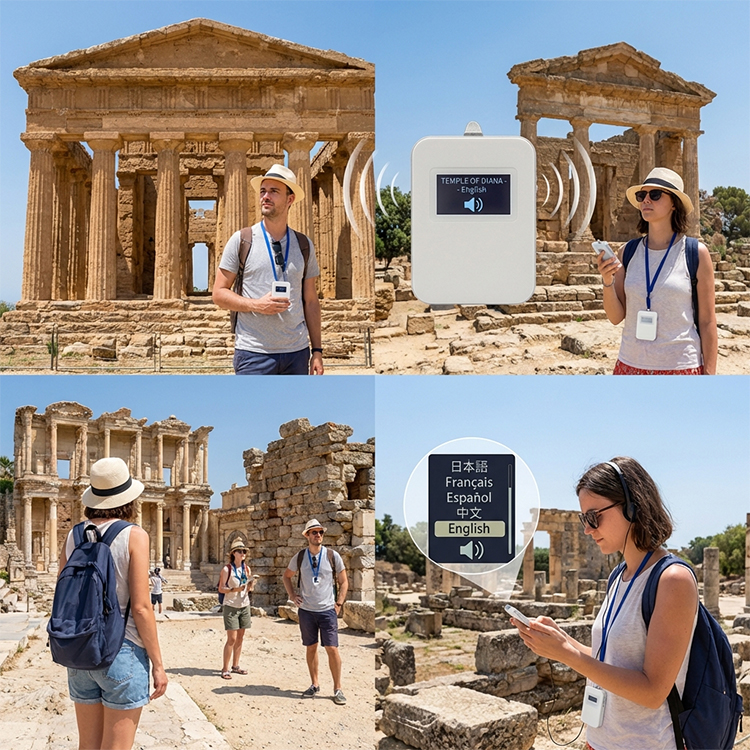
IV. Scenario-Based Selection Recommendation: YINGMI M7 Adapts to All Scenarios
YINGMI has 19 years of expertise in the audio guide industry, and its M7 model is an automatic induction audio guide specially designed for overseas venues. Relying on 2.4GHz stable transmission and RFID precise triggering technology, it adapts to most audio guide scenarios and fully matches the usage habits of overseas customers.
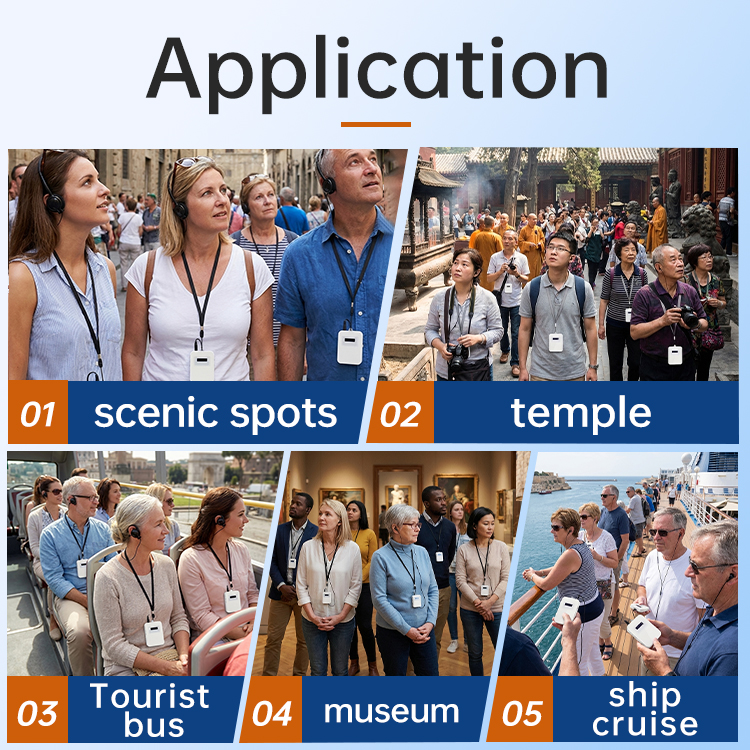
1. Museums / Art Galleries / Cultural Relics Sites: Quiet Commentary, Precise Triggering
Such venues require a quiet and immersive experience. The RFID triggering of M7 automatic induction audio guide covers up to 40 meters, and it plays commentary automatically when visitors approach exhibits without noise interference. The device supports 8 languages and can store up to 9,999 audio commentary segments, which is enough to meet the full-exhibit commentary needs of large venues, allowing international visitors to easily understand the stories behind exhibits.
2. Scenic Spots / Cultural Heritage Sites: Free Tour, Listen While Walking
Outdoor scenic spots are large with scattered spots. The M7 receiver weighs only 50g, compact and portable, bringing no burden to visitors. Its battery life lasts more than 16 hours, meeting the needs of all-day tours; the transmitter has a battery life of up to 15 months, eliminating frequent charging and maintenance, making scenic spot operation more convenient.
3. Science and Technology Museums / Corporate Exhibition Halls: Flexible Content, Strong Anti-Interference
Science and technology museums and exhibition halls have large passenger flows and numerous devices. M7 has stable signals, supports 16-level signal strength adjustment, and features outstanding anti-interference ability. It also supports quick update of commentary content, adapting to variable needs such as temporary exhibitions and brand events.
4. Car Showrooms / Sightseeing Vehicles: Exclusive Commentary, Improved Professionalism
During car launches and VIP visits, M7 can play exclusive commentary for car models automatically, enhancing the professionalism of reception; on sightseeing buses, cruise ships and other vehicles, the device triggers commentary automatically according to route spots, allowing visitors to obtain accurate information throughout the journey.
In addition, M7 supports OEM/ODM customization, including logo, frequency, battery capacity, functions and more, fully meeting the personalized needs of different overseas venues.
V. Why YINGMI M7 Is Worth Buying: Cost, Experience and After-Sales
To judge whether an audio guide is worth buying, we focus on three core dimensions: investment cost, usage experience and after-sales support. M7 has obvious advantages in all three aspects:
- Cost reduction and efficiency improvement: One-time investment replaces a large amount of manual guide costs. The device is durable and easy to maintain, with extremely high cost performance for long-term use.
- Excellent experience: Automatic triggering requires no operation, with clear and smooth sound quality, multilingual support and large-capacity storage, suitable for visitors of all ages and countries.
- Worry-free after-sales: The main unit comes with a 2-year warranty,24/7 online English technical support with a response within 2 hours, long-term spare parts supply and free firmware updates to ensure long-term stable use of the device.
As a brand with 19 years of industry experience, YINGMI products have passed EU CE certification, meeting international quality standards. It has served thousands of venues worldwide, making it a reliable and mature choice for overseas customers.
VI. Conclusion: Self-Service Audio Guide Is an Investment in Service Upgrade
Back to the original question: Is a self-service audio guide with positioning function worth buying? The answer is clear: If you want to improve visitor experience, reduce operating costs and cover multilingual reception, this device is absolutely worth buying.
It is not a fancy tech product, but a practical tool to solve real pain points. With stable automatic induction function, full-scenario adaptability, professional international certification and comprehensive overseas after-sales service, YINGMI M7 helps you achieve a comprehensive upgrade of audio guide services with reasonable investment.
If you are struggling with the audio guide solution for your venue or scenic spot, you may consider this market-proven self-service audio guide according to your scenario needs, making professional audio guide services simple, efficient and worry-free.
FAQs
Q1: What makes a self-service audio guide with positioning function better than manual guides or public broadcast?
A: It eliminates labor costs, avoids noise interference, and triggers commentary automatically when visitors approach an exhibit or spot-no buttons, no schedules, and full multilingual support.
Q2: How does the RFID automatic induction work?
A: Visitors wear a lightweight receiver. When they walk into a preset RFID trigger zone (up to 40m coverage), the device automatically plays the corresponding commentary-“sound starts when arriving, stops when leaving”.
Q3: What are the main scenarios suitable for the YINGMI M7?
A: Museums, art galleries, heritage sites, outdoor scenic areas, science museums, corporate exhibition halls, car showrooms, and sightseeing vehicles (buses/cruise ships).
Q4: How many languages and audio tracks can the M7 store?
A: It supports up to 8 languages and can pre-store 9,999 audio commentary segments-enough for large venues with hundreds of exhibits.
Q5: Is the battery life sufficient for all-day outdoor touring?
A: Yes. The M7 receiver lasts 16+ hours (800mAh), and the transmitter lasts up to 15 months-no need for frequent recharging or battery changes.
Q6: What after-sales support does YINGMI provide for overseas clients?
A: 2-year warranty on main units, 24/7 online English technical support (reply within 2 hours), long-term spare parts supply, and free firmware updates.