

As a journalist that has actually been operating in the audio guide market for 10 years, I have carried out on-site monitorings at scientific research and modern technology galleries in over twenty nations around the globe. But when I strolled right into the London Scientific Research Gallery once more in the late autumn of 2025, I was still brought in by the silver-white terminal of the analysis devices at the entryway– presentation system. A tourist from Australia was carefully touching the display with his fingertip, picking the “English– Industrial Transformation Event Location” setting. A couple of secs later on, the device instantly pressed a specialized seeing course, also noting “The 18th Century Heavy Steam Engine Event Location has less site visitors today. It is recommended to see initially.”
This scene specifically mirrors the updating and version of the event and analysis system at the Scientific Research Gallery in London over the past 3 years. This “International Scientific Research and Modern Technology Royal Residence” with 70 exhibition rooms, 200,000 displays and an 8-acre location, from the 14th-century bronze bell to the 20th-century lunar module, from the rubbing coefficient slide in the fantastic research laboratory to the “earth-shaking and earth-shaking” in the lightning simulation room, how is it clarified via a smart presentation system? Can global visitors of various languages and ages understand the development of human technical background? Today, from a market perspective, we will certainly discover the worth behind this presentation system.
The Analysis Issue of the Century-old Scientific Research and Modern Technology Gallery
Prior to we discuss the existing smart systems, we need to go back 3 years– when I visited the Scientific Research Gallery in London for the very first time, I occurred to satisfy a team of intermediate school trainees from Canada. They collected in a circle before the display of Watt’s boosted heavy steam engine in the 18th century, yet might only resent the textual summary. The educator accountable claimed helplessly, “The hands-on description will take half an hour and only in English and French. The kids wish to know the functioning concept of the heavy steam engine, yet they can not locate an ideal means.”
This is not a separated instance. As one of the leading 3 scientific research and modern technology galleries on the planet in regards to function quantity, the Scientific Research Gallery in London invites over 3 million site visitors every year, 60% of whom are global site visitors from around the globe. Prior to the smart analysis system was applied, the 3 significant “analysis dilemmas” it encountered were practically typical troubles for all global scientific research and modern technology galleries.
The dilemma of the period of displays and the deepness of descriptions
The displays in this gallery period a timeline of 600 years: from the copper clock used for expensive monitoring in the 14th century, to the Newcomen heavy steam engine in the very early 18th century, and afterwards to the lunar module and re-entry component of Beauty 10 in 1969. Conventional hand-operated descriptions are either “general” or can only cover a couple of prominent displays— for example, the first general-purpose computer system that numerous global travelers involve see specifically, yet commonly because of the long line for descriptions, they can just take a picture and leave.
The issue of multilingualism and real-time communication
One of the most headache-inducing trouble for global travelers is certainly the language obstacle. Previously, although the gallery had audio guides in English, French and German, the material was taken care of and they were not interactive. As an example, in the lightning simulation location of the “Marvel Lab”, after the team showed the experiment of “mimicing lightning striking a steel pole”, some Japanese travelers intended to ask, “Why does lightning strike sharp things initially?” Nonetheless, because of the language obstacle, they could only motion and hence missed out on the possibility to get a deeper understanding.
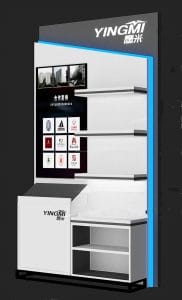
Z1 System: Adjust Displays to the practices of global travelers
In the “Digital Innovation Event Location” of an international scientific research and modern technology gallery, I saw the useful application of the Yingmi Z1 system— before a screen closet showcasing the first general-purpose computer system (ENIAC), there was a 21-inch high-def LCD screen ingrained. A vacationer from Singapore got the “interactive noticing board” beside the situation, and the display instantly turned up a computer animation of the functioning concept of ENIAC. He asked in English voice, “What’s the distinction in between ENIAC and modern-day computer systems?” The system supplied a succinct response within one 2nd, together with a comparison graph.
This Z1 system is a tailored modification we made based upon the practices of global visitors. Thomas, the head of the gallery’s technical division, informed me. From a market viewpoint, the reason that the Z1 system can satisfy the demands of global scientific research galleries depends on its remedy to the issue of “how displays can interact effectively with global site visitors”, and there are 3 essential designs behind this.
Multi-mode communication without thresholds. International visitors originate from various social histories and have differing levels of experience with the procedure user interface. The Z1 system uses three interaction techniques: “touch + voice + light noticing”. For example, in the “Rubbing Coefficient Slide” event location of the “Fantastic Research Laboratory”— there are mini slides made from timber, plastic and steel. Kids can observe the rate distinctions by moving the little rounds. On the Z1 incurable beside it, you can either touch the display with your finger to choose the description of “The concept of rubbing coefficient” or state in English, “Why do the little rounds on the plastic slide run the fastest?” The system will instantly match the matching material. Also when the youngster places the little round on top of the slide, the light-sensing tool will certainly trigger a description, “This is the fight in between gravity and rubbing.” This “knowing by doing” setting is especially preferred amongst global families with children.
From simply seeing displays to taking pleasure in different services
Lots of global travelers want the gallery’s outer items when checking out— such as mini versions of 18th-century heavy steam engines and social and innovative products with the motif of lunar modules. When the Z1 system is discussing the displays, an access for “Relevant Devices” will certainly turn up at the end of the display. After clicking on it, you can see the price and product, and additionally pick between “in-store pick-up” or “International Express distribution”. Thomas revealed me a collection of info: Because the Z1 system was introduced, worldwide orders for museum-related items have actually increased by 40%. “Several visitors, upon seeing the model on the audio guide, located it practical and put an order straight without needing to look for a shop.”
Use info to enhance the appeal of displays
As a market reporter, I pay specific focus to the “back-end capacities” of the presentation system— the Z1 system can tape the “variety of check outs”, “communication period” and “essential inquiries” of each display. As an example, info programs that the ordinary communication time of global travelers with the “lunar module” is 8 mins, and one of the most often asked question is “How do astronauts make it through in the re-entry pill?” However, the copper bells from the 14th century, although gone to by lots of people, had a reduced communication price. Based upon these info, the gallery has readjusted the material of its descriptions: it has included video clips of “information of astronauts’ lives” to the lunar module and supplemented the tale of “how it influenced the timing of navigating during that time” to the bronze bell, making the much less prominent displays likewise attract global travelers to remain.
More significantly, the “personalization ability” of the Z1 system completely matches the qualities of the event locations in global scientific research galleries. As an example, in the “Industrial Change Event Location”, the display cupboards are customized according to the dimension of the heavy steam engine. The display screen of Z1 is installed on the side of the screen closet, which neither obstructs the displays nor makes it practical for site visitors to see. In the “Fantastic Lab”, taking into consideration the multitude of youngsters, the incurable of the Z1 was made with rounded edges and made from scratch-resistant ABS plastic. “Even if it is unintentionally bumped by a kid, it will not damage,” Thomas claimed with a smile.
Zoned description of methods
The Z1 system has actually dealt with the issue of “communication between displays and site visitors”, truly addressing the market’s difficult trouble of “synchronised descriptions in numerous locations”— this is likewise what I think is one of the most deserving of recommendation for global scientific research and modern technology galleries.
Three years back, when I was speaking with in the “Agricultural Equipment Area” of the gallery, the clear voice of the description from the “Computer system Area” next door came through. A designer from Germany grumbled, “I intended to pay attention meticulously to the tale of the tractor’s development, yet I was constantly disrupted by the computer system’s description.” Now, this situation has actually entirely disappeared— since the system embraces UWB ultra-wideband positioning innovation, with a placing accuracy of ± 10cm, which can exactly determine the location where travelers lie.
When you get in the “Heavy Steam Engine Event Location”, the system will certainly trigger a description within 0.5 secs after you enter the location. When you reach the side of the event location, the descriptions will normally discolor in and out, without all of a sudden disrupting or sounding out.” Thomas took me on an experience: from the heavy steam engine location to the integrate farmer location, the material of the description efficiently transitioned from “Watt’s treatment of improving the heavy steam engine” to “How the integrate farmer changed farming production”, the quantity slowly went down from 60 decibels to 0, and afterwards rose to 60 decibels in the integrate farmer location, with no feeling of abrupidity. This “0.8-1.2 secs flexible fade-in and fade-out” is specifically the essential indicator for evaluating the “acoustic efficiency” of the zonal presentation system in the market— it prevents the shame of conventional systems making loud noises as quickly as they go into the location, and is especially ideal for the behavior of global travelers to “walk gradually”.
The more core is the “independent audio area” innovation. The event locations of the Scientific Research Gallery in London are fairly near to each other. As an example, the “Computer system Location” and the “Lunar Module Location” are just divided by a glass wall surface. However, with the twin sound decrease of “physical seclusion + electronic formula”, the descriptions in both locations will not interfere with each other. I performed an examination: when the description was playing in the computer system location, basing on the opposite of the glass wall surface in the lunar module location, I might barely listen to any type of sound. And the other way around. This kind of “non-interference” experience is specifically vital for global travelers— most of them intend to focus on the displays before them and not be disrupted by various other sounds.
The “security” of the system has actually likewise been checked in real fight. Throughout optimal hours daily, the Scientific Research Gallery in London sees countless global site visitors making use of the directed excursion system at the same time, covering numerous languages such as English, French and Spanish. However, the system sustains multi-user parallel procedure and there will be no “regularity crossover”— for example, if you pick an English description, French material will certainly never ever instantly turn up. Thomas claimed, “Last summer season, we obtained 23,000 travelers a day and the system ran without any mistakes. This was something we never ever attempted to envision in the past.”
On top of that, the “scalability” of the system likewise leaves sufficient area for the future. As an example, at the start of this year, the gallery included a brand-new event location called “AI and Future Innovation”. By simply establishing a couple of UWB putting base stations in the brand-new event location, the existing system can be attached without needing to restore the entire collection of devices. “For global scientific research and modern technology galleries, event locations are frequently upgraded and systems can be flexibly enhanced, so there is no demand to consistently spend funds.” This factor has actually been discussed by a lot of the heads of the global scientific research and modern technology galleries I have actually spoken with— scalability is a crucial factor to consider for them when picking a presentation system.
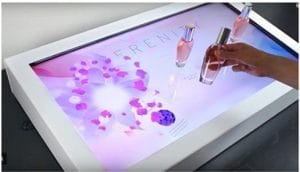
The presentation system ends up being a great aide for seeing the gallery
Throughout the one-week meeting at the Scientific Research Gallery in London, I arbitrarily spoken with over 20 global travelers. Their evaluations of the analysis system might be a lot more encouraging than technological requirements.
Lily, a senior high school pupil from New york city, United States, pertained to see with her “Scientific Research and Modern Technology Background Job”. “Before, I needed to hold a note pad to tape the info of the displays. Currently, the audio guide will certainly send out the bottom lines to my e-mail and mark the components that call for extensive research study.” She opened her phone and revealed it to me: In the description of the lunar module, she kept in mind “thermal security products for the re-entry pill”, and the system likewise instantly suggested relevant prominent scientific research short articles. “This is so useful for my research.”
The Yamada pair from Tokyo, Japan, saw the “Fantastic Research Laboratory” with their 5-year-old child. The kid was especially curious about the coefficient of rubbing of the slide. The expert showed with a computer animation “Why plastic slides are quicker than wood ones”, and he comprehended it quickly. Mrs. Yamada claimed that in the past, when she took her kid to see the scientific research and modern technology gallery, the kid constantly asked “why?” and she could not address. Currently, the audio guide has actually come to be a “short-term instructor”, “and it can also switch over to Japanese. It’s so practical.”
Pierre, a designer from Paris, France, most licenses of the “tranquility” of the zonal presentation system. The last time I came below, there were descriptions all over, yet this time around there’s none in any way. I can pay attention diligently to the tale of each display, such as the comprehensive description of the development procedure of the first computer system, along with the meeting video clips of the designers. This is extremely beneficial to me.
These authentic experiences validate the success of the upgrade of the analysis system at the Scientific Research Gallery in London— it is no more a “chilly gadget”, yet a “bridge linking displays with global site visitors”. As Thomas claimed, “We wish that every global site visitor, despite their country or language, can understand the technical tales behind these displays and really feel the power of human progression.”
When picking a presentation system, it needs to be in line with the demands
As a reporter with 10 years of market experience, I am frequently asked by the supervisors of global scientific research and modern technology galleries, “How should we pick a screen and presentation system that matches us?” It is not regarding going after one of the most costly modern technology, yet instead regarding “satisfying the attributes of one’s very own displays and the demands of site visitors”.
To start with, it is required to make clear the “core demand”.
The core demands of the Scientific Research Gallery are “offering global site visitors, resolving crosstalk troubles, and accomplishing interactive experiences”, so it has actually picked the Z1 system + UWB zoning modern technology. If it is a little scientific research and modern technology gallery with couple of displays and mostly regional site visitors, such a complicated system might not be needed. A fundamental Bluetooth audio guide can satisfy the demands.
Second of all, interest needs to be paid to “individual habits”.
The majority of global travelers choose “independent procedure and versatile communication”, so the system must be simple and easy to use, sustaining numerous languages and numerous communication techniques. As an example, the voice communication of Z1 does not require pushing way too many switches. Simply claiming one sentence can trigger it, which is quite according to the procedure practices of global travelers.
Ultimately, it is essential to connect relevance to “customer service”.
The presentation system is not something that can be just acquired; it needs long-lasting upkeep and upgrades. The maker picked by the Scientific Research Gallery in London will regularly send out individuals to examine the devices, readjust the description material according to the upgraded displays, and likewise give 24-hour technological assistance. Throughout last Xmas, a Z1 incurable malfunctioned, and the maker showed up within 2 hours to repair it, which did not influence the site visitor experience.
At the end of the meeting, I was standing in the room of the Scientific Research Gallery in London, seeing the sunshine infiltrating the glass dome and dropping on the “Lunar module” displays. A little woman from India was making use of the AR feature of the audio guide to “touch” the lunar module version on the display, her face loaded with inquisitiveness. Then, I recognized that a great screen and presentation system not just enables the displays to “talk”, yet likewise enables site visitors from various nations to really feel the appeal of modern technology— this might be the very best motivation that the “smart description change” of the Scientific Research Gallery in London has actually provided to scientific research galleries around the world.
From the old clocks of the 14th century to the lunar modules of the 20th century, the Scientific Research Gallery in London has actually brought its 600-year-old technical heritage to life with a smart analysis system. For global scientific research and modern technology galleries, the worth of this system exists not just in the modern technology itself, yet likewise in its “visitor-centered” style concept— allowing every global site visitor to understand the tales behind the modern technology in an atmosphere without language obstacles and audio disturbance.
In the future, with the development of AI multilingual modern technology and customized material generation, there will certainly be a lot more opportunities for presentation systems. Yet regardless of exactly how modern technology upgrades, the core stays the same: to bring displays more detailed to site visitors and spread out the tales of modern technology around the world. The technique of the Scientific Research Gallery in London has actually currently offered a deserving version for this training course. Yingmi Customer Service Hotline: 400-990-7677 Official website: www.it2002.com, always ready to provide you with exclusive tour plans.
FAQ
1.What is the Z1 system?
It is an advanced presentation system that improves gallery experiences via multi-mode interaction.
2.How does the audio guide work?
It supplies automated descriptions and can conserve information for visitors’ future research study.
3.Is the system suitable for children?
Definitely, with child-friendly user interfaces and interactive components.
4.Can the system handle peak visitor times?
Yes, it is developed to take care of high website traffic without interference.
5.What languages are supported?
Several languages are sustained, consisting of English, French, and Spanish.