

Friends who are engaged in overseas scenic area operation, enterprise training or museum management must have all encountered the problem of choosing a wireless audio guide – even though they have bought expensive equipment, it always has problems in actual scenarios: the signal in the scenic area is intermittent, there is always a lag when multiple people cooperate during enterprise training, and the operation of the equipment in the museum is complicated and disturts the exhibition atmosphere. In fact, it’s not that the equipment is bad, but that the right model suitable for the scene was not chosen.
YINGMI has been engaged in the interpretation and display industry for 15 years, serving over 4,000 clients worldwide, ranging from domestic 5A scenic spots to overseas museums, and has witnessed the pain points of various scenarios. Today, starting from the three core scenarios of scenic spots, enterprises and museums, I will talk to you about how to choose the right wireless audio guide and also discuss how Yingmi specifically addresses these issues.
I. Scenic area tour Guide: Stable signal, long battery life, and the ability to withstand complex environments
The environment of overseas scenic spots is mostly complex. Some are open coasts or grasslands, some are natural scenic areas densely covered with mountains and forests, and some are cultural attractions crowded with people. When choosing an audio guide, three issues need to be addressed first: no signal interruption, no voice crossover for multiple groups, and comfort for tourists to wear. If it can also support multiple languages, it will be even more worry-free.
A customer from a scenic area in Southeast Asia once joked with us that the audio guide they used before had no signal when tourists entered the mountains and forests, and they could only rely on the tour guide Shouting at the top of their lungs. During peak season, when multiple groups visit simultaneously, the channel crosstalk is severe. Tourists in Group A can only hear the explanations of Group B, resulting in a particularly poor experience. Later, after switching to the team explanation system of Yingmi, all these problems were solved. The Yingmi system has made many optimizations for scenic area scenarios.
1. In terms of signal and anti-interference
It adopts UHF ultra-high frequency technology combined with 4G FSK signal modulation, just like opening a “dedicated highway” for the interpretation signal. Whether it is blocked by mountains and forests or crowded with tourists, it can be heard clearly within a 200-meter range. Wi-Fi and Bluetooth signals cannot interfere either. Just like the Taihu Lake Scenic Area in Suzhou and Longhu Mountain in Jiangxi Province in China, this system is used. Even when tourists walk along the lakeside trails or mountain paths, the sound of the explanations remains very stable.
2. In terms of device battery life and portability
Battery life is also a must-have for scenic spots. It can’t run out of power by noon. The transmitter of Yingmi can last at least 8 hours on a single charge. If you choose the E8-GT main speaker, it can still last for 15 hours. From the opening of the scenic area to its closing, it is more than enough to support it. The receivers are made extremely light. The in-ear type weighs only 18 grams and the ear-hook type only 25 grams. Tourists can wear them for a whole day without feeling any discomfort in their ears. Moreover, there is no distinction between left and right ears. Just pick them up and you can use them without spending time adjusting them.
3. In terms of multi-team and multi-language adaptation
Yingmi has also taken into account the multilingual function that overseas scenic spots need most. The E8-GT main speaker is equipped with 4GB of memory, capable of storing 9,999 segments of explanation content. It supports 8 common language types and can also be customized for minor languages according to customer needs. For instance, in European scenic spots, English, French, German and Spanish can be installed simultaneously. Tourists can choose the language they are familiar with by wearing a receiver, without the need for additional translators. This also saves labor costs for the scenic spots.
4. In terms of management convenience
In terms of management, it is also worry-free. Yingmi has dedicated charging boxes and storage boxes. The charging box can charge 36 or 48 units at a time. There’s no need to plug in wires one by one; just put them in the slot. It also comes with ultraviolet disinfection. After tourists use it, they can disinfect it, ensuring hygiene. The storage box is made of aluminum alloy and has shock-absorbing cotton inside, so the equipment won’t be bumped when placed inside. When the scenic area needs to transport the equipment to different scenic spots or add more equipment during peak season, it is convenient to move.
II. Corporate Training/Meetings: Clear sound quality, easy operation, and no lag when multiple people cooperate
Overseas enterprises have different requirements for tour guides when conducting training or holding product launches compared to scenic spots. The core is to have clear sound quality. After all, what is being discussed are all professional content. If one parameter is not heard clearly, it will affect understanding. If the trainers and teaching assistants, or the leaders and product managers need to cooperate with the explanations, there should be no delay. The participants may come from different countries. The operation of the equipment should not be too complicated; otherwise, just teaching how to use it will waste time.
Previously, I was helping A German company with a product launch event. The equipment they were using before caused a delay when two people spoke simultaneously. As soon as A finished speaking, B’s words began to pour in, leaving the audience completely confused. When the meeting room is crowded, echoes can still be heard in the back row, which is a particularly bad experience. Later, when we switched to the team explanation system of Yingmi, all these problems disappeared.
1. In terms of sound quality guarantee
The Yingmi system employs high-fidelity audio coding technology and dedicated digital noise reduction. Whether it’s a small meeting room with dozens of people or a large venue with hundreds, it can filter out environmental noise and make human voices clear. Many enterprises use this set of equipment when conducting new product training. Even if they talk about complex technical parameters, the participants can understand them clearly.
2. Pay more attention to the aspect of linkage and operational convenience
The strength of Yingmi lies in multi-person cooperative explanations. The system supports “simultaneous teaching by the main instructor and assistant instructor”, with each instructor carrying a transmitter. The signal transmission delay can be controlled within milliseconds, which is completely imperceptible to the human ear. For instance, when the trainer explains the product features, the teaching assistant can add cases at any time, and the connection is very smooth. There is no need to wait for one person to finish and then another to speak as before, and the efficiency has improved significantly.
The operation is also simple. There is an LCD screen on the transmitter, allowing you to clearly see the channel, volume and battery level without making any mistakes. Press the SET button on the receiver to turn it on, and it will automatically search for the signal and connect, eliminating the need for manual channel adjustment. Even if it is the first time for overseas employees to use it, there is no need to teach them. They can use it immediately after picking it up and will not delay the meeting progress due to operational issues.
3. Scene adaptation and management
、If you are holding a product launch event and need to play background music or video audio, the Yingmi system also supports it. You can directly connect it to your mobile phone or computer and transfer it in, and the sound quality will not deteriorate. After the meeting, the equipment can be put away quickly. The charging boxes can be charged in batches, and the storage boxes can be stored uniformly. The administrative staff do not need to work overtime to organize the equipment.
Iii. Museums/Art Galleries: Silent and intelligent, safeguarding a quiet exhibition atmosphere
The core of museums and art galleries is to be quiet. The atmosphere should not be disrupted by the loud sound of the audio guide. Tourists have different visiting paces. Some want to take their time to look around, while others prefer to walk quickly. Not everyone can follow one tour guide. Overseas museums have a large number of visitors, so multilingual explanations are a must. The equipment should also be lightweight so that visitors won’t feel tired after wearing it for a long time.
I previously talked with the partners of the British Museum. They used traditional audio guides before. Either a tour guide led a group of people and spoke through a loudspeaker. If the volume was too loud, it would disturb others. Either tourists press the buttons themselves to select exhibits, often making mistakes and having a poor experience. Later, I used the self-service and zoned explanation systems of Yingmi, and the effect improved a lot.
1. In terms of noise reduction and intelligent sensing
The system of Yingmi is all for listening through headphones without any external sound. The museum is quiet and visitors can focus on viewing the exhibits. The zonal explanation system also supports intelligent sensing. When visitors walk to any exhibition area, the device will automatically play the corresponding explanation of the exhibits without the need for manual pressing, achieving the goal of “explaining wherever they go”. For instance, when a tourist approaches an oil painting, the receiver automatically tells the author of the painting and the background of its creation. When they move on to the next exhibit, it automatically switches again, which is particularly convenient.
2. Multilingual and content storage aspects
The multilingual function is also in place. The self-service interpretation system can accommodate multiple languages. Tourists can choose by wearing a receiver and no longer need to rent equipment for different languages. For instance, museums like the National Museum of Chinese Nationalities and the Henan Provincial Museum can support overseas tourists in English, Japanese, Korean and French. Tourists can listen slowly and gain a deeper understanding of the culture behind the exhibits.
3. In terms of lightweight and comfort
The equipment is also lightweight, available in both in-ear and ear-hook types. It is light in weight and won’t feel stuffy even after wearing for a long time. The exterior design is simple and elegant, matching the cultural atmosphere of the museum without looking out of place.
4. Management and maintenance aspects
In terms of management, Yingmi has a self-service rental system. Tourists can rent and return equipment through a mobile phone mini-program without queuing for registration, thus saving the museum a lot of manpower. After the equipment is used up, the charging box charges it in batches, and the storage box stores it uniformly. Maintenance is also simple. Yingmi also offers a lifetime warranty. If there is a problem with the equipment, it can be sent back for repair within 10 working days. Museums don’t need to worry about milestone malfunctions affecting their use.
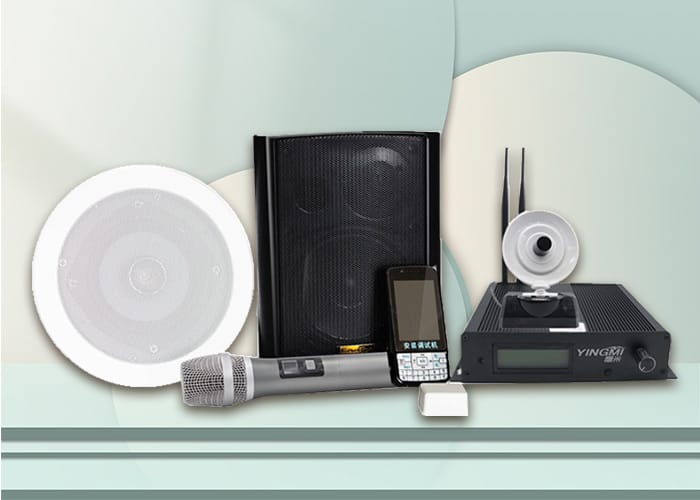
IV. Choose Yingmi: With solid technology and excellent service, it is recognized by overseas users
Whether it is a scenic spot, an enterprise or a museum, when choosing a wireless audio guide, in addition to considering the scene compatibility, the technical strength and service of the brand should also be taken into account. Yingmi is a national high-tech enterprise with its own patented technology. Its products have passed international certifications such as CE and ROHS, and are reassuring to use overseas.
In terms of service, Yingmi has done an excellent job. There is a 90-second quick response before sale. If you are not sure which one to choose, you can also get a free sample for testing. Try it in your own scenario first. If it works well, then buy it. If on-site inspection is required during the sales process, such as when a scenic area needs to plan channels or an enterprise needs to set up meeting rooms, the team of Yingmi can provide on-site assistance. We offer a lifetime warranty for after-sales service. If there are quality issues within 3 months, we can exchange the goods unconditionally. Within 1 year, we provide free repair. If the equipment doesn’t work after two repairs, you can directly switch to a new model. Overseas users don’t need to worry about no one taking care of the equipment when it breaks down.
Now, Yingmi’s products have been exported to many countries in Europe, America and Asia. Among the customers it has served, there are scenic spots in Southeast Asia, enterprises in Europe and museums in the Middle East, all of which have given positive feedback. CCTV has also reported on Yingmi, which is a global supplier of Huawei and its quality is guaranteed.
V. Conclusion: Choose the right one, not the expensive one
Finally, I’d like to give you a reminder: When choosing a wireless audio guide, don’t blindly look at the price. The key is to see if it can be adapted to your scenario.
Scenic area tour guide: Prioritize those with stable signals, long battery life, and support for multiple languages. The Yingmi team’s interpretation system is the top choice.
Enterprise training/meeting: Choose a system with clear sound quality, easy operation, and support for multiple people to speak simultaneously. The Yingmi team’s explanation system can meet these requirements.
For museums/art galleries, the most suitable options are the silent, intelligent sensor, and lightweight Yingmi self-service interpretation System and the zoned interpretation system.
Yingmi has been in business for 15 years. It does not merely sell equipment but makes adjustments based on the specific needs of overseas users. For instance, if scenic spots need to add more languages, enterprises need to customize meeting modes, or museums need to adjust the sensing range, all these issues can be resolved through communication.
If you are still unsure which one to choose for your scenario or want to know more about the details of overseas compatibility, feel free to contact Yingmi at any time. We have a professional team to help you analyze and ensure that you select the most suitable wireless guide, making every guide smooth and efficient.