

In recent years, many overseas cultural and tourism venues, whether it’s old museums in Europe or popular scenic spots in Southeast Asia, have quietly upgraded their equipment – replacing traditional manual guides with self-service tour guides. It’s not that people don’t want to use tour guides, but the self-service interpretation devices have precisely solved many troubles for overseas scenic spots and museums, such as the multilingual needs of international tourists, high labor costs, and difficult management.
YINGMI has been engaged in the production of tour guide equipment for 15 years and is a national high-tech enterprise. Our self-service tour guide systems are used in 5A scenic spots such as the National Museum of Chinese Nationalities, the British Museum, and Taihu Lake in Suzhou. Our products are also sold to dozens of countries around the world all year round. Today, starting from the actual needs of overseas users, let’s talk about why self-service tour guides have become a standard feature, and also discuss what makes Yingmi’s equipment so good that it has been recognized by so many overseas customers.
I. Tourist Experience: From “Following the Tour guide” to “Visiting However you Like”
The most important thing for museums in overseas scenic spots is the experience of tourists. After all, there are many international tourists and their demands are diverse. There were really a lot of problems when I explained things manually before. For instance, tourists have to closely follow the tour guide, with the pace completely determined by others – when they come across exhibits they like and want to take a closer look, the tour guide has already moved forward. Even if you are not interested in something, you still have to force yourself to listen. For foreign tourists, language is an even greater problem. Either they can’t find a tour guide who knows their native language, or the translator speaks incoherently, leaving them with nothing to remember after the tour. There was also the noise during the team’s explanations, which stood out particularly in the museum. It was hard to quietly look at the exhibits.
All these problems were solved as soon as the self-service tour guide came out. Visitors can stroll at their own pace, with the equipment being introduced wherever they go. They can listen to the exhibits they like repeatedly without having to rush around. The multilingual function directly breaks down language barriers. We won’t mention commonly used languages like English, French and German. Even minor languages can be customized in advance. Foreign tourists no longer have to be at a loss when facing the exhibits. And it’s listening through headphones. You can hear clearly yourself and it doesn’t disturb others. The entire visiting environment is much more comfortable.
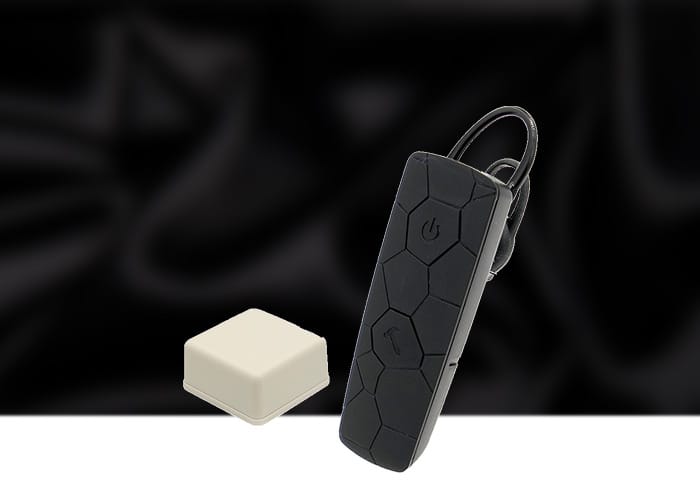
Yingmi has put a lot of effort into the visitor experience. Let’s take our i7 ear-hanging self-service tour guide for example. It is made of imported silicone and designed according to the curvature of the ear. Even after wearing it for a long time, it won’t feel tight. The entire machine weighs only 20 grams. When hung on the ear, it feels as if it’s not worn at all. Tourists won’t get tired even if they spend a whole day there. The most considerate thing is that it doesn’t go into the ears, which is much more hygienic than the kind that can be stuffed into the ears. Overseas scenic spots and museums are used by so many people every day, so hygiene must be in place.
Functionally, it is also particularly worry-free. The i7 has a sensing range of 35 meters. When visitors approach the exhibits, they don’t need to press any buttons; the device starts talking by itself, truly achieving the goal of “talking wherever you go”. In response to the multilingual demands overseas, our system can be pre-installed with more than 8 commonly used languages. If customers have special requirements, we can also customize for niche languages. For instance, museums in Europe use our equipment, which can accommodate English, French, German and Spanish simultaneously. Whether local or international tourists, they can choose the language they understand and have a tour experience before coming up.
Ii. Operating Costs: From “Keeping a bunch of tour guides” to “One device replacing One person”
The most headache-inducing issue for museums in overseas scenic spots is the labor cost. The wages for workers are high and management is also troublesome. In the past, with manual explanations, these problems were even more prominent.
1. It costs a lot. Hiring a tour guide overseas is not cheap.
During the peak season, there are many tourists and a lot of people have to be hired. During the off-season, no one comes and the tour guides are idle, so it’s a waste of money. Then there is the issue that the quality of the explanations cannot be guaranteed. Some guides are professional, while others are not so good. During their explanations, they either omit key information or speak uninterestingly, leaving a bad impression on tourists. There are also conflicts in team reservations and complaints from tourists, which give the operation team a headache every day.
The self-service tour guide just saves everyone the trouble and money. A piece of equipment is like a “gold medal tour guide” that works non-stop for 24 hours. It doesn’t need to be paid, doesn’t have to take care of food and accommodation, and can still maintain a high level of explanation all the time. The content of the explanations is uniformly recorded by a professional team and stored in the cloud. If you want to update it, you can directly operate remotely – for example, when a scenic area holds a special exhibition or a museum changes its exhibits, there is no need to retrain the guides. Just modify the explanations, which is very convenient.
2. In terms of team reception, the equipment of Yingmi is also very efficient.
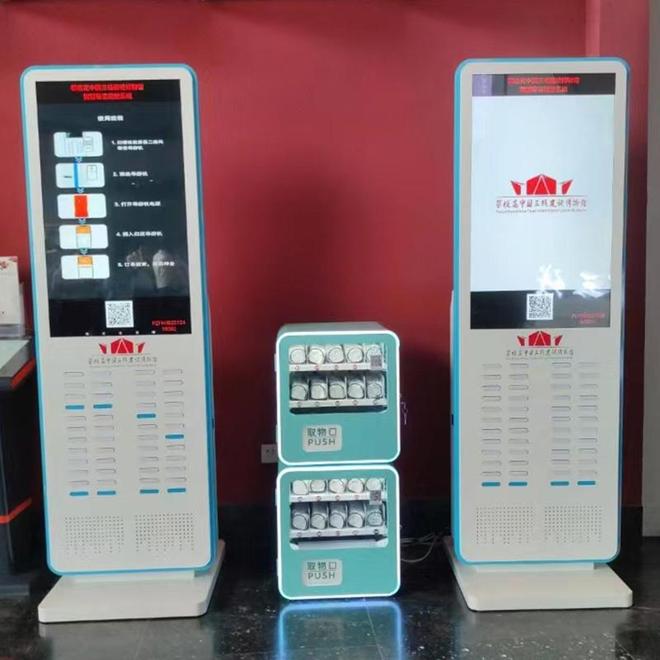
Whether it’s a study tour group of dozens or a tour group of over a hundred people, the batch distribution and collection of equipment are very fast, which is more than three times more efficient than the previous manual group leading. We also have dedicated charging boxes that can charge multiple devices at a time. They come with a disinfection function. When the devices are used up, they can be put in and both charged and disinfected. There’s no need for scenic spots and museums to specially hire someone to clean them, saving a lot of trouble.
Our self-service shared tour guide machine rental system is more intelligent. Tourists can rent and return the equipment through the mobile phone mini-program without queuing for registration. The entire process does not require manual supervision. Customers can see through the back-end how many devices they have rented and how long they have been using them. The data is clear and straightforward, making management particularly convenient. Overseas users who have used it all say that this system not only saves manpower but also eliminates many trivial matters, allowing the operation team to focus on more important work.
Iii. Cultural Dissemination: From “Just Watching the Fun” to “Truly Understanding the Ins and Outs”
The core of the scenic area museum is to disseminate culture, but in the past, with manual explanations, a lot of cultural information could not be passed on at all.
If there are not enough guides, tourists can only look at the text display boards. The characters are small and numerous. They can’t remember them even after looking for a long time. After strolling around, it’s like “skimming through the flowers”, and they have no idea about the stories behind the exhibits at all. Even if there are tour guides, due to limited time, tourists may not be able to concentrate, and many important cultural details will still be missed. Cultural dissemination is far from profound.
Self-service tour guides can explain culture more thoroughly and vividly. The museum in the scenic area can record the history, stories and significance of the exhibits into the equipment and tell them in the form of stories. It is interesting for tourists to listen and easy for them to remember. For instance, when it comes to a cultural relic, it is not only necessary to mention its date but also to explain how it came about, what it was used for at that time, and what special value it holds. Only in this way can tourists truly understand the culture rather than just looking at the surface.
Yingmi has a lot of experience in cultural dissemination. Our self-service interpretation system can store 9,999 pieces of interpretation content. Even for large museums and scenic spots, no matter how many exhibits there are, it is sufficient. The content of the presentation was done by cultural scholars and professional broadcasters and hosts together. It was not about dryly reading materials but telling stories in vivid language.
For instance, when the Henan Museum uses our equipment to explain bronze wares, they would say, “This tripod was a sacrificial vessel at that time. What do the patterns on it represent and how did the ancients use it?” After hearing this, visitors would feel as if they were listening to a story and remember it very well. The Taihu Lake Scenic Area in Suzhou tells local folk customs and combines them with legendary stories. After visiting, tourists not only enjoy the scenery but also learn about the local culture. With our equipment, overseas scenic spots and museums can also thoroughly explain their cultural characteristics, allowing tourists to truly “understand” them rather than just leaving an impression of having “been there”.
Iv. Management Model: From “Managing by Feeling” to “Speaking with Data”
Nowadays, no matter what industry one is in, digital management is emphasized, and overseas scenic spots and museums are no exception. In the past, with manual explanations, management was extremely rough and there was no data support at all.
For instance, not knowing which exhibits tourists like or which area is crowded, one has no direction to optimize the exhibition layout. Tourists complained that they “didn’t hear the explanations clearly” and “couldn’t understand the exhibits”, but they had no idea where the problem lay and could only deal with it passively. This management approach is simply unable to enhance the quality of service.
Self-service tour guides can help everyone achieve digital management. Through the positioning function of the device, it can be known which exhibits tourists stay in front of for a long time and which areas are less crowded. Analyzing these data can optimize the exhibition display – for example, if no one visits a certain exhibit, it might be because the explanation is not attractive enough, then the explanation words can be changed. If a certain route is too crowded, adjust the tour route. Moreover, with the use of self-service tour guides, scenic area museums will appear more “intelligent”, in line with the current development trend of the cultural and tourism industry, and may also receive relevant policy support.
Yingmi’s self-service tour guide system has a dedicated cloud data backend. Customers can view real-time data on device usage and visitor behavior, and reports can also be generated. When making decisions, there is data support, and there is no need to make decisions based on intuition. Through the background, the explanation content can also be remotely updated and the sensing range adjusted without having to go to the site for operation, which is particularly convenient.
V. Brand Image: From “No Distinctive Features” to “Everyone Wants to Copy”
The competition in the overseas cultural and tourism market is particularly fierce. To attract tourists, brand image is very important. Sometimes a small detail can make you different from others.
If the surrounding scenic spots and museums are still using loudspeakers and manual tour guides, you can first use self-service tour guides. This will immediately make you seem “tech-savvy” and “humanized”, and tourists will think you are more professional and dedicated. When tourists have a good experience, they will share it on social media, which is equivalent to promoting it for you for free. Government inspections and media interviews may also come to you, and your brand’s popularity will keep rising.
The self-service tour guide of Yingmi is not only practical but also has an attractive design. Its appearance is simple and fashionable, which matches the cultural atmosphere of the scenic area and museum very well and does not look out of place. Moreover, the equipment is lightweight and user-friendly. Tourists can feel your dedication, and their favorable impression of the brand will also increase.
Vi. Yingmi: A Reliable Partner for Overseas Scenic Spots and Museums
Self-service tour guides have become a standard feature in museums and scenic spots around the world because they truly address everyone’s pain points. The recognition that Yingmi has gained from so many overseas customers is attributed to its 15 years of accumulated technology, quality and service.
Now, Yingmi’s self-service tour guides have been sold to many places in Europe, America and Asia, enhancing the experience, reducing costs and optimizing management for overseas scenic spots and museums. If you are in the cultural and tourism industry overseas and want to upgrade your interpretation services, Yingmi is definitely a reliable choice – we don’t just sell equipment, but also help you solve problems, making cultural dissemination smoother and operation easier.
If necessary, we can also help you create a personalized overseas adaptation plan, including what equipment to choose, what language to select, and how to install and debug. We will guide you step by step to implement it, allowing you to use a user-friendly self-service explanation system without any worries. Yingmi Customer Service Hotline: 400-990-7677 Official website: www.it2002.com, always ready to provide you with exclusive tour plans.