

In the “Origin of Old Shanghai Civilization” exhibition area of the Qingpu Museum in Shanghai, as soon as a team of travelers came close to the Songze black pottery, the explanatory voice automatically rang out: “This is a black pottery single-ear pot made by the Songze individuals 6,000 years earlier. The body is as fine as paper. Check out these patterns, they are all hand-carved …”; At the “Beauty of Shanghai’s Water Culture” exhibit location next door, an additional group of people were paying attention to the tale of water conservancy devices, and their voices did not disrupt each other. In the past, throughout the summer season peak period, the explanations in both exhibit locations would certainly have been mixed up long ago, and site visitors had to obtain near to the guides to listen to plainly– this adjustment is all thanks to the Yingmi MC200 zoned explanation system.
I.The “Annoying Occurrences” of Qingpu Museum in the past: The stories of Great cultural relics are difficult to inform
The Qingpu Museum houses the earliest civilized memories of Shanghai. The jade wares of the Songze Culture, the water conservancy devices of the Ming and Qing Dynasties, and the exhibits with the theme of the Red Building all need to be well clarified. Before installing the MC200, these stories were constantly kept back by all sorts of troubles.
1.During peak period, there are lots of teams and their voices clash
Every summertime holiday and vacation, greater than 20 teams can see the museum in a day. The two exhibit locations, “The Source of Old Civilization” and “The Beauty of Water Culture”, are close to each other and the space is open. One side talks about pottery, the other about water gateways. The noises blend with each other like a “vegetable market”. Teacher Wang, who was in charge of the explanations, said, “Last year during the ‘Grand View • Red Chamber’ exhibit, when I was leading a group to discuss Daiyu burying flowers, the voice of the tour guide next door was even louder than mine. Some travelers directly said, ‘I can’t hear plainly. Can you highlight the key points again?’ By the end of the day, my voice was so hoarse that I couldn’t speak, and the travelers didn’t understand either.”
To prevent sound, the museum has to allow teams to see at various times. Popular exhibit locations often have lines for half an hour. Many people can’t wait and leave, not even catching the question “How old is the Songze Culture?”
2.The exhibit area change was “cut off”, and the sense of immersion was lost
The visiting route of the museum is attached. From one exhibit area to the next, traditional equipment needs to be switched by hand. Either the guide is busy pushing buttons while the visitors stand and wait. Either walk to the new exhibit area, where the equipment is still talking about the previous content. Once when leading an elderly group, when they reached the water conservancy display cabinet, the equipment was still talking about pottery. The elderly person asked, “Why are you still talking about jars?” Teacher Wang had no choice but to apologize and adjust it again. The originally meaningful historical tale was suddenly broken into “fragments”.
What’s more frustrating is that in areas with lots of metal display cabinets, the signal is prone to interference, and there is constantly a delay when switching devices. Sometimes, when travelers have already reached the next exhibit area, the explanatory sound follows slowly, and the experience is particularly poor.
3.Foreigners want to recognize, but they can’t speak the language
In recent years, travelers in Shanghai have become increasingly international. Overseas visitors account for 15% of the Qingpu Museum, but there are only brochures in both Chinese and English. Multilingual explanations need to be booked a week beforehand, and they only understand English and Japanese. Once, a French couple spent half a day in the Red Chamber exhibit area. They used a translation software application to look up “Daiyu Burying Flowers”, but it was translated as “Daiyu Burying Flowers”. The staff could only explain it in simple English. The couple smiled and nodded, but their eyes were full of regret. Sister Li, the operation manager, said, “We want foreigners to recognize the history of Shanghai, but due to the language barrier, no matter how good the culture is, it can’t be passed on.”
II.Yingmi MC200: By addressing the concerns, explanations become smoother
Yingmi’s team didn’t immediately move the equipment upon arrival. Instead, they spent a week in the museum: determining the dimensions of the exhibit areas, evaluating the sound environment, and taping the peak hours of the group. Lastly, they chose the MC200 solution, and each feature specifically resolved the problems in the museum.
1.Multi-channel independent sound field: Each speaks its own way without crosstalk
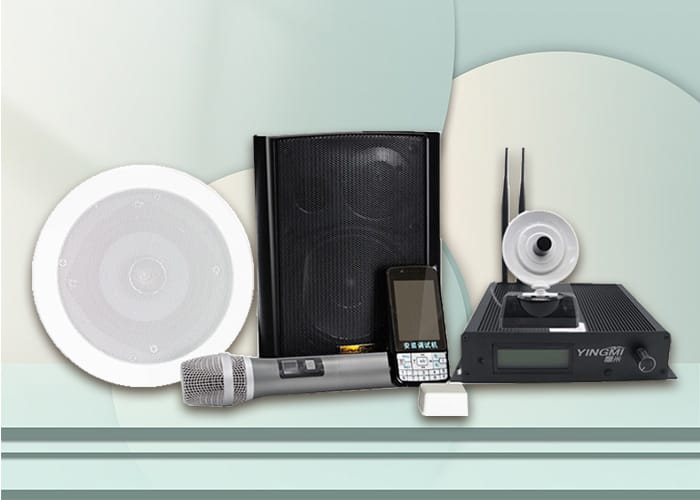
The most impressive feature of the MC200 is its “multi-channel independent sound”, which has set up “exclusive sound zones” for each of the eight core exhibit areas. The technical team installed signal collectors and speakers in each exhibit area, using U-band high-frequency signals of 860-870 MHZ. They also added SOC embedded noise reduction technology. The explanation sound was only transmitted within their own exhibit area. Even if two exhibit areas were 10 meters apart, there would be no crosstalk.
Now, “The Source of Old Civilization” talks about pottery, and “The Beauty of Water Culture” regarding water conservancy. Even when the three teams visit at the same time, there won’t be any noise. Teacher Wang said, “I wear a lapel microphone and speak at a typical volume. Vacationers can hear me plainly no matter where they stand. During the Red Building exhibit, it got 25 groups a day, 10 more than before, and there was no need to stagge the time.”
According to the data of the museum, after using the MC200, the waiting time for the group was lowered from 40 minutes to 10 minutes, and the proportion of travelers saying they “could hear plainly” increased from 62% to 96%.
2.LD positioning automatic switch: Audio starts when people get here, no demand to wait
The LD high-precision positioning technology of MC200 has addressed the problem of “interference during zone change”. The technical team installed positioning points at the connection points of the exhibit areas, with an error of less than half a meter. As soon as visitors step into the new exhibit area, the explanations will instantly switch. After leaving, the audio in the original exhibit area stopped and there was no demand to press the buttons by hand.
” Now, when leading a tour group from the pottery area to the water conservancy area, as quickly as they crossed over, the tour guide changed from black pottery to water gates. Vacationers never felt disturbed.” Teacher Wang said that previously, the signal was poor in areas with lots of metal display cabinets. The technical team also optimized the cordless module, and the signal efficiency was boosted by 150%. Even in the jade exhibit area, the switching was very accurate, and there was never a single mistake.
3.Multilingual + Pre-stored audio: Foreigners can also recognize the culture
To assist in foreigners, the MC200 supports 8 languages (English, Japanese, Korean, French, Spanish, German, Russian, and Arabic), and can also store 9,999 segments of explanation content. The translation is not a rigid one but rather an adaptation based on the understanding practices of foreigners. When telling European and American vacationers about Songze jade wares, it would add, “This is similar to the sacrificial feature of old Egyptian gold masks.” When talking about Shanghai’s water culture to the Japanese, one would contrast it with the water administration strategies of Lake Biwa.
The tour guide can choose the language in advance on the host and also connect to the smart phone to play the pre-stored audio. After visiting the Red Chamber exhibit area, French vacationer Pierre said, “In the past, when I came to the Chinese Museum, I could only see. This time, I understood the story of Daiyu burying flowers and also learned about the connection between ‘Dream of the Red Chamber’ and Shanghai. It was so worth it.” Now, the complaints from abroad travelers have dropped from 28% to 3%, and many people are still sharing their experiences of “visiting the Qingpu Museum with the MC200” online.
4.Sound and light linkage + emergency compatibility: Cultural warmth in the details
The “sound and light linkage” attribute of MC200 has further boosted the atmosphere of the exhibit area: upon entering “The Source of Old Civilization”, as quickly as the explanation starts, the warm yellow lights come on, making one feel as if they have returned to Songze 6,000 years ago. When it comes to “The Beauty of Water Culture”, the lights turn light blue, matching the water conservancy model, as if standing by the lake and looking at the water gateway. Sister Li said, “Before, the lights were constantly on and I didn’t feel anything. Now, the sound and lights move together. Vacationers say, ‘Visiting the exhibit is like enjoying a cultural film.'”.
What’s even more considerate is that the MC200 can be linked to the museum’s background music and emergency news: when a leader comes, the background music automatically reduces, making the explanations clearer. In case of any kind of emergency, the emergency broadcasting system can issue notifies in numerous languages via the system, ensuring safety and not delaying the visit.
Iii. The existing Qingpu Museum: Visitors can recognize it well and the museum is well-managed.
1.Vacationers experience “from shallow to deep”.
The average stay time of travelers has raised from 1.2 hours to 2.5 hours, and the proportion of “deep visitors” who can see more than six exhibit areas has risen from 35% to 72%. The museum has performed a survey. Among the visitors who listened to the MC200’s explanations, the proportion of those who remembered the “Songze Cultural Time” and “characteristics of water culture” has increased by 50% compared to before. One trainee said, “In the past, I would forget what the patterns on the pottery represent after visiting. This time, I know what the patterns on the pottery represent. I’m going to compose it in my structure when I return.”.
2.Operation management “from complex to simple.
There is no demand to arrange people to collaborate the team’s off-peak hours anymore, and the labor cost has been reduced by 40%. The MC200 host is tiny and can be installed in just two days. For maintenance, only the signal collector needs to be checked. The charging box can charge 36 devices at the same time and comes with ultraviolet disinfection, so you don’t have to fret about it. Sister Li said, “In the past, three people were in charge of the equipment during peak period. Now, one person is enough and can also help travelers answer more questions.”.
3.The cultural influence “from the inside out” has become a criteria in the industry.
The MC200 zoned interpretation system of Qingpu Museum has also become a “clever tour guide model” in Shanghai’s cultural and museum industry. Venues such as Shanghai History Museum and Shanghai Natural History Museum have come to visit and want to make use of this “affordable and highly adaptable” solution. In March 2025, Qingpu Museum was picked as a “Shanghai Smart Cultural Relics and Museums Demonstration Project” with this system, attracting coverage from media outlets such as Jiefang Daily and Wenhui Daily, and further expanding the reach of cultural dissemination.
Conclusion: Let the stories of cultural relics be heard much more plainly by more individuals.
Nowadays, when visiting the Qingpu Museum, it is common to see travelers strolling through the exhibit areas following the explanations: elderly people are listening carefully in front of the pottery, foreigners are checking out the exhibits of the Red Chamber with headphones on, and children are asking questions around the water conservancy models. The sound was clear and the lighting was timely. The story of the cultural relics finally reached more individuals’s hearts.
Yingmi has always believed that a good interpretation system is not a “machine”, but a “megaphone”– helping museums clarify their culture plainly and helping visitors recognize history. In the future, we will certainly aim to make the MC200 even better. We will certainly add AI interaction to allow visitors to ask questions and introduce more foreign languages to make it easier for foreigners to recognize. This way, whether it’s the Songze cultural relics of the Qingpu Museum or historical exhibits from overseas, they can all be heard and born in mind by more individuals. Yingmi Customer Support Hotline: 400-990-7677 Official website: www.it2002.com, constantly prepared to supply you with exclusive tour plans.
FAQ
Q1: How does the Yingmi MC200 system reduce operational costs?
A1: By automating audio switching and reducing the need for manual coordination, the MC200 cuts labor costs by 40%. It also minimizes maintenance with features like UV disinfection and easy charging.
Q2: What is the effect of the MC200 on visitor engagement?
A2: Visitor stay time increased from 1.2 to 2.5 hours, and the proportion of visitors exploring multiple exhibitions rose from 35% to 72%. The system’s clear audio and immersive features enhance deep engagement.
Q3: How does the MC200 handle signal interference?
A3: The system uses U-band high-frequency signals and optimized wireless modules to improve signal performance by 150%. This reduces delays and ensures reliable operation in metal-rich environments.
Q4: What recognition has the MC200 received?
A4: It has been adopted as a benchmark for smart guided tours in Shanghai and was selected for the “Shanghai Smart Cultural Relics and Museums Demonstration Project” in 2025, gaining media coverage.
Q5: How can other venues implement the MC200?
A5: Venues can contact Yingmi via their hotline or website for customized solutions. The system is designed for easy installation and adaptability to various cultural settings.