

There is an art museum that mainly showcases contemporary art. It had been plagued by the problem of providing adequate audio guide services. The paintings in the exhibition halls were placed closely together, and the distances between many exhibition areas were less than 5 meters. The old-style automatic audio guide devices always had interference, and tourists would hear one thing after another; the museum had about 40% foreign visitors, but the audio guide devices only supported two or three languages, so many foreign friends could only look at the text descriptions of the paintings to understand the background and artistic value of the works; during weekends when there were a lot of visitors, the interpreters simply couldn’t keep up, and tourists had to wait in line for more than half an hour to get the audio guide devices. Later, they replaced it with the wireless audio guide system from Yingmi, and unexpectedly, all the previous problems were solved – tourists could rent them themselves without waiting for the interpreters; the two sensing modes didn’t cause interference no matter how dense the exhibits were, and the explanations were clear and understandable; there were multiple languages available, and foreign visitors could also understand the stories behind the works. In fact, when choosing a wireless audio guide device for an art museum, the core is to find one that is suitable for the scene. Yingmi just hit the right spot for the needs of art museums.
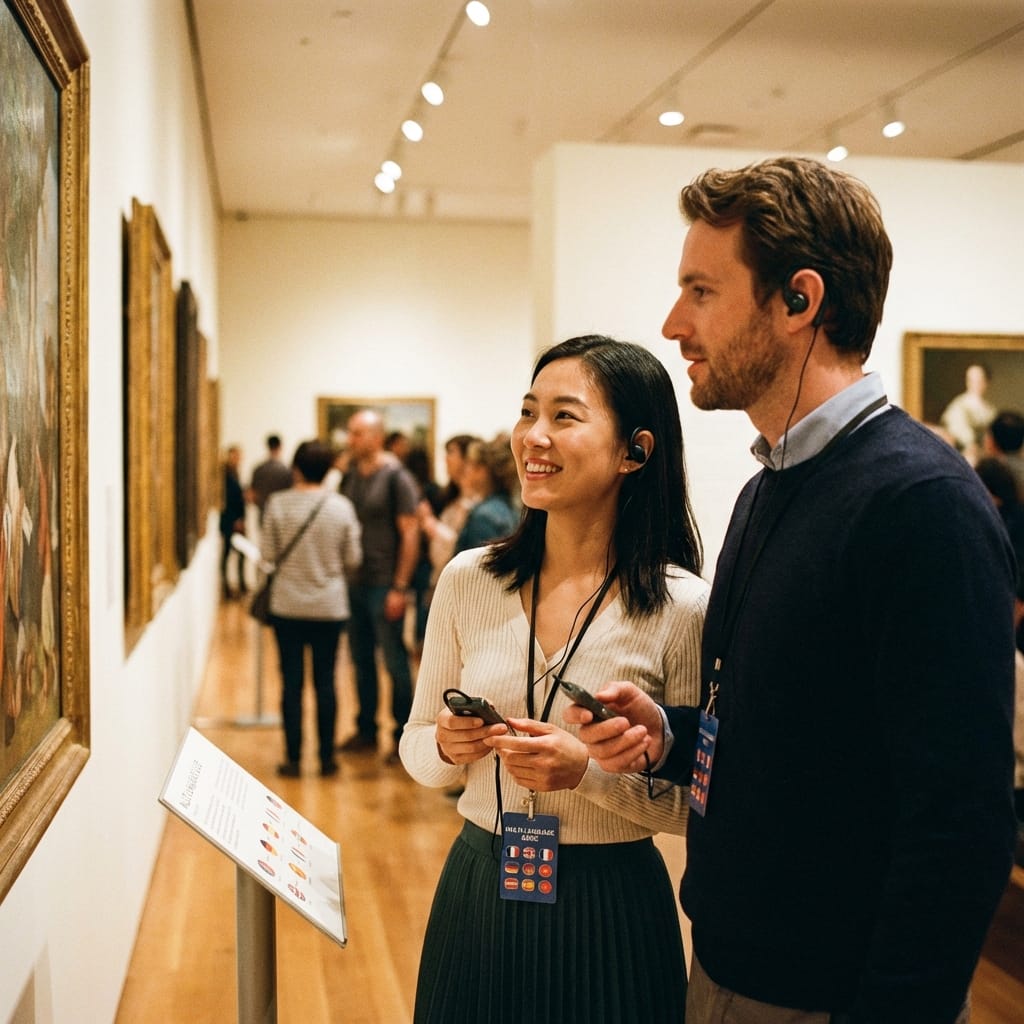
I.The actual pain points of choosing an audio guide device for an art museum
1.Exhibits are crowded together, and the audio guide devices always cause interference
To display more works, art museums often place the exhibits closely together. Some exhibition areas have two exhibits with a distance of less than 5 meters. Traditional automatic audio guide devices are prone to “confusing” the positions and triggering the explanations of adjacent exhibits. Tourists want to listen to the introduction of one painting clearly, but they are interrupted by the explanations of other exhibits. The immersion experience of the exhibition is completely disrupted.
2.Insufficient languages to keep up with the demand, and international visitors can’t understand
Nowadays, more and more foreign visitors come to art museums to view exhibitions. However, many audio guide devices only support a few languages such as Chinese and English. Visitors from other languages can only rely on text descriptions to understand the exhibits and can’t deeply know the creation background and artistic value of the works. The experience is greatly reduced, and the international service level of the venue is also lowered.
3.Noise interference + complex operation, inconvenient to use
When there are many visitors in the art museum, the environment is inevitably noisy. Ordinary audio guide devices usually have poor sound quality and become indistinct when the distance is a little far. Some devices have complex pairing steps that foreign visitors can’t understand the operation instructions and need to be guided by staff repeatedly, which is both labor-intensive and delays the visitors’ viewing time.
4.Short battery life + troublesome management, requiring much effort
Many audio guide devices can only last for 4-6 hours after a charge, which can’t cover the entire operation time of the art museum for a whole day. Moreover, there is no dedicated storage and charging equipment, and the devices are scattered for charging and storage, which not only makes management troublesome but also poses hygiene risks. It is not suitable for public rental use.
II.The preferred scene adaptation: Yingmi’s wireless audio guide system
1.Dual sensing design, solving the problem of dense exhibits
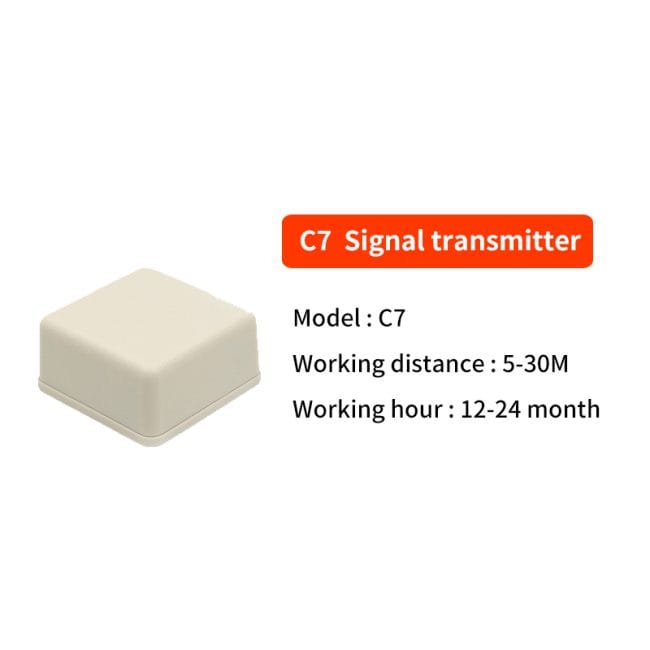
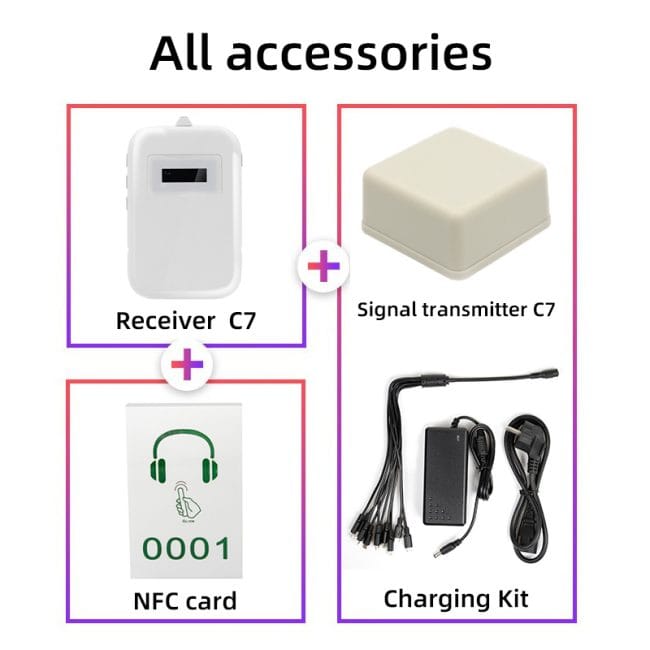
The Yingmi C7 audio guide has two sensing modes: automatic sensing and NFC touch. It is fully compatible with the exhibition characteristics of art museums. In open areas, it uses automatic sensing, and when tourists enter the interpretation area, the device will automatically play the corresponding content without manual operation; if the exhibits are placed closely and the spacing is small, it switches to NFC touch mode. Tourists simply touch the NFC card next to the exhibit with the navigation device to hear the exclusive explanation, and there will be no interference anymore. This function has been tested in thousands of exhibition halls, even if the exhibits are less than 5 meters apart, the interpretation will not be wrong, and the accuracy is extremely high.
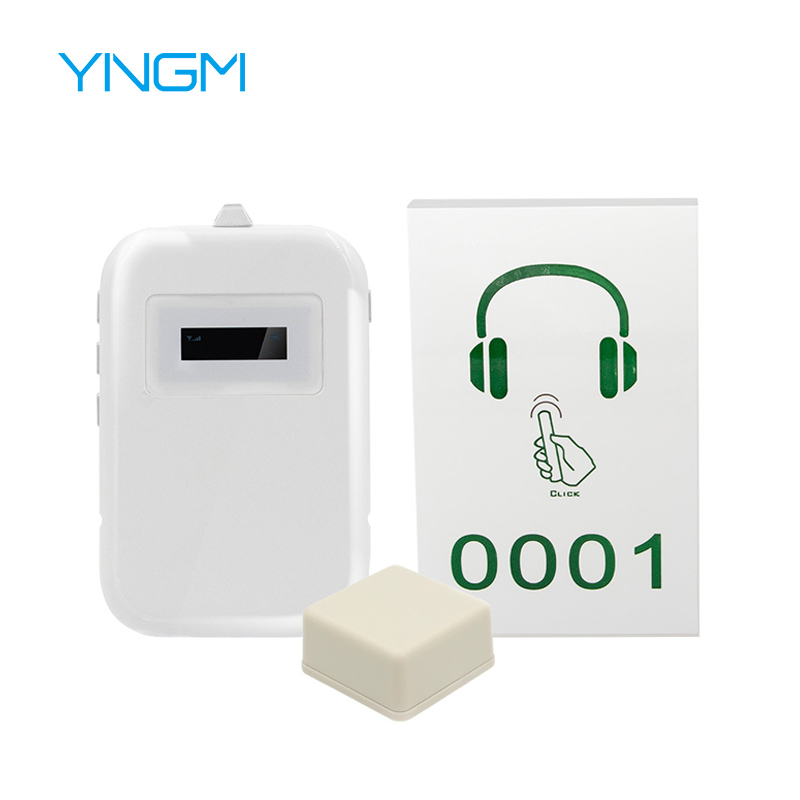
2.Multiple languages + high-definition sound quality, suitable for both domestic and foreign visitors
The C7 supports more than 8 languages and can store up to 9,999 explanations. Whether it’s common languages or minority languages, they can be pre-recorded. Moreover, it uses SOC embedded integrated digital noise reduction technology, which can filter out environmental noise, so even if there are many people and noisy in the exhibition hall, tourists can clearly hear the explanations, just like having an interpreter introducing one-on-one. The device is ear-mounted, with ergonomic design, not in-ear, and won’t cause ear pain after long-term wearing, and it can also avoid hygiene problems caused by shared devices.
3.Simple operation + Global compatibility, no learning curve required
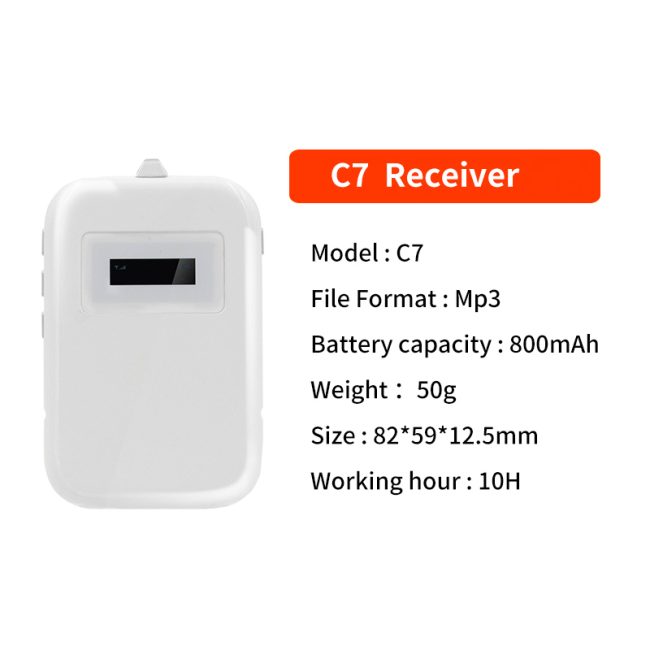
The operation of C7 is extremely simple. Just press the button to turn it on and it will automatically pair without any complex settings. Coupled with multi-language graphic instructions, even foreign tourists can learn how to use it by just looking at it. The accompanying charging box supports a wide voltage range of 100V-240V, allowing it to be used directly in any country without the need for an additional transformer. This is particularly convenient for hosting international tourists or overseas art galleries.
4.Long-lasting battery life + Convenient management, reducing operational effort
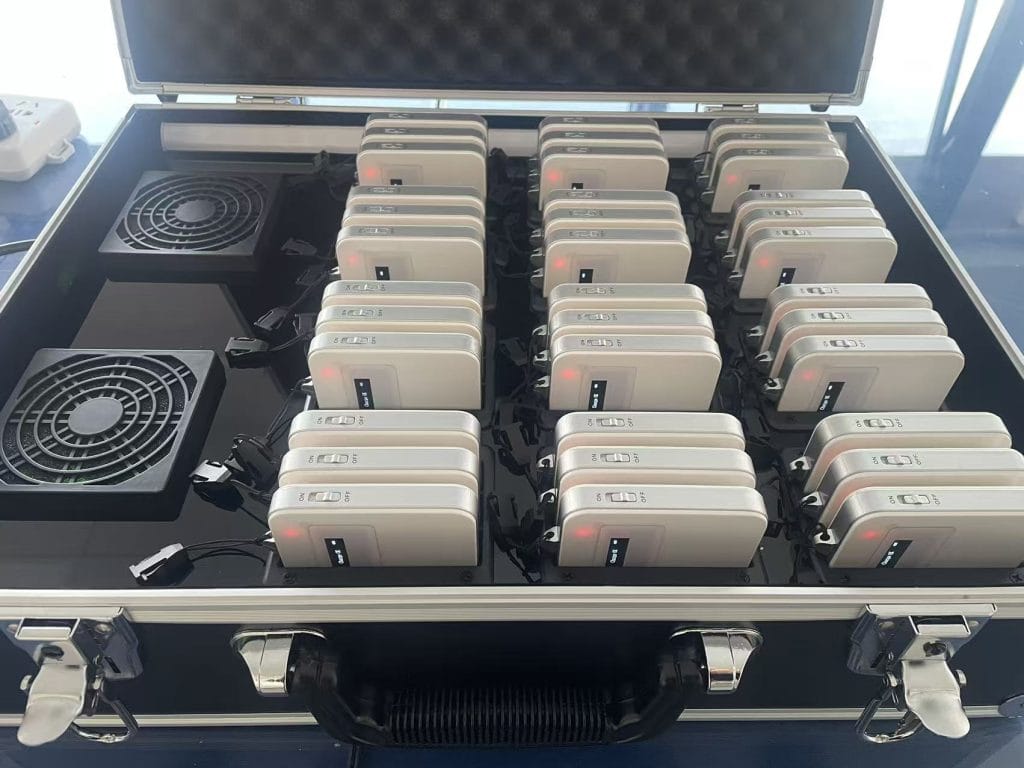
C7 is equipped with an 800mAh PMU safety intelligent lithium battery. After charging once, it can operate continuously for over 10 hours, fully meeting the operational needs of the art gallery throughout the day. The accompanying charging box can charge 45 devices simultaneously at once. Some models even have an ultraviolet disinfection function. Charging, storage, and disinfection are all done in one step, significantly reducing the management costs of the venue. The signal transmitter uses a long-lasting lithium battery, which needs to be replaced every 2-3 years. Subsequent maintenance does not require too much effort.
Comparison Table
| Feature / Challenge | Traditional Audio Guide | Yingmi C7 Audio Guide System |
| Signal Interference | Common in dense exhibits (<5m apart), causing overlapping audio. | Dual Sensing Modes (Auto + NFC touch). No interference even in crowded layouts. |
| Language Support | Often limited to 2-3 languages (e.g., CN, EN). | Supports 8+ languages, customizable packages. |
| Ease of Use | Can have complex pairing; requires staff guidance. | One-button operation, auto-pairing, pictorial guides. |
| Sound Quality | Often poor in noisy environments; sound degrades with distance. | Digital noise reduction (SOC embedded tech); clear, high-definition audio. |
| Battery & Management | Short battery life (4-6 hrs); scattered charging; hygiene concerns. | 10+ hours battery life; organized charging case (45 units) with optional UV disinfection. |
| Global Compatibility | May require voltage adapters for international use. | Charging case supports 100V-240V; ready for global use. |
| After-sales & Service | Varies by supplier; maintenance can be cumbersome. | One-stop solution (device + case + support); fast 90-sec response; free samples/testing available. |
III. Targeted Solutions
1.Precise explanation solution: Switch between modes as needed
Yingmi will provide on-site investigation services. Based on the size of the art gallery’s exhibition areas and the density of the exhibits, they will customize the installation plan for the sensing equipment. In densely exhibited areas, NFC sensing cards will be placed in priority, and automatic sensing transmitters will be installed reasonably in open exhibition areas to enable precise explanations in each area. Tourists can control their viewing pace themselves and do not have to passively listen to explanations.
2.International service solution: Multiple languages + Simple operation
Based on the visitor source structure of the art gallery, an exclusive language package can be customized. Whether it’s exhibit descriptions or venue guides, they can all be made into multilingual versions. At the same time, a simple and clear graphic operation guide will be provided, and the buttons on the equipment are all iconically designed. Even if the language is not understood, tourists can quickly learn to use it through the icons.
3.Operation management solution: Equipment service one-stop solution
Provide “equipment + charging box + after-sales” one-stop service. The charging box is designed in a layered structure, facilitating batch storage and charging, and it does not occupy space. All equipment has passed EU CE and RoHS certifications, ensuring quality. Each device undergoes 5 strict tests to ensure long-term stable operation. The after-sales response is particularly fast, with a connection within 90 seconds. Free technical support and sample testing are also provided, allowing the venue to use with confidence.
IV. Conclusion
Since its establishment in 2007, Yingmi has been dedicated to the research and development of audio guides for 18 years. It has provided intelligent guided tour solutions to thousands of art galleries and museums worldwide. Its products have been exported to various regions including Europe, America, and Asia. With its design tailored to specific scenarios, stable performance, and comprehensive services, Yingmi has become the preferred brand for many cultural venues.
For art galleries, choosing the right wireless audio guide can not only solve current service problems but also enhance the professional image and internationalization level of the venue. Yingmi’s wireless tour guide system precisely meets the scene requirements of art galleries. Through technology, it makes the guided tour service more personalized and efficient, allowing every visitor to deeply experience the charm of art.
If your art gallery is facing issues such as insufficient accuracy in guided tours, difficulty in meeting multilingual needs, or cumbersome management operations, you might want to take a look at Yingmi’s customized solutions.
FAQ
Q1: Why is interference a common problem with audio guides in art museums, and how does Yingmi solve it?
A: Art museums often place exhibits close together (sometimes less than 5 meters apart). Traditional automatic sensors can trigger overlapping explanations. Yingmi’s system offers dual sensing modes: automatic sensing for open areas and precise NFC touch sensing for dense exhibit arrangements. This eliminates cross-talk, ensuring clear, accurate playback even in crowded spaces.
Q2: Does the Yingmi system support multiple languages for international visitors?
A: Yes. The Yingmi C7 audio guide supports over 8 languages and can store up to 9,999 audio tracks. Custom language packages can be created based on your visitor demographics, ensuring a comprehensive experience for guests from around the world.
Q3: Is the device easy for visitors to use, especially those unfamiliar with the technology?
A: Absolutely. The device operates with a simple one-button power-on and auto-pairs instantly. It comes with multilingual pictorial instructions. The intuitive icon-based design allows users of any language to start using it immediately without staff assistance.
Q4: How does Yingmi address the operational challenges of managing and maintaining audio guide devices?
A: Yingmi provides a complete management solution. The devices feature a 10+ hour battery life. The accompanying charging/storage case can charge 45 units simultaneously, and some models include UV sterilization. This centralized system simplifies storage, charging, hygiene, and distribution, significantly reducing staff workload.