

Temples are places that hold a thousand years of culture and religious beliefs. Explaining this matter is quite special – one must accurately and thoroughly convey the historical context and religious connotations without spoiling the unique tranquility and solemnity of this place. In the past, there were either not enough human tour guides or the time was insufficient, and the quality of their explanations was uneven. Those handheld audio guide devices require queuing and a deposit when rented. They need to be repaired when broken and disinfected after use. Not only are they troublesome, but sometimes they can also disturb others. They are really not suitable for the temple setting.
Nowadays, smart tourism is becoming increasingly popular, and the QR code tour guide system is gradually becoming the first choice for many temples. Yingmi, which has been making tour guide system for many years, has long understood the needs of temples and specially customized a suitable solution. This not only makes cultural transmission smoother but also makes tourists feel more comfortable during their visit. It can be said that it has perfectly combined experience and practicality.

I.When choosing a audio guide for a temple, these points are the most important
When choosing an audio guide for a temple, it’s not just about picking one that can make sound. All aspects need to be taken into account to be truly useful.
1.The content must be accurate and profound
Every detail in the temple has its own particularities – how the dougong brackets in the Great Buddha Hall are erected, which Buddhist story is depicted in the murals, and what history is hidden in the inscriptions on the steles – none of these can be talked about randomly. Whether it is ordinary tourists who want to get a general understanding or believers who want to delve deeper into the religious connotations, there must be authoritative and accurate interpretations without any mistakes.
2.One must protect the tranquility of the temple
Temples are places for spiritual practice and praying for blessings. Peace and tranquility are what truly suit one’s taste. The previous handheld audio guide devices would make a sound when turned on or off, and they would also chat with tourists when they handed over. Sometimes, human tour guides have to use loudspeakers. When the volume is too loud, it can completely disrupt the tranquility of the temple and may even disturb the ongoing religious activities. Therefore, a good audio guide should provide “quiet service” and not cause any trouble.
3.It should support multiple languages and be understandable to foreign tourists as well
Nowadays, more and more foreigners come to China to visit temples and want to learn about our culture. If they could only listen to explanations in Chinese, they would be completely at a loss. Therefore, the audio guide system should be able to switch between multiple languages, whether it is English, Japanese, Korean, French or Spanish, so that foreign tourists can also understand smoothly. Only in this way can the culture of the temple be spread further.
4.It is easy to maintain and does not add any burden to the temple
Most temples’ operating funds either come from the money of incense offerings or from ticket sales, which simply cannot afford large expenditures. If you buy a bunch of expensive equipment and have to find someone specifically to watch over and repair it, the cost is too high. Therefore, the deployment of the audio guide should be simple, not cost too much money, and the later maintenance should be worry-free. Moreover, it should not damage ancient buildings and cultural relics. Only in this way can the temple be used for a long time.
II.QR code tour guide system precisely meets the needs of the temple
The QR code tour guide system is used by scanning codes with mobile phones. Each scenic spot has a unique code, which precisely solves the troubles of traditional explanations and has particularly obvious advantages.
1.No need to touch any additional equipment
Tourists only need to take out their mobile phones, open wechat and scan the QR code. There is no need to download an APP, queue up to rent equipment or pay a deposit. They can immediately listen to the explanations. The whole journey was quiet and peaceful, without any unnecessary noise. It neither disturbed others’ prayers nor allowed me to fully immerse myself in the atmosphere of the temple. After a thousand-year-old temple was put into use, the number of tourists’ complaints decreased by more than half, mainly because there was no longer any equipment noise to cause trouble.
2.The content and forms are diverse, which can vividly tell the “story” of the temple
Qr code tour guide system are not just about listening to sounds; they also allow you to view pictures, videos, and even engage in AR interactions. For instance, by scanning the code, you can watch high-definition videos of how Buddha statues are made and how murals are restored. The Sutra Repository and the Bell Tower, which are not open to the public, can be viewed through a 360°panoramic view. By scanning ancient buildings with AR, you can restore their former appearance and even virtually experience Buddhist rituals. With so many presentation methods, whether it’s the difficult religious doctrines or the complex architectural structures, they can all be explained clearly. Ordinary tourists can have a fresh look, and culture enthusiasts can also delve deeply into them.
3.You can freely switch between multiple languages, and even foreign tourists can understand the tour
A good QR code tour guide system can support more than ten languages. After foreign tourists scan the code, they can switch to their native language by themselves. Whether they are overseas believers seeking the roots of religion or foreign tourists visiting cultural heritage sites, they can all accurately grasp the essence of the temple and no longer have to wander around aimlessly due to language barriers.
4.Low cost, quick deployment, and easy maintenance of the temple
The QR code tour guide system is much cheaper than the traditional handheld audio guide, with a cost of only about one-tenth. There’s no need to purchase a bunch of equipment or carry out wiring and construction. Just make a batch of waterproof and sun-proof QR code labels and stick them beside the Buddha statues and at the entrances of the halls. You won’t be afraid of wind and sun exposure, and they will be ready for use very soon. If you want to update the content later, you can do it in the background without changing the tags. There is no need to specifically hire someone to manage the equipment. Over the course of a year, a considerable amount of money and manpower can be saved, which is particularly suitable for the operation of temples.
5.Be able to view data and make flexible adjustments
Sometimes, temples have religious festivals or when there are new research findings and you want to update the explanation content, you can directly change it in the background of the QR code tour guide system, which is very convenient. Moreover, data can be seen in the background – which scenic spots have more people scanning the code, which language of explanations tourists prefer to listen to, and how long they listen on average. With these data, temples can adjust the tour routes, optimize the key points of explanations, and make the services more and more to the tourists’ taste.
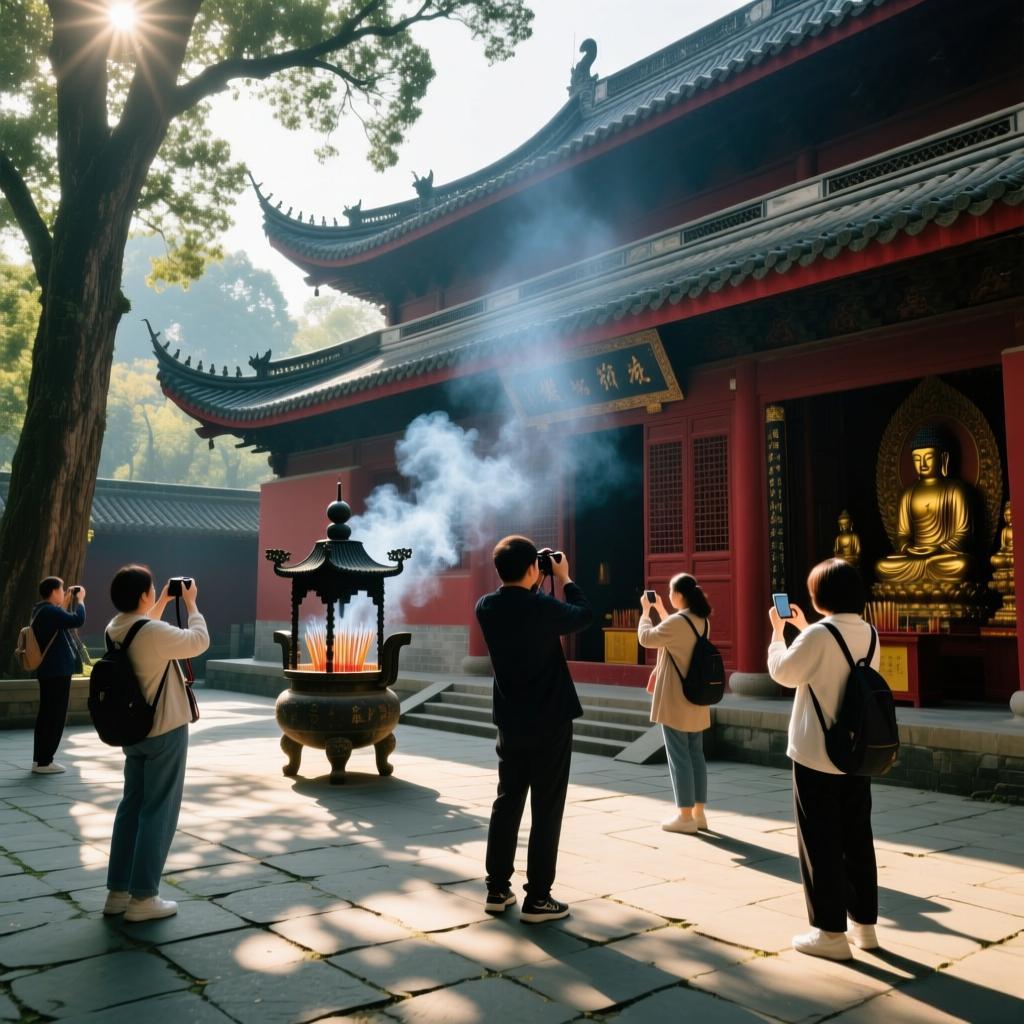
III. Yingmi QR Code Tour Guide System: The Exclusive Guide Helper for temples
There are many QR code tour guide systems on the market, but Yingmi has been making tour guides for so many years that it really has a thorough understanding of the needs of temples, and its solutions are particularly practical.
1.The content is specially customized to ensure accuracy and professionalism
Yingmi knew that temple explanations could not be taken lightly, so she specially invited religious research experts and historians to sort out the content together. Whether it is the concept of “not establishing characters” in Zen temples or the symbolic meanings of Buddha statues in Tibetan Buddhism, they should all be verified clearly first and then presented in plain yet professional language. It not only respects religious traditions but also enables tourists to understand it without any deviation.
2.It is compatible with the temple environment and reliable to use
Some parts of the temple are open-air, some are damp, and some have poor signal. The QR code labels of Yingmi are all waterproof, sun-proof and wear-resistant, so you can stick them anywhere with peace of mind. The system also supports offline caching. Even if tourists go to places with weak signals such as the Sutra Repository or the underground palace, they can still listen to the explanations normally without sudden interruptions. Moreover, it consumes less battery and data for your phone. You can use it for three or four hours without any problem, so you don’t have to worry about range anxiety.
3.From start to finish service, the temple doesn’t have to worry
Yingmi offers full-process services to temples, from the initial design of the plan, to content production, tag installation, and then to the later maintenance, all with professional teams following up. They will plan where to post the QR code based on the architectural layout of the temple, neither missing the core scenic spots nor spoiling the appearance of the ancient buildings. In the later stage, if the temple staff want to update the content or view the data reports, they don’t need to understand complex technologies. They can operate in the background. If you encounter any problems, there will be someone responding 24 hours a day, which is particularly worry-free.
4.With the addition of interactive functions, young people also love to come
Nowadays, when young people visit temples, they not only want to enjoy the scenery but also have some fresh experiences. Yingmi has added AR interaction to the system. After scanning the code, tourists can play “Cultural Treasure Hunt” – by scanning the Buddha statues and steles, they can unlock hidden religious stories and historical knowledge. You can also virtually experience lighting incense to pray for blessings and copying scriptures. While having fun, you will remember the temple culture. After a Zen temple did this, the proportion of young tourists rose from one third to nearly 60%, and traditional culture could also be passed down by the young.
Audio Guide Comparison for Temples
| Feature | Traditional Handheld Guides | QR Code Tour Guide System |
| Key Issue | Can be noisy, requires rental/maintenance | Solves noise and logistics problems |
| Core Requirement | Accurate content, preserves tranquility | Meets requirement effectively |
| Multi-language | Often limited or unavailable | Easy self-switching for foreign tourists |
| Cost & Maintenance | High cost for purchase, rental, and repair | Very low cost, easy to deploy and update |
| Visitor Experience | May involve queuing and carrying devices | Quiet, uses visitor’s own smartphone |
IV.Practical Cases Speak for Themselves: QR code Tours make Temples More popular
In Zhejiang Province, there is a thousand-year-old temple that has long been troubled by the problem of tour guides: during the peak season, there are not enough human tour guides, and during the off-season, the tour guides are idle. It’s troublesome to rent and return handheld audio guides, and there are always people complaining about the noise. Foreign tourists came. Because they couldn’t understand the explanations, they just strolled around for a while and then left. Later, they introduced the Yingmi QR Code Tour guide System. Qr codes were pasted beside 12 core halls, 8 steles and 6 main Buddha statues. It supports four languages: Chinese, English, Japanese and Korean, and covers everything from architectural regulations to religious ceremonies.
The system has been in use for half a year. Among the eight tourists, nearly seven can scan the code to listen to the explanations. This is more than double the number of people renting the equipment before. The average time tourists spend in the temple has also increased by about ten minutes. The satisfaction of foreign tourists has increased significantly. They also share on overseas social media platforms, and the number of related posts has increased by half. More importantly, the cost of temple Tours has been reduced by over 70%. Staff no longer have to be busy managing equipment and can focus on cultural inheritance and tourist services.
There is also a Zen temple that held a “Zen Treasure Hunt” event through the AR interaction of Yingmi. Visitors can scan the code to find Zen elements, unlock Zen stories, and complete tasks to get an electronic blessing card. Unexpectedly, it attracted so many young people to come and take photos. Now, there are more and more young tourists in the temple, and traditional culture has become more down-to-earth.
V.Conclusion
In fact, the core of temple explanations is quite simple: it is necessary to preserve the solemnity and purity of this place, while also ensuring that the culture and beliefs can be understood and passed on by more people. The QR code tour guide system requires no additional equipment, costs little and is not noisy, which precisely meets the needs of temples. After years of developing audio guides, Yingmi has been able to precisely address the pain points of temples in terms of content customization, environment adaptation, and subsequent services, providing one-stop solutions.
Nowadays, whether it is a thousand-year-old temple or a newly-built one, more and more of them are using the Yingmi QR code tour guide system. Foreign believers can explore the roots of their faith in their native languages, ordinary tourists can follow the explanations to learn about the historical background, and young people can experience the charm of traditional culture through interaction. With just one code in hand, one can understand the thousand-year-old cultural heritage of the temple. This not only enables the cultural value of the temple to be fully exerted but also makes this inheritance last longer.
FAQ
1. Q: Can this system effectively serve foreign tourists?
A: Absolutely. A well-designed system supports multiple languages (e.g., English, Japanese, Korean). Foreign tourists can simply scan the code and select their preferred language, allowing them to deeply understand the temple’s culture without language barriers.
2. Q: Is the QR code tour guide system expensive and difficult for temples to install and manage?
A: No, it is a cost-effective and low-maintenance solution. The initial cost is significantly lower (around one-tenth) than traditional handheld audio guides. It involves simply placing durable, weather-proof QR code labels. Content updates are done digitally via a backend system, requiring no physical hardware changes or specialized technical staff for daily management.
3. Q: How does a QR Code Tour Guide System help maintain the temple’s peaceful atmosphere?
A: It enables a completely silent, self-guided experience. Visitors use personal headphones, eliminating noise from device rentals, loudspeakers, or group chatter. This allows for individual contemplation without disturbing others.
About us
HEFEI HUMANTEK. CO., LTD. has been dedicated to the research and development and production of tour guide devices for 18 years. Our company mainly deals in team tour guide systems, self-service audio guide systems, multi-channel tour guide systems, and intelligent presentation systems. As an innovative enterprise, Yingmi Technology holds multiple core patents and technical certifications, and its strength is highly recognized. The company possesses H4 national patent core technology, a 7S product guarantee system, and a 9G service system throughout the entire life cycle, ensuring zero accidents from the first unit to one million units, all for the reliable delivery of products and services to customers! The company is committed to creating industry-leading intelligent tour guide solutions through a strategy of integrating online and offline as well as domestic and international interaction, and promoting a comprehensive upgrade of cultural and tourism display experiences.