

In recent conversations with many museum operations managers, a common confusion has emerged: museums now face an increasingly diverse range of reception needs. They have to host exclusive group visits such as government and enterprise inspections and research exchanges, while also catering to a steady stream of individual visitors and international tourists on a daily basis. So, which is the better choice—a tour guide system or an audio guide? As an analyst with years of experience in the audio guide industry, I have witnessed the entire process of R&D and product launch for brands like Yingmi, which boasts 19 years of industry experience. I have also accumulated plenty of practical experience in the real-world application of museum equipment. Today, starting from actual needs, I will talk about how to choose between these two types of explanation devices.
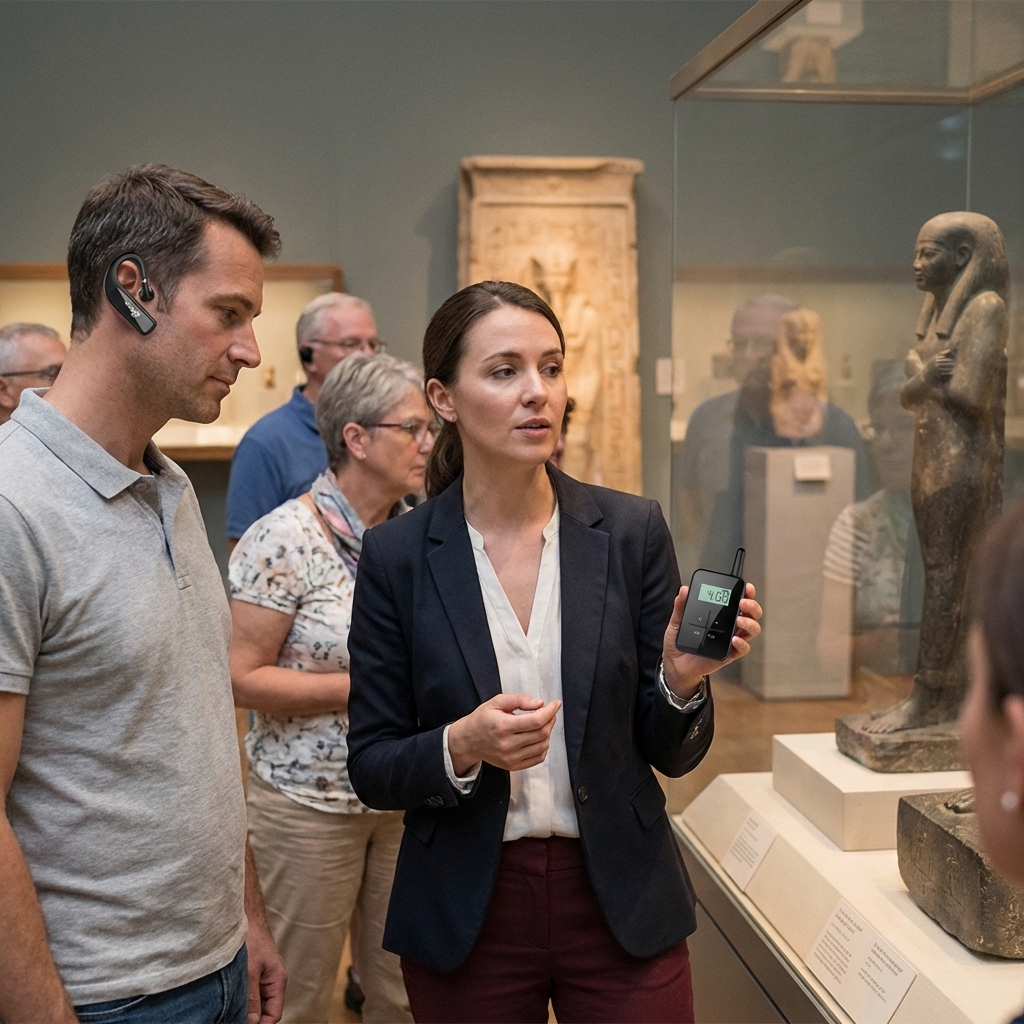
I. Tour Guide System: An Efficient Communication Tool for Museum Group Reception
The tour guide system is a mainstream device for organized group receptions in museums, designed around the core needs of group visits. It plays an irreplaceable role in professional reception scenarios, with its functions and performance fully meeting the museum’s group service requirements.
1.1 Core Design: A Synchronous Listening Mode Led by the Tour Guide
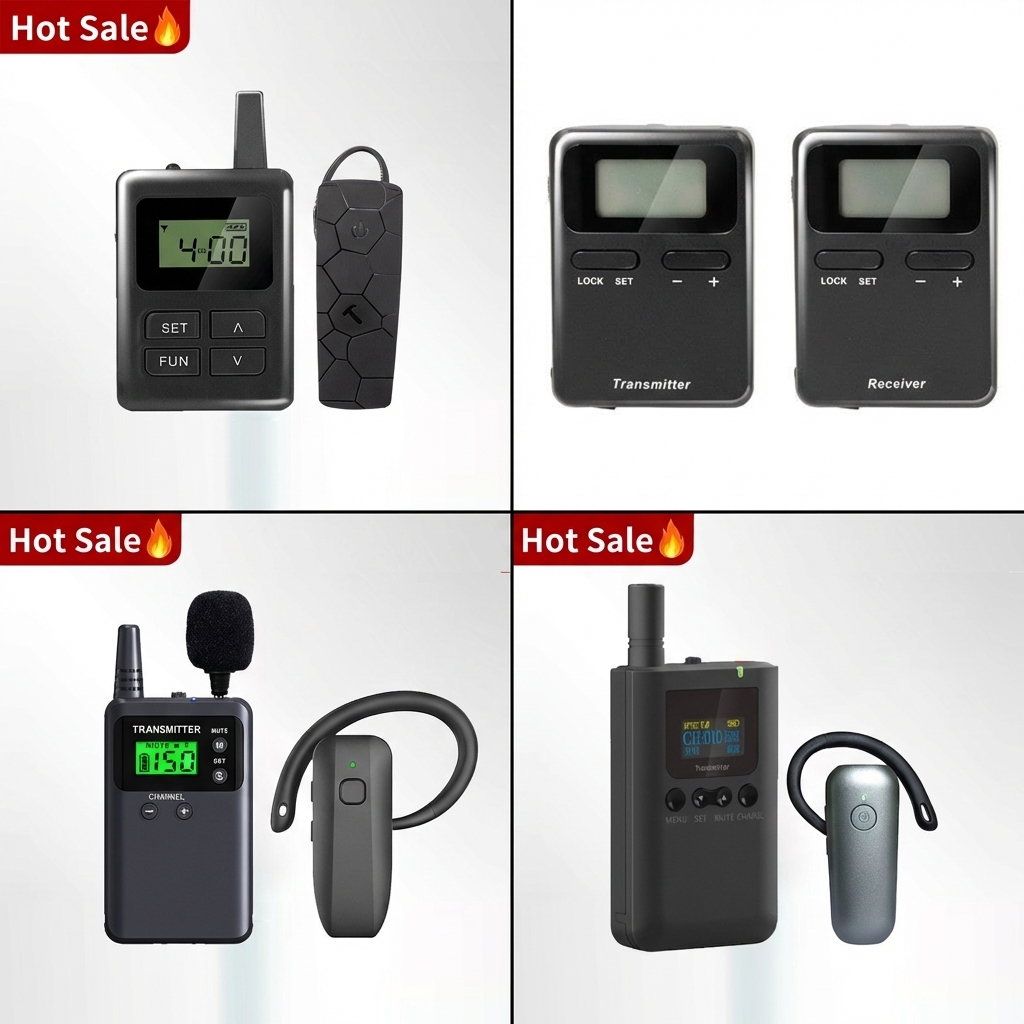
The tour guide system features a core design of “transmitter + receiver”. The tour guide holds the transmitter to deliver explanations, and visitors wear the receiver to listen synchronously—a typical guide-led explanation mode. This design enables real-time delivery of explanation content, fundamentally solving the problem of poor audibility in large groups and no sound when visitors are far from the guide during museum group tours, and serving as a basic guarantee for group reception.
1.2 Core Advantages: Adapting to the Diverse Needs of Group Reception
The advantages of the tour guide system are fully reflected in the actual experience of group reception. First, it supports real-time interaction: tour guides can extend knowledge points and answer questions at any time according to the group’s comprehension level, making it suitable for VIP groups and research groups with in-depth communication needs. Second, it allows seamless multi-guide switching, capable of supporting 3 to 5 groups for simultaneous explanations in different museum areas with independent channels to avoid cross-talk, thus solving the interference problem of multiple group receptions during peak hours. Third, it can connect to external Bluetooth devices such as translation equipment, easily adapting to the reception needs of international groups.
1.3 Hardware Performance: Tailored to Museum Scenarios
High-quality tour guide systems fully consider the environmental characteristics of museums in terms of hardware performance. They feature stable signal transmission, ensuring clear sound quality within a 300-meter range, whether in enclosed exhibition halls or open atriums. The devices are designed to be lightweight, with both transmitters and receivers weighing less than 100 grams, so visitors wear them without any burden. The single-day battery life can reach 6 to 8 hours, meeting the museum’s all-day reception needs. The supporting group charging equipment also makes the daily management of museum equipment more convenient.
II. Audio Guide: An Intelligent Assistant for Individual Visitors’ Independent Exploration in Museums
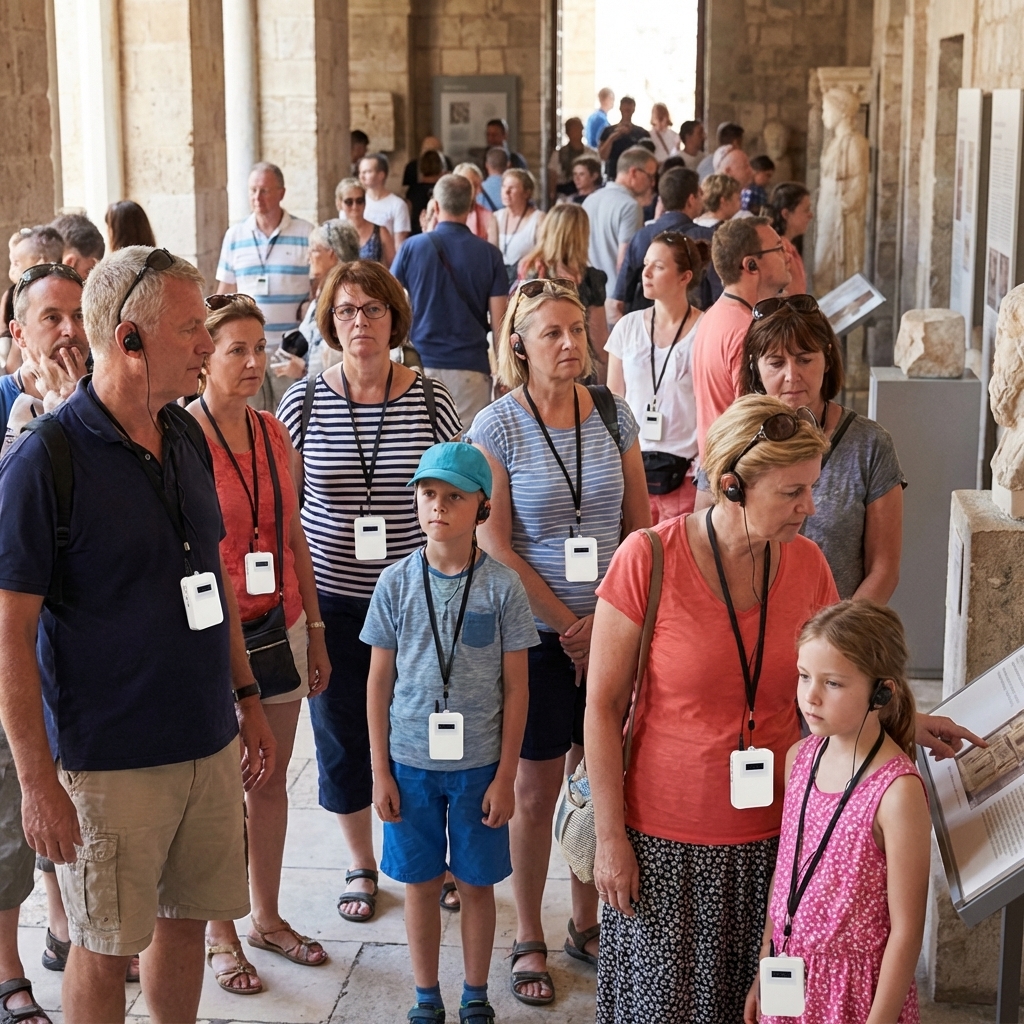
If the tour guide system is like an “exclusive tour guide”, the audio guide is an “intelligent accompanying guide” prepared for individual visitors. Relying on intelligent induction technology, it realizes unattended autonomous explanation, perfectly aligning with the visiting habits of individual visitors and serving as an important tool for daily individual visitor reception in museums.
2.1 Core Definition: An Unattended Intelligent Explanation Device
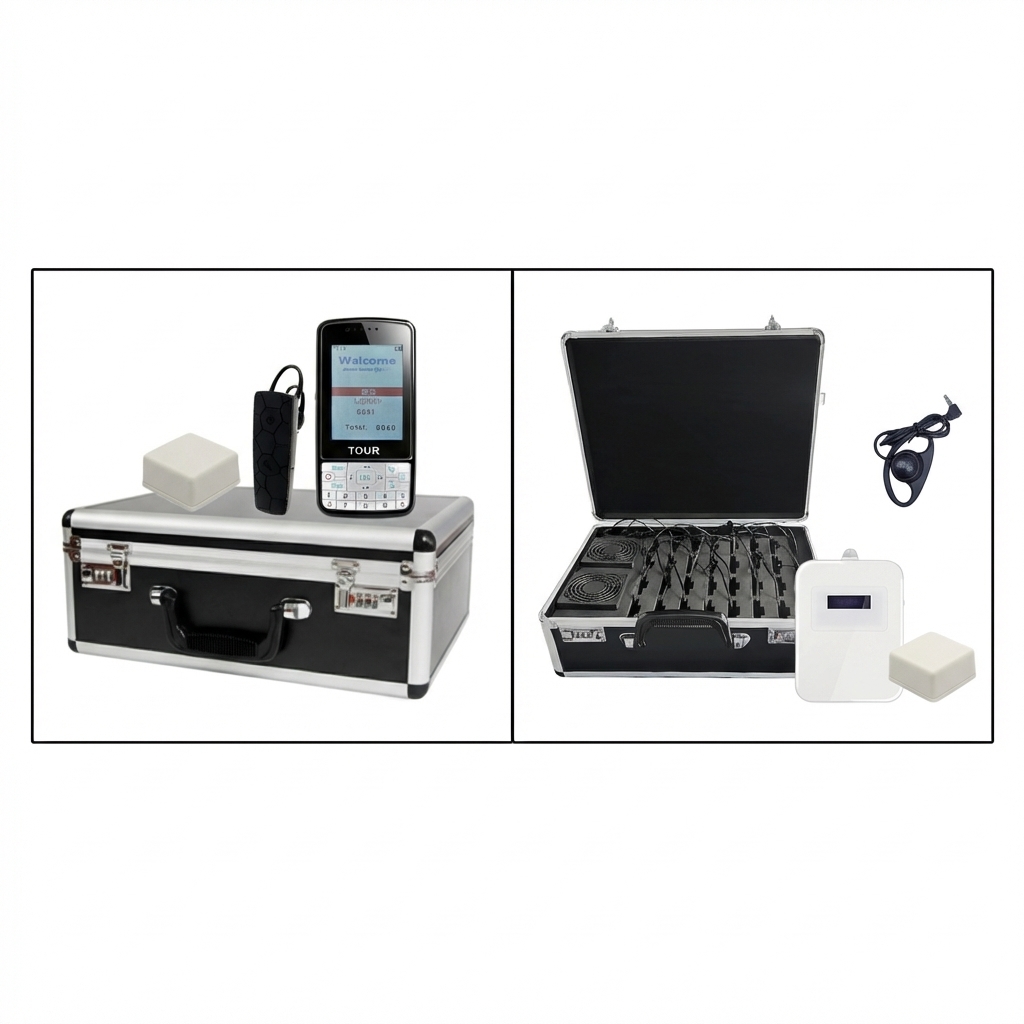
The audio guide is an intelligent device that triggers explanation content through induction technology. Museums only need to preset induction points next to exhibits or exhibition areas; when visitors carry the device into the induction range, the corresponding explanation content will be played automatically. The whole process requires no manual operation or group following, truly achieving “unattended and independent exploration”.
2.2 Core Features: Aligning with the Visiting Needs of Individual Visitors
The core features of the audio guide are entirely designed around individual visitors’ tours. First, it has automatic induction triggering, eliminating the trouble of individual visitors manually searching for and switching explanation content, and enhancing the visiting experience. Second, it has large-capacity storage, able to pre-store up to tens of thousands of segments of explanation content covering all exhibits and areas of the museum, and also support switching between 8 or more languages to meet the different needs of domestic and international individual visitors. Third, it allows flexible content updates—museums can quickly modify explanation content when holding temporary exhibitions or adjusting exhibit layouts, with strong adaptability.
2.3 Technical Parameters: Tailor-Made for Individual Visitor Reception
The technical parameters of the audio guide fully consider the usage characteristics of individual visitors and the environmental requirements of museums. It adopts a carrier frequency suitable for indoor environments with a precise induction coverage range, avoiding false triggering and missing triggering. The device is compact and lightweight, weighing only about 50 grams, making it easy for visitors to hold or hang. The single-day battery life can reach more than 16 hours, meeting the all-day visiting needs of individual visitors, while the induction base station has a longer battery life and requires no frequent charging and maintenance.
III. Scenario Adaptation: On-Demand Selection is the Core Principle of Museum Reception
There is no distinction between superior and inferior between the tour guide system and the audio guide. They have different design purposes and functional positioning, and each has its own focus in adapting to museum reception scenarios. Choosing based on actual reception scenarios can maximize the value of the equipment.
3.1 Tour Guide System: The First Choice for Exclusive Group Reception
The tour guide system is more suitable for various organized exclusive group receptions in museums, such as government and enterprise inspection groups, school research groups, industry exchange groups, and VIP reception groups. These groups have clear visiting routes, fixed personnel composition, and demand for in-depth explanations and real-time interaction. The synchronous listening and real-time Q&A functions of the tour guide system can maximize the visiting experience of such groups.
3.2 Audio Guide: A Standard for Daily Individual Visitor Reception
The audio guide is the best choice for daily individual visitor reception in museums, applicable to groups such as ordinary tourists on holidays, international free independent travelers, and parent-child family visitors. These visitors value the autonomy and flexibility of the tour and prefer to visit exhibits according to their own interests and pace. The audio guide allows them to break away from the constraints of groups and immerse themselves in exploring the museum, while also greatly reducing the museum’s labor costs for manual explanations.
3.3 Combined Matching: A Full-Scenario Solution for Large Museums
For venues with diverse reception needs such as large comprehensive museums and exhibition halls in cultural and tourism scenic spots, the combined matching of “tour guide system + audio guide” is the optimal full-scenario solution. Equip tour guide systems in areas for group reception and audio guides in regular exhibition areas for individual visitors. This not only meets the in-depth reception needs of professional groups but also caters to the independent visiting needs of individual visitors, achieving full coverage of museum reception services.
IV. Scientific Selection: Formulate Plans Based on Scale and Scenario Complexity
In addition to fitting the actual reception scenarios, museums can also make scientific equipment selections from the two core dimensions of reception scale and exhibition area complexity, while paying attention to the supporting services of the equipment to make the equipment configuration more reasonable and cost-effective.
4.1 Determine Equipment Configuration by Reception Scale
If a museum has a high proportion of group reception and frequently hosts multiple groups at the same time, it should prioritize choosing a tour guide system that supports multi-channel and seamless multi-guide switching, and match the corresponding number of receivers according to the size of regular groups. If a museum has a large flow of individual visitors, especially a surge in tourists on holidays, it can configure audio guides in bulk to meet visitors’ rental needs and ease the pressure of manual explanations.
4.2 Make Targeted Selections by Exhibition Area Complexity
If a museum has many exhibition areas, scattered explanation points, and relatively fixed explanation content, audio guides can better cover all exhibition areas to ensure visitors do not miss the explanations of any exhibits. If a museum needs to adjust explanation content in real time according to visitor types—for example, delivering in-depth content to professional groups and interesting content to teenage groups—the flexibility of the tour guide system is more advantageous. For museums with international reception needs, regardless of the type of equipment chosen, priority should be given to models that support multiple languages and are compatible with translation equipment.
4.3 Key Considerations for Selection: Supporting Services and After-Sales Guarantee
The supporting services and after-sales guarantee of the equipment are important considerations for museums during selection. First, check whether there are supporting charging and storage equipment to reduce daily management costs. Second, check the brand’s warranty policy and prioritize products with a 2-year or longer whole-machine warranty. Third, check the technical support—whether there is 24/7 online technical service to solve problems in equipment use in a timely manner. These details will directly affect the museum’s equipment usage experience.
Comparison Table: Tour Guide System vs. Audio Guide for Museum Reception
| Aspect | Tour Guide System | Audio Guide |
| Primary User | Organized groups (government, research, VIP, exchange teams) | Individual visitors (ordinary tourists, international FITs, families) |
| Core Design | Live guide-led with “transmitter + multiple receivers” | Unattended, induction-triggered automatic playback |
| Interaction | Real-time Q&A, guide can adjust content based on group level | No live interaction; pre-recorded content |
| Signal/Induction Range | Stable up to 300m, suitable for enclosed halls and atriums | Precise indoor induction coverage (avoids false/missed triggers) |
| Multi-Language Support | Via external Bluetooth translation tools | Built-in, supports 8+ languages pre-stored |
| Device Weight | <100g each (transmitter & receiver) | ~50g (lightweight, easy to hold or hang) |
| Battery Life | 6–8 hours (full-day reception) | 16+ hours (full-day individual visiting) |
| Content Flexibility | Real-time, unlimited topics based on audience | Pre-stored (up to tens of thousands of segments); can be updated for temporary exhibitions |
| Best Scenario | Fixed-route, in-depth, interactive group visits | Self-paced, autonomous exploration, high individual visitor flow |
| Daily Management | Requires group charging cases and storage | Induction base station has long standby; less frequent charging |
V. Conclusion: The Best Choice is the One That Adapts to the Museum’s Reception Needs
In the final analysis, both the tour guide system and the audio guide are important tools for museums to improve the quality of reception services. The core difference between them lies in the visitor groups and usage scenarios they serve: the tour guide system excels in professionalism and interactivity, making it the core choice for various organized group receptions; the audio guide stands out in flexibility and convenience, serving as an essential device for daily individual visitor reception.
Museums do not need to struggle with an “either-or” choice, but should make targeted selections based on their own reception structure, exhibition area characteristics, and visitor types. Small museums focusing on individual visitor reception can prioritize configuring audio guides; medium-sized museums with a balanced volume of group and individual visitor reception can adopt a combined mode of the two; large comprehensive museums can achieve refined layout of the two types of equipment according to different exhibition areas and reception needs.
At the same time, choosing a brand with profound industry experience and mature technology can provide museums with a more complete product experience and full-process support. Brands like Yingmi, with 19 years of industry experience, can escort museum reception services from product R&D and customized services to subsequent maintenance and firmware updates. The selection of museum explanation equipment ultimately needs to return to the essence of “visitor experience” and “reception efficiency”. The best choice is always the one that suits the museum’s actual needs.
FAQs
- What is the main difference between a tour guide system and an audio guide?
A tour guide system is a live, guide-led group listening device (transmitter + receivers), while an audio guide is an unattended, induction-triggered device for individual visitors to explore at their own pace.
- Which device is better for school research groups or VIP inspection teams?
The tour guide system is the first choice. It supports real-time interaction, multi-guide seamless switching, and can connect to Bluetooth translation tools for international groups.
- Can a museum use both tour guide systems and audio guides at the same time?
Yes. Large museums often adopt a combined full-scenario solution: tour guide systems for group reception areas and audio guides for individual visitor areas, covering all reception needs.
- How long do the batteries last on these devices?
High-quality tour guide systems last 6–8 hours (all-day reception). Audio guides typically last over 16 hours, meeting the needs of individual visitors for a full day.
- What should museums consider when choosing a brand?
Check for supporting charging and storage equipment, a warranty of 2+ years, 24/7 technical support, and the ability to support multiple languages or translation device compatibility.