

In the present context where the international tourism market is slowly recovering, when lots of managers of overseas picturesque areas, museums and theme parks involve us, they all point out similar worries: the number of global vacationers is on the increase, yet the scarcity of multilingual tour guides has never been filled. Standard tour guides either have fixed and inflexible web content that fails to fulfill the demands of different vacationers or call for a great deal of manpower to keep. These functional troubles are precisely the core concerns that Yingmi Technology has always intended to solve through technology when it has been deeply taken part in the field of wireless tour guide devices for many years.
As a brand that has served over 500 visitor destinations worldwide, Yingmi has always believed that the audio guide system ought to not just be a “tool for playing audio”, but must come to be a bridge connecting vacationers with neighborhood culture. The intelligent voice tour guide system need to be a good helper for overseas operators to lower prices and increase performance and boost the visitor experience. Today, let’s start from our functional service experience and discuss what the future audio guide system should be like.
I. Yingmi audio guide system
When lots of overseas consumers first come into contact with us, they commonly ask, “What makes your audio guide system different from those on the market?”
Based on Yingmi Technology’s experience in serving overseas clients, the current audio guide system has become a combination of “hardware devices + software program services”, with the core being to address troubles for vacationers and operators with various needs. Especially, it primarily falls into three categories:
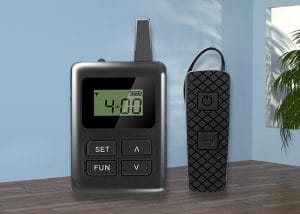
1.Team description equipment
It is especially created for circumstances such as holiday company group Tours, business evaluations, and global conferences. Last year we upgraded a local trip agency in Athens, Greece. The equipment they were using before would always lose sound in the noisy setting of the Acropolis picturesque area, and there were many complaints from vacationers. The equipment we offered them is a “lapel microphone + lightweight receiver”. The tour guide doesn’t have to scream when speaking. Even if the vacationers put on the receiver 10 meters away from the tour guide, they can still hear clearly. Extra importantly, during the same time period, three trip groups giving explanations nearby won’t have any sound interference. This is exceptionally vital for preferred picturesque spots. Now this set of equipment has also added a multi-language switching function, supporting 16 mainstream languages. For instance when receiving Chinese vacationers, it can switch to Chinese, and when receiving Middle Eastern vacationers, it can switch to Arabic, getting rid of the demand for additional translators.
2.Self-service tour guide system
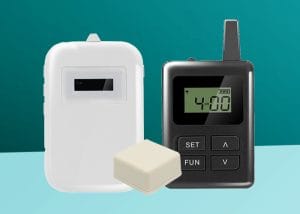
It mainly serves specific vacationers and independent travelers. Several small and medium-sized museums in Europe have limited space and can not manage to hire way too many tour guides. Our self-guided trip devices have been of excellent aid. For example in a ceramic museum in Florence, Italy, when visitors come to the display cases, they either enter the item numbers on the guide devices or the equipment automatically senses when approaching the display cases, and then they can hear the explanations– from the firing techniques of ceramics to the Renaissance stories behind the patterns, everything is explained clearly. We have also provided 24-hour self-service rental lockers. Tourists can borrow and return them by themselves even when they come in the early hours of the morning. The museum doesn’t need to add graveyard shift staff, and the labor cost has been dramatically reduced. After the pandemic last year, this sort of “contactless service” equipment also sold particularly well in picturesque spots in Southeast Asia.
3.Online tour guide platform
It can be used via mini-programs, apps or official accounts. A mountainous picturesque location in Chiang Mai, Thailand, has adopted our online system Tourists don’t need to rent hardware. By scanning the code, they can view the graphic and textual introduction of the picturesque location and listen to the legends recorded by local elders– such as why a certain stone is called “the seat of the Mountain God” and how villagers used to pray here for blessings. For overseas independent travelers, there is no demand to bring extra equipment; they can use it with their mobile phones, which is particularly convenient. For picturesque spots, updating the content is also simple. Just change the text or audio in the background, and vacationers can see it immediately without needing to update the hardware set by set.
Actually, to summarize, the core of the audio guide system is to “solve practical problems”: assisting vacationers easily obtain info and assisting operators save costs and improve efficiency. This is also the starting point that will never change when we explore the future audio guide system.
II.The core function of the future audio guide system.
Over the past few years, when talking with overseas clients, we have discovered that they share three common expectations for the “future tour guide system”: the content needs to be more in line with the demands of vacationers, it ought to be more convenient to make use of, and it must also aid the operators manage it more easily. Based on our technological reserves and practical instances, the future audio guide system will have three core features:
1.AI makes what everyone hears different
Nowadays, several overseas customers have given feedback that the content of traditional tour guides is too fixed– vacationers with children find it too boring, and history enthusiasts think it is not deep enough. The future intelligent voice tour guide system will resolve this problem.
For example, when vacationers first receive our tour guide equipment, they don’t need to fill in complex forms. They just need to select easy preferences such as “family Tour”, “Cultural In-depth Tour”, and “Leisure Sightseeing Tour”, and the system will automatically adjust the content. Last year we conducted a test in a heritage park in Cairo, Egypt: Tourists with children walked up to the stone statue and heard, “There is a story behind this stone statue. In the past, children would play hide-and-seek beside the stone statue.” For vacationers who have chosen the “Cultural In-depth Tour”, the system will say, “The material of this stone statue is granite from Aswan. The archaeological group found new inscriptions on the base of the stone statue last year, recording the time of the sacrificial ceremony at that time.”
There will also be multilingual translation, and it will be more “down-to-earth” in the future. For example, for Chinese vacationers, it’s not just simple Mandarin; they can also choose Cantonese or Minnan dialect. For English-speaking vacationers, it is possible to switch between British, American and even Australian English. Previously an Australian tourist told us, “When I heard the explanations in my hometown accent, it felt like talking with locals.” Moreover the system can adjust the speaking speed in real time. For example when encountering elderly vacationers the speaking speed will automatically slow down without the need for manual setting.
2.AR and wearable gadgets make the experience smoother
Overseas customers usually state, “A great tour guide system should be one where vacationers are not aware of its presence but can not do without it.” The future audio guide system will move in the direction of the direction of “hands-free” and “immersive”.
For example regarding the integration of wearable devices we are currently collaborating with a hiking picturesque location in New Zealand for testing: the smartwatches worn by vacationers will be connected to the navigation system. When they reach the viewing platform the watch will vibrate once and the explanation of the snow-capped mountains will come through the headphones– “This mountain was formed 2 million years ago. In summer small yellow flowers will bloom at the foot of the mountain which is an unique variety of the local area.” If vacationers reach a fork in the road the watch will gently tremble to the left or right reminding them “This way you can see the remnants of the glacier.” Without holding a mobile phone or pressing buttons vacationers can focus on enjoying the scenery and the experience is particularly good.
AR technology will also be more practical and not just for show. Last year we did an AR tour for an ancient Roman theater in Turkey When vacationers point their mobile phones at the ruins of the theater scenes of ancient Romans watching a play will appear on the screen– actors performing on stage and audiences clapping in their seats. At the same time a voice explanation will be given: “The theater at that time could seat 5 000 people. The noise could reach the last row without a microphone because the arc design of the theater had acoustic principles.” Many vacationers said “Before when we saw the ruins we only thought they were old. Now we finally understand how they were used before.”
3.Cloud computing and the Internet of Things help save a lot of difficulty
Most overseas picturesque spots are confronted with the issue of “wide distribution of devices and difficult maintenance”. For example in Southeast Asian picturesque spots equipment placed outdoors is prone to moisture while in European museums there are several tools and it is hard to locate them when they break down. The future audio guide system will aid operators resolve these difficulties through the cloud and the Web of Things.
For example in terms of cloud management a chain of art museums in Italy uses our system in all five of its venues. Their staff can update the content at the headquarters– for example when there is a new exhibition they upload the explanation audio to the background and the equipment in all five venues is updated synchronously without having to go and debug one by one. If the battery of the equipment in a certain venue is about to run out of power the system will automatically send a reminder and the staff will go to charge it in advance so as not to delay the use of vacationers.
Data analysis can also assist the operator in making decisions. For example the system will calculate “which exhibition area visitors stay the longest” and “which language is used the most frequently”. A French museum found that the usage of Spanish had increased by 30% compared to last year so it specially added explanations in Spanish. Later the positive feedback rate from Spanish vacationers rose significantly. These data do not need to be manually tallied. The system will automatically generate reports. The operator can know how to adjust the service by looking at the reports.
III. The Application of Future Audio Guide Systems
Whether a technology is good or not ultimately depends on whether it can be applied in actual circumstances. Based on Yingmi Technology’s experience in serving overseas clients, the future voice guide system will play a significant role in three core scenarios, truly implementing the future voice guide service for smart tourism in picturesque spots.
1.Museums and Cultural Sites: Bringing Culture to Life
The most core demand of museums and cultural sites overseas is to “enable vacationers to understand the culture”. The future audio guide system will shift from “imparting knowledge” to “telling stories”.
For example in the pyramid picturesque location of Egypt our system will use AR to restore the funeral ceremony of the pharaohs– when vacationers face the entrance of the pyramids they can see the scene of ancient Egyptians carrying coffins inside with voice explanations saying “At that time people believed that this could take the soul of the pharaohs to heaven.” At the same time it can also retrieve the internal photos taken by the archaeological group stating “This passage was discovered by archaeologists in 1922 and at that time the jewelry of the pharaoh was still preserved inside.” It is not about dryly stating that “the pyramids were built around 2500 BC” but rather allowing vacationers to experience the culture and life of that time.
We are also concentrating on supplying barrier-free solutions. For example for visually impaired visitors the tour guide equipment will be equipped with haptic feedback. When visitors touch the model of the exhibit the equipment will explain “This earthenware jar is 20 centimeters high and the patterns on it are wavy. It feels a bit uneven when touched.” For hearing-impaired vacationers AR will display subtitles in real time and can also switch to sign language animations to ensure that every tourist can enjoy the guided tour service. Last year the accessibility upgrade we made for a museum in London UK was commended by the local tourism department.
2.Scenic Places and theme Parks: Make Your Tour smoother
Overseas scenic spots and theme parks are large in location and crowded with people. The most troublesome issues for vacationers are “finding the way” and “queuing up”. The future audio guide system will aid vacationers solve these problems.
For example in terms of dynamic route recommendation after a theme park in Tokyo Japan adopted our system visitors could see the message “The queue for the roller coaster is 20 minutes and for the carousel is 5 minutes” when they turned on the tour guide device. The system would also suggest “Go to the carousel first and then go to the roller coaster when there are fewer people.” If a scenic spot is temporarily closed the system will immediately alert to prevent vacationers from making a wasted trip. Last summer vacation the number of complaints from visitors to this park dropped by 40% compared to the previous year all because the route recommendations saved visitors a lot of time.
There is also commercial linkage which can aid scenic spots increase their income. For example when vacationers get tired from walking around the scenic area the tour guide equipment will suggest “There is a cafe 50 meters ahead. Their handmade cakes are local specialties” and at the same time it will mention “This cafe has been open for 20 years. The owner’s grandmother used to make desserts for the nobility.” Tourists find it interesting and are willing to give it a try. A scenic spot in Southeast Asia said that since adding this function the revenue of the coffee shop has increased by 25%.
3.International Conferences and business Visits: Making Communication smoother
In addition to tourism scenarios future audio guide systems can also be used in international conferences and business investigations. We provided solutions for a tourism industry forum in Germany. There were people from 12 countries in attendance. Our group’s interpretation equipment was used for simultaneous interpretation– speakers spoke English. The receivers worn by the participants could switch to Chinese Japanese and Spanish in real time eliminating the need to sit in a row of interpreters. Moreover after the meeting participants can download the meeting minutes and voice replay in the system without having to take notes anymore.
There are also enterprise visits. For example a Chinese tourism group went to Europe to visit scenic spots and used our equipment for explanations– the local tour guide spoke French and the equipment translated it into Chinese in real time. The members of the visit group heard it clearly. When encountering key content you can also press the “Mark” button on the device. After going back you can bring it up for review. The head of the inspection team said “In the past I was always afraid of missing the key points during inspections. Now with this equipment I feel much more at ease.”
Conclusion: Technology Serves People
After so many years of developing audio guide systems, our most profound realization is that technology is never meant to show off, but to “solve problems”. Whether it is the future audio guide system or the intelligent audio guide system, the core is to serve people– to serve vacationers, enabling them to easily and deeply experience the local culture. Serve the operation party, enabling them to manage the scenic area with peace of mind and efficiency.
In the future, we will continue to follow the demands of overseas customers: for tropical scenic spots, we will improve the high-temperature resistance and waterproof performance of the equipment. For niche museums in Europe, keep the cost of the system even lower. For cultural sites in the Middle East, the historical details restored by AR should be made more accurate. We believe that there is no one-size-fits-all solution; there are only solutions that are adapted to local conditions.
If your scenic area or museum is located overseas, whether you need anti-interference team equipment, a self-service system that can adapt to multiple languages, or want to implement a future voice guide solution for smart tourism in your scenic area, you can all come to us for a chat. Yingmi Technology is willing to work with you to make the future voice guide system more practical and considerate, making every trip full of warmth.
FAQ
1.What are the main advantages of an audio guide over a human tour guide?
Audio guides offer scalability, consistency, 24/7 availability, and cost efficiency. They can provide instant multilingual support, personalized content, and do not suffer from fatigue or variability in delivery.
2.Can audio guides work in areas with poor internet connectivity?
Yes, many systems offer offline modes where content is pre-downloaded onto devices. Team equipment and self-service kiosks also operate on independent wireless or RF technologies that do not rely on cellular networks.
3.How does an audio guide enhance accessibility?
Future systems include features for visually or hearing-impaired visitors, such as haptic feedback, real-time captions, sign language avatars, and adjustable speech speed and volume.
4.Is it complicated to update content on an audio guide system?
Not with cloud-based management. Operators can update text, audio, or translations centrally, and changes sync automatically to all connected devices, eliminating the need for manual, on-site updates.
5.Can audio guides integrate with existing ticketing or CRM systems?
Yes, through APIs and IoT platforms, audio guide systems can connect with ticketing, POS, and visitor management systems to enable features like personalized recommendations, dynamic routing, and integrated data analytics.