

There is a provincial museum in China that is considered a popular cultural landmark. It can accommodate over 3 million visitors in a year. However, the number of full-time tour guides in the museum is only around 30. During holidays, it takes up to a week to get an official guided tour. Most tourists can only follow the crowd and wander around aimlessly, only knowing the appearance of the precious artifacts but having no idea about the background stories. The whole experience is rather unenjoyable.
It wasn’t until they switched to the Yingmi wireless tour guide system that the situation completely changed. Tourists put on the Yingmi wireless tour guide device and approached the exhibits. Without pressing any buttons, the corresponding explanations would automatically trigger. Several groups of tourists were visiting simultaneously, and there was no interference among them. Finally, the exhibition hall regained the quiet atmosphere that a cultural venue should have. Foreign tourists could also switch to their familiar native language and quietly understand the stories behind the artifacts, and their satisfaction level immediately increased. In fact, from this example, it can be seen that if a museum selects the right wireless tour guide device, it can really help convey culture to tourists better.
I.Core Pain Points of Museum Interpretation
1.Insufficient professional tour guide system and unreliable service quality
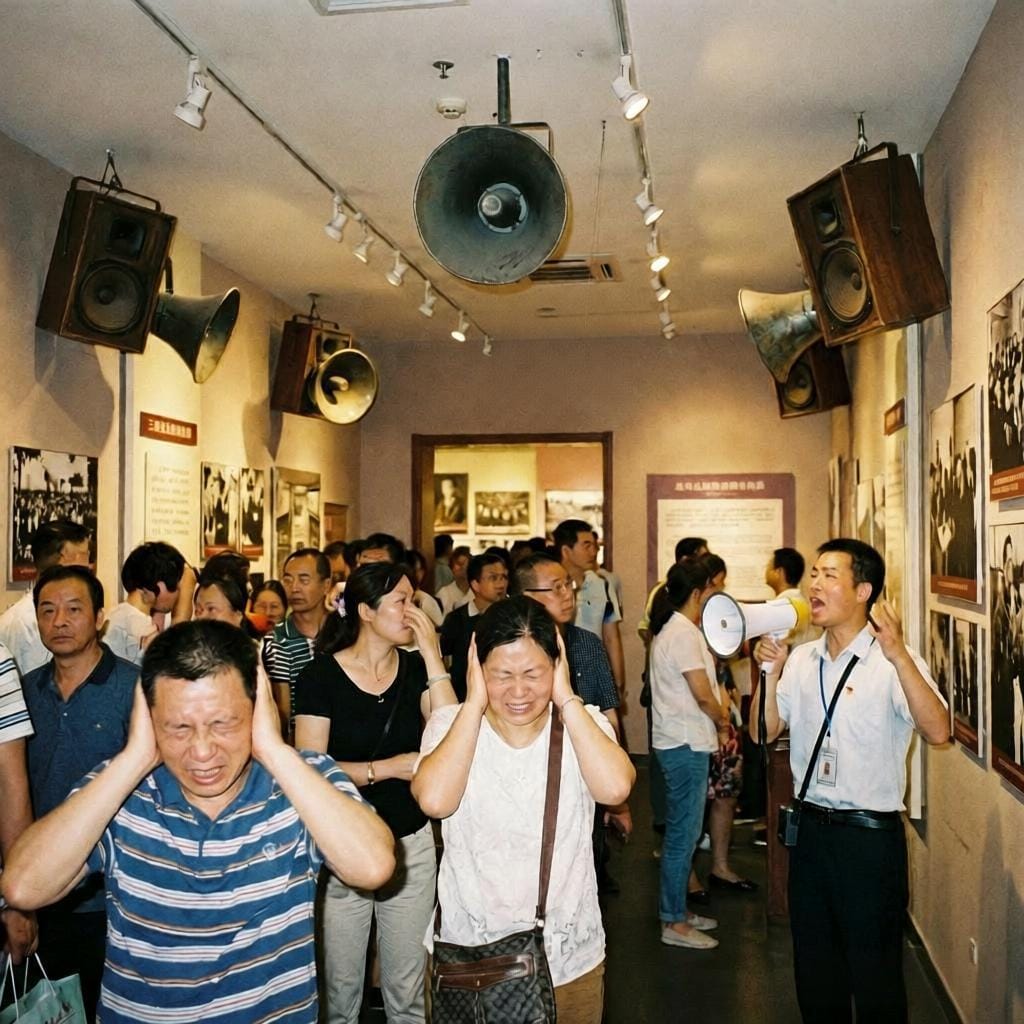
Most popular museums nowadays are facing the same problem: there is a huge shortage of professional tour guide system. If one wants to arrange an official interpretation, they either have to wait in line or make an appointment several days in advance. Many tourists simply don’t have the opportunity to enjoy formal interpretation services. And those “wild guides” outside the museum have completely unpredictable quality. They either fabricate wild history to attract attention or interpret the cultural information of the relics in a chaotic manner, misleading tourists and damaging the museum’s reputation.
2.Loud environment and poor signal, making listening to interpretation difficult
When the traditional amplification equipment is used in the exhibition hall, it becomes a “noise generator”. There are already many people in the exhibition hall, and multiple teams are explaining simultaneously, so various sounds mix together and interfere with each other. It’s difficult for tourists to hear a single effective piece of information. Some old tour guide devices also have unstable signals, a small coverage area, and unclear sound quality. Especially in museums with many exhibition halls and many walls, it’s easy to encounter connection and frequency interference issues. The more you listen, the more annoying it becomes. Eventually, tourists simply stop listening.
3.Lack of freedom of visit and inability to meet multilingual needs
When visiting museums with an interpreter-guided tour, tourists must follow the rhythm of the group. If they encounter exhibits they are particularly interested in, they can’t stay longer or get more details. There is no flexibility in visiting. Now that there are more international tourists, everyone hopes to listen to the interpretation in their native language. However, the cost of hiring multilingual interpreters manually is too high, and most museums simply can’t afford it. As a result, foreign tourists can only watch and have no chance to truly understand the cultural value of the exhibits.
II. Yingmi: An Intelligent tour guide Solution Tailored for Museum Scenarios
Yingmi has been deeply involved in the tour guide system industry for 18 years and is considered an established brand. The i7 self-service audio guide system it launched precisely addresses these actual needs of museums. Many cultural venues now choose this model as their preferred option.
1.Automatic sensing + precise coverage, more freedom in visiting
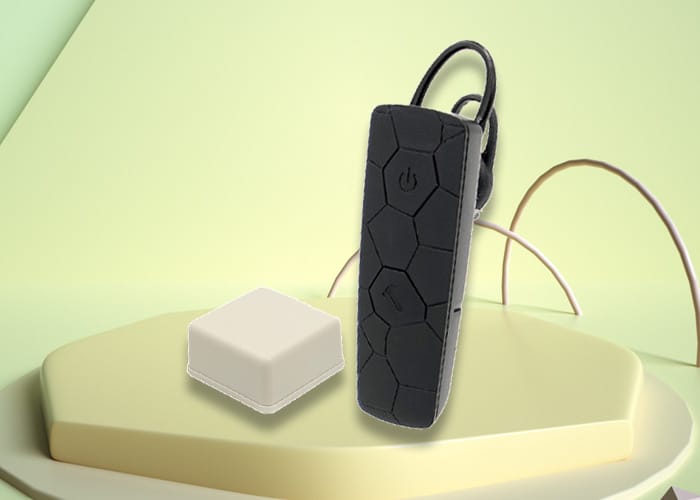
The i7 uses advanced RFID modulation technology, which has extremely strong anti-interference capabilities. When tourists wear the receiver, as long as they are within 0.5 to 35 meters of the exhibit, the interpretation will be triggered automatically. Once they leave this area, it will automatically stop. There is no need for manual operation at all. It’s extremely convenient. Moreover, the sensing range can be adjusted according to the size of the exhibition hall. Whether it’s a small thematic exhibition hall or a large historical exhibition hall, it can cover everything clearly. This way, tourists no longer have to follow the group’s rhythm. They can stay longer at the exhibits they are interested in and get more details. They can truly immerse themselves in the stories behind the exhibits.
2.Stable signal + clear sound quality, saying goodbye to interference troubles
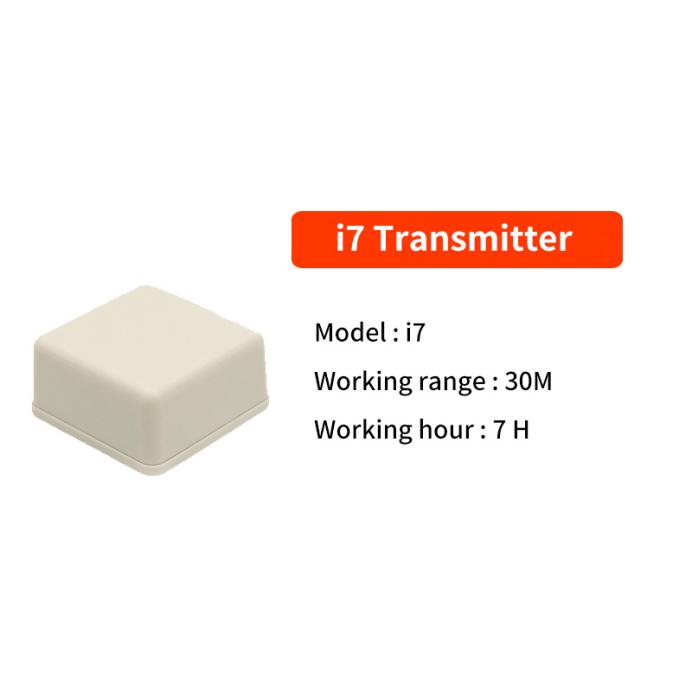
This self-service audio guide system has reliable signal transmission. Even if there are many walls blocking in the museum, the interpretation content can be clearly transmitted without any connection issues. It also supports multi-channel intelligent management, capable of accommodating up to 999 + teams simultaneously. It avoids frequency interference through automatic frequency hopping technology, and there will no longer be situations where multiple teams’ interpretations disturb each other. Moreover, it has professional noise reduction technology, using digital signals to filter out the environmental noise in the exhibition hall completely. Even during peak tourist hours, everyone can clearly hear every detail of the interpretation.
3.Lightweight and durable + multilingual support, adaptable to more needs
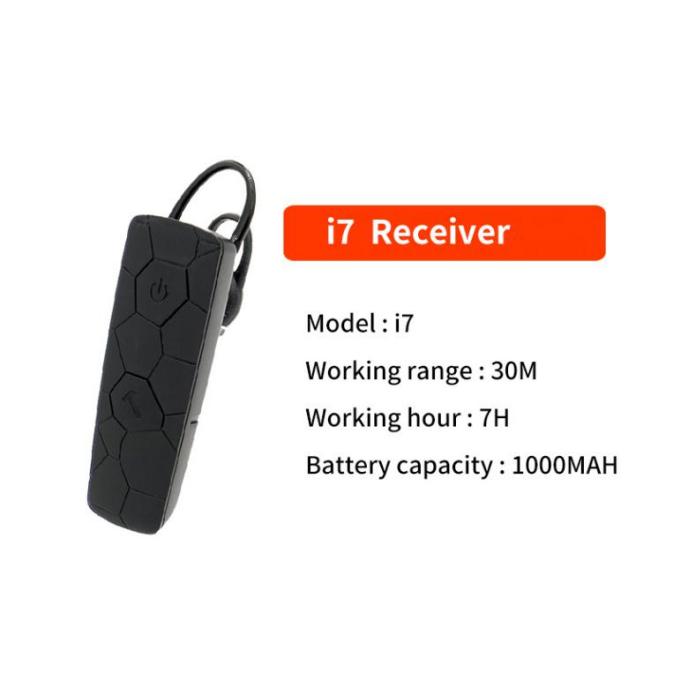
The receiver of the i7 weighs only 20 grams and feels almost nothing when held in hand. It is an ear-mounted integrated design. It uses imported silicone material, which is very soft and can fit the curvature of the ear. Tourists won’t feel itchy or uncomfortable even if they wear it for a long time. The battery life is also very powerful. The receiver can last for more than 7 hours after a single charge, fully meeting the needs of tourists for a whole day’s visit. The signal transmitter has a longer working time, lasting from 12 to 24 months. There is no need to frequently replace batteries, which saves a lot of trouble. Additionally, it supports multi-language switching and can preset various languages such as Chinese, English, French, German, Japanese, and Korean. When switching languages, there are language prompt sounds, and the previously selected language can be automatically saved. The next time the device is powered on, it can directly switch over, easily resolving language barriers for international tourists and helping museums create a more internationalized service image.
Comparison Table: Traditional Tour Guide vs. Yingmi i7 Wireless Audio Guide System
| Feature | Traditional Manual Guiding / Basic Audio Guides | Yingmi i7 Wireless Audio Guide System |
| Availability | Limited; long waits or advance booking required | On-demand, self-service rental |
| Operation | Manual button-pressing or following a guide | Fully automatic, sensor-triggered playback |
| Group Interference | High; multiple guides cause noise overlap | None; anti-interference frequency hopping |
| Visit Freedom | Low; must follow guide’s pace | High; explore freely, linger at interests |
| Language Options | Limited, often 1-2 languages | Multiple languages, easy switching |
| Sound Clarity | Often poor in crowded or walled spaces | Clear, stable signal with noise reduction |
| Coverage Range | Unstable, especially around obstacles | Reliable coverage up to 35m, adjustable |
| Comfort & Portability | Bulky handsets or crowded group gathering | Lightweight (20g), ergonomic earpiece |
| Battery Life | Often short, frequent charging needed | 7+ hours (receiver), 12-24 months (transmitter) |
| Content Management | Fixed, hard to update | Easily updatable, customizable content |
| Cost Efficiency | High labor cost, recurring hiring needed | Lower long-term cost, scalable deployment |
| Suitability for Int’l Visitors | Poor without multilingual staff | Excellent; built-in multilingual support |
III. Targeted Solutions to Enhance Museum Service Quality
1.Reasonable allocation of interpretation resources, reducing operating costs
With the Yingmi i7, some manual interpretation work can be replaced. Museums no longer need to rush to find audio guide system when there is a sudden increase in tourists, significantly reducing labor costs. Moreover, the equipment supports batch leasing and management, and is equipped with dedicated storage boxes or charging boxes. It can charge and store dozens of devices at once, which not only makes maintenance particularly convenient but also avoids problems such as tangled wires and disordered placement when recovering the equipment. It is very suitable for large-scale deployment in museums. If there are temporary exhibitions, the interpretation content can be updated quickly, flexibly adapting to the needs of different exhibitions, making it particularly convenient.
2.Unified interpretation content standards, making cultural dissemination more reliable
Museums can import official authoritative interpretation content in advance into the i7 self-service audio guide system. In this way, every visitor will hear accurate and professional cultural relic information, and there will be no need to worry about misleading tourists by unqualified audio guide system. Moreover, the interpretation content can be updated at any time. If there are new academic research results or more details about the exhibits need to be supplemented, they can be added in time, allowing visitors to learn more comprehensive and in-depth cultural knowledge, further enhancing the professional image of the museum.
3.Improve supporting services, making use more convenient
Yingmi’s service system is truly in place. Before sale, it can respond quickly within 90 seconds and also provide free sample testing. There are over 1,000 real cases for reference. During the sale, on-site surveys of the exhibition layout are conducted, and signal transmission points are planned based on the actual layout to ensure no coverage blind spots. In case of urgent orders, they can be delivered on the same day. It also supports multiple platform transactions, ensuring security. After-sales service is more considerate, providing free technical support, and the equipment has a lifetime warranty, completely eliminating the concern of milestone issues. For museums with international tourists, customized multilingual content entry and system debugging services can be provided to enable the interpreter to quickly adapt to international operation needs.
Yingmi has been in the interpretation industry for 18 years and has accumulated rich experience. This i7 audio guide system not only truly solves various problems of the traditional museum interpretation mode but also uses the power of technology to make the dissemination of cultural relics and culture more efficient, more accurate, and more inclusive.
FAQs about the Yingmi Wireless Tour Guide System
Q1: How does the device work?
A: It uses advanced RFID technology to automatically trigger precise exhibit commentary when visitors approach within 0.5-35 meters. No manual button-pressing is required.
Q2: Can multiple visitors use it simultaneously without interference?
A: Yes. The system supports multi-channel management for up to 999+ teams at once, using automatic frequency hopping to prevent cross-talk and ensure clear audio for every user.
Q3: What languages are supported?
A: The device supports multiple languages, including Chinese, English, French, German, Japanese, and Korean. Users can easily switch between them.
Q4: Is the sound quality clear in crowded and enclosed spaces?
A: Absolutely. It features professional noise reduction and stable signal transmission, ensuring clear audio even in busy halls or through walls.
Q5: How long does the battery last?
A: The receiver offers over 7 hours of continuous use on a single charge. The signal transmitter lasts 12-24 months, minimizing maintenance.