

Whenever I visit a museum or breathtaking place, I undoubtedly encounter some minor frustrations: When traveling in a group, the tour guide moves too fast. Just as I start to be interested in a piece of cultural relic, I have to follow the large group and move forward; If I wish to rent a typical guidebook, I have to queue up and pay a deposit, and then I have to go back to return it. If I lose it, it will be even more problematic; When meeting foreign buddies asking for directions, I want to suggest the story of the breathtaking place, but due to language barriers, I can only wave my hand … Until last month at the Palace Museum, I happened to see an elderly lady with white hair smiling at the blue QR code beside the display cabinet. She was holding a mobile phone, not wearing headphones but still able to clearly hear the gentle explanation. Her grandson who was nearby came over and asked, “Grandmother, is this about the story of the dragon throne?” The lady nodded and said, “Look, there are additionally images here.” Later, I learned that this was the QR code automatic tour system. From that day on, I unlocked a new method of openly exploring the exhibition.
No requirement to queue, simply scan the QR code to begin the assisted trip
That day, next to the museum, I saw that there was a QR code printed at the bottom right corner of the display board, accompanied by a tiny note: “Scan to listen to the explanation, support multiple languages”. Out of interest, I opened the “Scan” feature on WeChat– no complicated links were opened, nor was an APP needed. After a few seconds, I got in a basic page: in the center was the “Begin Description” button, below which were three options: “Chinese”, “English”, and “Japanese”, as well as two small icons: “High-definition Gallery” and “Related Stories”.
I clicked on “Chinese Explanation”, and quickly a clear voice of the announcer came from the phone. The voice was not extreme, and the speaking speed was moderate. Even in a crowded exhibit hall, decreasing the volume would certainly still permit one to hear plainly. What’s more considerate is that the explanation was segmented. After each point was described, there would certainly be a two-second pause. If one didn’t understand, they could rewind the video to replay it, without needing to listen from the beginning again.
Later I discovered that the Yingmi was specifically created for travelers– whether utilizing WeChat, QQ, or the scanning function in 360 Security Guard, it can be easily acknowledged; even for the elderly who are not extremely proficient with smart devices, as long as somebody assists scan it once, then clicking “Begin Description” will certainly do. There are no unnecessary buttons on the interface, which won’t make things perplexing.
From Sound to Immersive Experience, Bringing Cultural Relics to Life
Professional and adaptable explanatory material
Last week, I checked out the Terracotta Army Museum in Xi’an. I scanned the QR code next to Pit No. 1. Besides the usual “Background of the Terracotta Army Pit Construction” explanation, a “AR Experience” button appeared at the bottom of the page– when I clicked it, by scanning the terracotta figurines inside the pit with my phone, a virtual artisan appeared on the screen: He was squatting next to the figurine, step by step demonstrating how to shape, apply glaze, and fire it. Even the details of how the colorful patterns on the figurines were preserved were plainly noticeable on the phone screen.
Multimedia and Interactive Experiences
Beside her, a girl who resembled a college student was also playing AR. She told me, “Before, just seeing the Terracotta Army made me feel awe-inspiring, but I didn’t know how they were made. Now, watching this AR animation, it feels like I’ve traveled to the workshop of the Qin Dynasty. It’s much more vivid than what’s described in the textbooks.” What’s even more interesting is that after the AR demonstration, the system appeared an “AI Q&A” box. A few seconds later, it received a professional reply. Later, I learned that the content of the QR code automatic tour system is not fixed. The museum staff said that they will update the explanations based on the latest archaeological discoveries. For example, if there are new research results for a certain mural in the Mogao Caves, there’s no need to re-make the exhibition signs. Just change the content of the QR code automatic tour system online, and tourists will hear the new explanations when they scan the QR code next time.
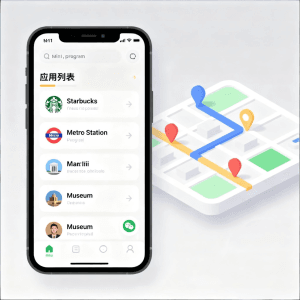
Comparison: What makes the Yingmi QR code automatic tour system much better than the traditional assisted tour experience?
After using the Yingmi QR code automatic tour system several times, I deliberately compared it with the previous “traditional assisted tour experience” and found that it solved many of the problems that tourists had.
Firstly, it’s more flexible.
When visiting scenic spots in an excursion group, the tour guide would set “stay at this scenic spot for 15 minutes” and “gather at the next scenic spot”. If you come across a place you like and want to stay longer, it’s difficult. But when using , I can follow my own pace completely– next to the Broken Bridge in the West Lake, after listening to the legend of “Bai Mo Zhen and Xu Xian”, I clicked on “Related Stories” and learned the origin of the name of the Broken Bridge, and also viewed pictures of the Broken Bridge in different seasons. I stayed there for 40 minutes, and no one reminded me or hurried me. Mr. Wang, who brought his grandson to visit, said: “I have sluggish legs. Before, when I was in an excursion group, I couldn’t keep up. Now with this QR code scanning explanation, when I get tired from walking, I can find a chair to sit down and listen. After listening, I continue walking. It’s much more comfortable.”
Secondly, it’s more convenient.
Traditional audio assisted tour tools require renting and paying a deposit, and sometimes you have to queue up. If you neglect to return it, you have to go back to the scenic area service center. But Yingmi doesn’t have these– just carry your own phone. After listening to one scenic spot, when you go to the next one, you just scan the next QR code. You don’t have to worry about “returning the equipment”. Moreover, since the phone is your own, the sound quality and volume are in line with your own habits, which is much more comfortable than using an unfamiliar assisted device. “Last time I leased a assisted device, I paid a deposit of 200 yuan. When I returned it, I queued up for 20 minutes. Later, I found that I could use with my phone, and I never leased a device again,” a vacationer informed me with a joke.
Also, it’s more hygienic.
After the pandemic, everyone was very concerned about the hygiene of public products. Traditional assisted tools were used by many people every day, even if they were sanitized, there was still some worry. But Yingmi uses your own phone, no contact with others’ points, clean and reassuring. “When I take my kid out, I’m very afraid that he will touch public products. Now with my own phone for listening to the explanation, I don’t need to remind him ‘Don’t touch’, it’s much more practical.” A mom said.
For scenic spots and museums, the Yingmi also has many advantages.
The staff at the Palace Museum informed me that previously, the scenic spots needed to employ many tour guides, which was costly. During peak visitor seasons, there would be a scarcity of guides. Now with the , not only has the labor cost been reduced, but it has also enabled more tourists to receive expert explanations. Moreover, through the backend data, they can know which exhibits have received more scans and which ones have attracted longer stays by visitors.
Details: Thoughtful Tiny Style
High error tolerance rate
Once in an outdoor scenic location, the QR code was somewhat damp by the rain, and the edges were a bit fuzzy. I believed I couldn’t scan it, but when I opened WeChat and scanned it, it worked successfully. Later, I asked the staff and learned that the QR code of has a tolerance rate of 30%. Even if there is some wear and tear, stains, or direct sunlight exposure, it can still be easily identified, without needing to
” locate the angle” for the QR code. “Last time I scanned under the shade of a tree, at first it didn’t work, I thought the QR code was broken. But when I altered the direction, I was able to scan it. It turns out you don’t need to especially look for a bright place.” A traveler shared with me.
Content segmentation
The explanation of is not listened to in one continuous segment, but is divided into “fundamental introduction”, “comprehensive story”, and “fun facts” sections. Travelers can choose to listen based on their own interests. For example, when looking at blue and white porcelain in a museum, if you only want to know “which dynasty it belongs to”, listen to “fundamental introduction”; if you want to know “its firing process”, click “comprehensive story”; if you bring your kids, you can also listen to “fun facts”, such as “what did the ancients use the blue and white porcelain for”, and the kids were specifically fascinated.
Offline listening
If the signal in the scenic location is poor or you don’t intend to use data, travelers can scan the QR code in a place with internet connection to cache the explanation content, and then listen when there is no signal. “Last time I went to a mountain village in the mountains, the signal was extremely poor. I cached the explanation of in advance, and during the visit, it didn’t cause any delay, which was much more reliable than using data.” A traveler who likes to visit small and less-known scenic spots said.
Verdict: Make “checking out exhibits” into “recognizing exhibits”, this is the definition of traveling
Now each time I go to a museum or scenic location, I will certainly first search for the Yingmi QR code next to the exhibit sign– unlike traditional tour guides that “push you along”, or like the navigator app that “puts a burden on you”, it is much more like a “friend that comprehends you”, accompanying you to stray and listen, enabling every scenic spot and every artifact to “speak”.
Keep in mind in the Mogao Caves of Dunhuang, I scanned a “Flying Paradise” mural, listened to the explanation, and then watched the high-definition image collection and AR animation. Instantly, I comprehended why the ancients would draw “Flying Paradise” so wonderfully– those ribbons were not drawn casually, every line contained the meaning of “liberty”. At that moment, I was no more a “skimming through” traveler, but truly walked into history and comprehended the story behind the artifacts.
If you are tired of the hurriedness of group excursions, or believe it’s frustrating to rent a navigator app, the next time you go to a museum or scenic location, don’t forget to focus on the Yingmi QR code next to the exhibit sign– no deposit, no queue, just bring your phone and scan, making every trip “able to comprehend, bear in mind, and gain something”. After all, the meaning of traveling is never “having been there”, but “having comprehended”– and the Yingmi is helping us achieve this “understanding”.
FAQ
1.Q: What is the QR Code Automatic Tour System?
A: It is a system that allows visitors to scan QR codes with their mobile phones to access audio explanations, multimedia content, and interactive experiences for exhibits and scenic spots.
2.Q: How do I use the system?
A: Simply scan the QR code next to the exhibit using your smartphone’s scanning function (e.g., via WeChat or other apps), and you can start listening to the explanation in your preferred language without any additional apps or downloads.
3.Q: Is there a cost to use the Yingmi system?
A: No, it’s free to use. You only need your own smartphone and an internet connection for initial scanning, but offline listening is also supported.
4.Q: Can I use it without an internet connection?
A: Yes, you can cache the content when online and listen to it offline without using data.
5.Q: How is it better than traditional audio guides or Tour guides?
A: It offers more flexibility, hygiene, and convenience. You can explore at your own pace, use your own device, and avoid queues or rental deposits.