

The cultural heritage industry is booming these days, and museums across the globe are welcoming a growing number of visitors. Whether it’s regular student study tours, casual visitor groups, or special events such as government and enterprise inspections and VIP receptions, guided services are the core of how museums convey cultural value. Yet many museums face the same challenge in daily operations: tour guides raise their voices to the maximum, but visitors still struggle to hear the stories behind the exhibits. Frustrated by the poor audio, visitors either crowd around the guide or wander off randomly. This not only dampens the visitor experience but also creates plenty of headaches for venue crowd management. Figuring out how to tackle both poor sound quality and unruly crowds has become a key step for museums to upgrade their services.
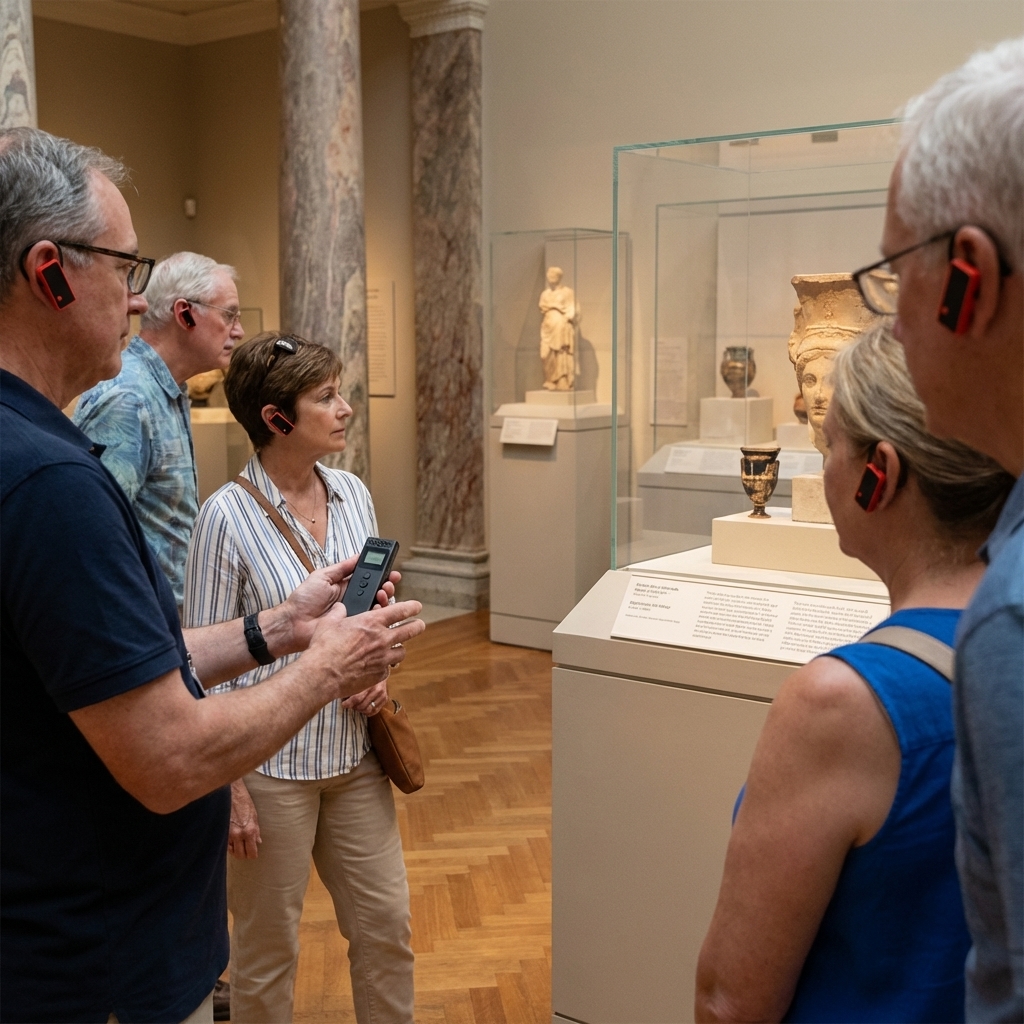
Two Core Pain Points in Museum Guided Services
The layout and visiting scenarios of museums make guided services inherently fraught with unavoidable challenges, with poor sound quality and difficult crowd control being the most prominent. These two issues feed into each other, creating a vicious cycle that plagues both venues and visitors alike.
When it comes to sound quality, museums consist mostly of spacious exhibition halls and enclosed cultural relic display areas, where ambient noise is already a problem. Add in the chatter and footsteps of visiting crowds, and a guide’s verbal explanations are easily drowned out. To make themselves heard, guides have to keep raising their voices, which not only adds a huge burden to their work but also generates extra noise that disturbs other visitors. Some museums use basic electronic tour guide devices, but these suffer from unstable signals and weak anti-interference capabilities. When multiple devices are used at once, cross-talk and audio dropouts are common, and the sound fidelity is poor—making it impossible to deliver clear explanations to visitors.
Crowd control issues are a direct result of poor sound quality. Visitors crowd around guides to catch every word, leading to congestion in exhibition halls and even potential risks to the safety of cultural relics. On the flip side, if visitors can’t hear the explanations at all, they wander off on their own, completely disrupting the tour schedule and turning group visits into unorganized free walks. This drastically increases the difficulty of venue crowd management, especially when hosting large student study tours or government and enterprise inspection groups.
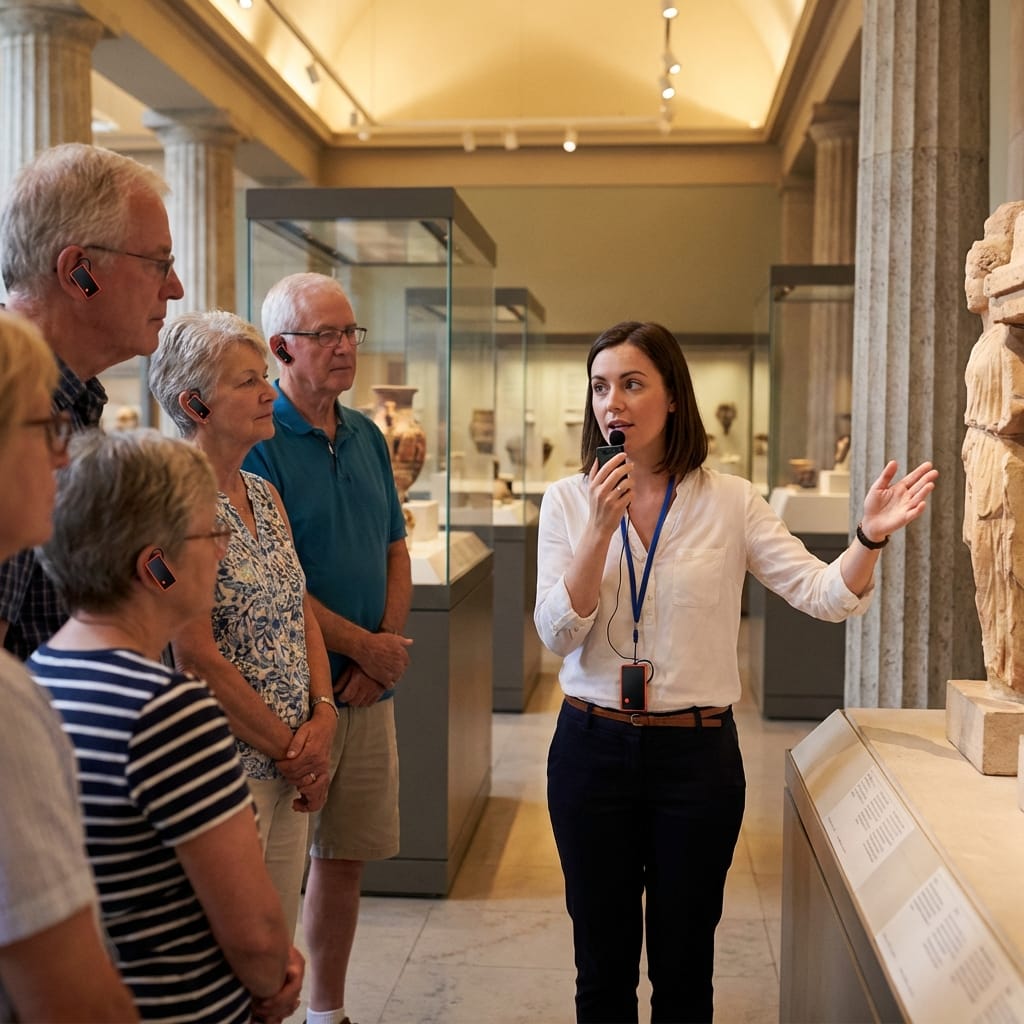
Yingmi L5 Wireless Tour Guide System: A Tailor-Made Solution for Museum Scenarios
With 19 years of deep expertise in the tour guide system industry, Yingmi has launched the Yingmi L5 Wireless Tour Guide System specifically for museum visiting scenarios and their practical pain points. Designed exclusively for guided services in cultural heritage venues and scenic spots, this product has become the top choice for solving museums’ audio and crowd management problems, thanks to its scenario-driven functionality and stable performance. Every advantage of the product is highly aligned with the actual usage needs of museums.
The Yingmi L5 is mainly composed of a transmitter, non-in-ear receivers, matching microphones, and charging and storage accessories, with all core functions tailored to museum guiding scenarios. First, it adopts a UHF 794-806MHz high-frequency band design with exceptional anti-interference capabilities, effectively avoiding disruptions from various electronic devices and ambient noise in museums. It ensures high sound fidelity for explanations, letting visitors catch every detail clearly. Second, it supports a one-to-many transmission mode with no limit on the number of receivers, which can be flexibly allocated according to the size of the visiting group—suitable for casual visitor groups, VIP groups, and large student study tours alike. Third, the receivers have a 150-meter reception range, so visitors no longer need to crowd around the guide and can explore freely within a reasonable area. This addresses the root cause of crowd congestion and makes venue flow management much easier.
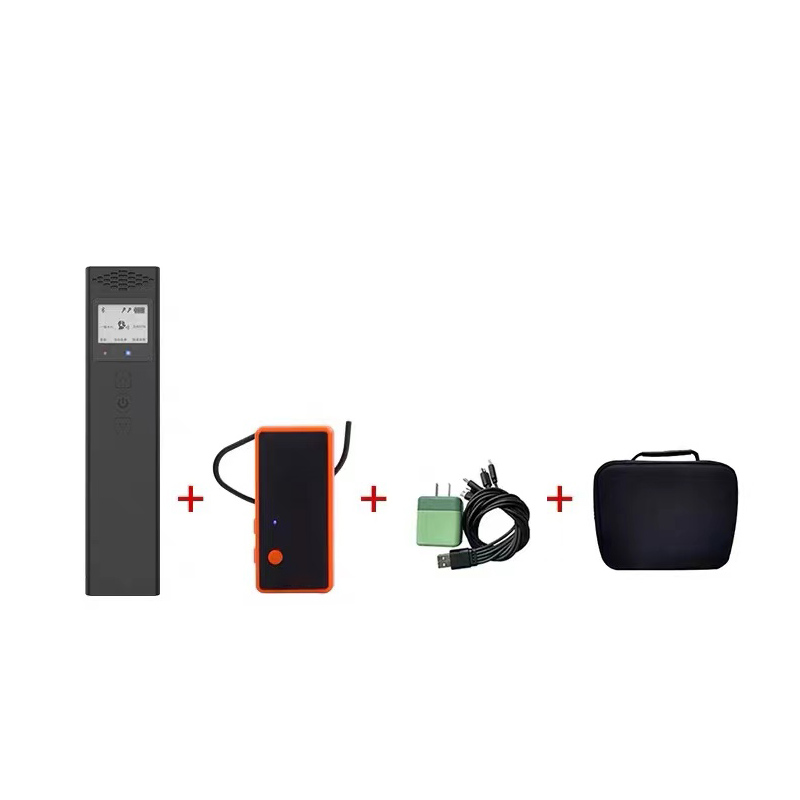
In addition, the detailed design of the Yingmi L5 fully considers the practical needs of museums: the non-in-ear receivers weigh just 17 grams, offering a comfortable, burden-free wearing experience for visitors throughout their museum tour. The transmitter is equipped with a full-function LCD display that clearly shows the channel, volume, battery level, and signal strength at a glance. It’s extremely easy to operate, allowing guides to master it quickly. The device is powered by high-performance polymer lithium batteries, with the transmitter boasting a battery life of over 30 hours and the receivers more than 35 hours on a single charge—enough to meet the all-day guiding needs of museums. What’s more, the matching contact batch charging case can charge 36 or 48 devices simultaneously and can be optionally equipped with a UV disinfection function, complying with museums’ hygiene management requirements. The dedicated all-aluminum storage case enables safe storage and convenient transportation of equipment, greatly reducing the venue’s equipment management costs.
Practical Implementation Solutions for Yingmi L5 in Museums
The Yingmi L5 Wireless Tour Guide System not only features museum-centric design but also offers practical, implementable solutions tailored to the actual operation of venues. It maximizes equipment efficiency and effectively solves various practical problems for museums.
For visiting groups of different sizes, venues can allocate equipment flexibly: regular casual visitor groups can be divided into small teams with their own receivers, and a single guide operating one transmitter can deliver simultaneous explanations to all teams. For high-end scenarios such as VIP receptions and government and enterprise inspections, a head-mounted microphone can be paired for more convenient guiding while ensuring clear audio quality. For large student study tours and group visits, the number of receivers can be expanded infinitely according to the group size, enabling all participants to listen to the explanation synchronously and avoiding crowd dispersion and disrupted tour rhythms.
To meet museums’ equipment management needs, efficient management can be achieved with the matching charging and storage accessories: after the museum closes each day, staff only need to place all devices into the batch charging case for unified charging and disinfection, with no need to operate each device individually—saving a great deal of labor costs. The dedicated storage case allows for classified storage of equipment and accessories, facilitating daily equipment inventory and transportation, and preventing equipment damage and loss.
Furthermore, Yingmi provides a 2-year warranty service for the L5 series, with a professional technical team on hand to offer timely technical support and solve any problems encountered during equipment use. Museums have no need to worry about after-sales maintenance of the equipment.
Comparison Table: Museum Challenges vs. Yingmi L5 Solutions
| Museum Challenge | Yingmi L5 Feature | Benefit for the Museum |
| Poor Sound Quality due to echoey halls and background chatter. | UHF 794-806MHz Frequency Band with exceptional anti-interference. | Crystal-clear audio with no crosstalk or dropouts, ensuring visitors hear every detail. |
| Crowd Congestion as visitors huddle to hear the guide. | 150-Meter Long-Range Reception for receivers. | Visitors can spread out comfortably, improving flow and reducing safety risks near exhibits. |
| Difficult Group Management for varying group sizes. | One-to-Many Transmission with no limit on receivers. | Easily accommodates any group size, from small VIP delegations to large student tours. |
| Hygiene Concerns with shared equipment. | Optional UV Disinfection Function in the batch charging case. | Meets strict hygiene standards, providing a safe and clean experience for all visitors. |
| High Equipment Management Costs for storage and charging. | Contact Batch Charging Case and All-Aluminum Storage Case. | Saves staff labor with centralized charging and organized storage, preventing equipment loss. |
Creating a High-Quality Museum Guided Experience with Professional Equipment
Today, a museum’s core competitiveness is no longer just about cultural relic display—it also lies in the all-round enhancement of the visitor experience. And clear, smooth guided services are the key to elevating that experience. Solving the problems of poor sound quality and difficult crowd control not only allows visitors to gain a deeper understanding of the cultural connotations behind cultural relics but also optimizes the overall operational order of the venue, reduces daily management costs, and enables museums to better fulfill their cultural communication function.
With 19 years of industry experience, Yingmi’s products are exported to dozens of countries around the world, serving more than 4,000 various venues and institutions in total. We have a profound understanding and grasp of the guiding needs of cultural heritage venues. The Yingmi L5 Wireless Tour Guide System has become the preferred choice for many museums to upgrade their guided services, thanks to its museum-scenario tailored design, stable performance, and comprehensive after-sales support. Whether it’s daily guiding services for small and medium-sized museums, or high-end receptions and large group services for large cultural heritage venues, the Yingmi L5 can provide adapted solutions. We can also customize exclusive equipment configurations and usage plans according to the actual operational needs of each venue.
Choosing a professional tour guide system is an important step for museums to improve service quality. The Yingmi L5 Wireless Tour Guide System allows museums to bid farewell to the troubles of poor sound quality and unruly crowds for good. It empowers cultural communication with technology, letting every visitor experience the charm of cultural relics in an immersive way and ensuring that the cultural value of museums is better conveyed.
Frequently Asked Questions (FAQ)
Q1: What are the main problems the Yingmi L5 solves in museums?
A1: The Yingmi L5 is designed to solve two core, interconnected problems: poor audio clarity for visitors during tours and the difficulty of managing crowds that result from visitors straining to hear their guide.
Q2: How does the Yingmi L5 ensure clear sound in a noisy museum environment?
A2: It uses a UHF high-frequency band (794-806MHz) with strong anti-interference capabilities. This cuts through ambient noise and prevents crosstalk from other devices, ensuring the guide’s voice is delivered with high fidelity directly to the visitor’s receiver.
Q3: Can the system handle large groups like school tours or VIP receptions?
A3: Yes. The system supports a one-to-many transmission mode with no limit on the number of receivers. This makes it scalable for small casual groups, large student tours, and high-end VIP inspections alike.
Q4: How does the device help with crowd control and museum flow?
A4: With a 150-meter reception range, visitors can hear the guide clearly without having to crowd around them. This allows people to spread out comfortably, which reduces congestion in exhibition halls and makes venue flow management much easier.
Q5: Is the equipment hygienic and easy for the museum staff to manage?
A5: Absolutely. The system offers a contact batch charging case that can charge up to 48 devices at once and can be optionally equipped with a UV disinfection function. The dedicated all-aluminum storage case also helps prevent loss and damage, reducing management costs.