

On weekends, the museum is constantly loaded with people– equally as you have actually quit at the situation of bronze artifacts with the guide, the voice of the description from the nearby event hall has actually wandered over, humming and disrupting your stream of consciousness; the young person intends to take a far better consider that Tang Sancai, yet the significant team has actually currently relocated to the following exhibit location, and you can simply promptly comply with along, not also listening to the description plainly; prior to leaving, you likewise need to remember to return the leased description gadget, for concern of unintentionally shedding it and sustaining a loss. If you have had such a experience when going to the museum, after that today you should definitely discuss the “black technology” in the museum– multi-network tour guide system.
It is not such as the antiques presented in the display screens, which are “quiet”, neither is it such as the description gadget you keep in your hand. Instead, it is the “undetectable tour guide” concealed in every edge of the museum: as you go into a particular event location, the description will instantly play; even if numerous teams are going to at the same time, they will certainly not conflict with each other; without using any kind of devices, the senior and kids can appreciate it easily. Today, let’s talk from the perspective of tourists regarding exactly how useful this system is and what troubles it can fix in the museum.
Issues Experienced While Going To museums
Prior to entering into call with multi-network tour guide system, I constantly really felt that going to museums was a “both-liked-and-fearful” experience– I liked the tales behind the artifacts, yet was afraid that an inadequate description would certainly wreck my state of mind. If we think meticulously, the troubles that we tourists frequently come across in fact come under 3 variables:
Not able to listen to plainly, being disrupted
Specifically in prominent museums, a number of groups crowded in surrounding event halls. This tour guide was describing “the shooting procedure of blue and white porcelain”, while one more tour guide was discussing “the symbolic meanings of the patterns on Ming and Qing home furnishings”. The voices mixed with each other, and ultimately, absolutely nothing could be recognized. As soon as in the modern-day background event location of a particular museum, I procured to the front to pay attention to the information. Nonetheless, instantly the description of the youngsters’s team following door raised the quantity, quickly drawing away all my rate of interest. I might simply helplessly drink my head and leave.
Not having flexibility, being pressed along
All standard descriptions comply with the pattern of “the overview leads the way, and the tourists comply with”. When experiencing a display that intrigues you and you wish to continue to be for a pair even more mins to evaluate the info, the major team has actually currently proceeded. You either need to surrender or need to follow them at a fast lane, making the museum see a “race”. When I took my moms and dads to the museum, the senior had slow-moving legs and frequently could not stay up to date with the team. In the long run, they might simply take a look at the events arbitrarily and really did not also have a clear understanding of the basic historic history.
Tools issues, worry of loss
Some museums give mobile audio guides. Holding them makes it difficult to take pictures and see the events; using earphones can trigger pain in time, and there’s constantly the worry of shedding them– I have actually become aware of tourists leaving their audio guides in the event hall and needing to pay a number of hundred dollars as a settlement. Moreover, the battery life of the audio guides is limited. If you do not have power midway via your see, you’ll be delegated “witness in silence” the staying areas.
These issues, essentially, originate from the reality that the standard description method stops working to satisfy the demands of our tourists– what we desire is “I can pay attention however I pick when I’m finding”, as opposed to “I comply with specifically what others do”. And multi-network tour guide system specifically deals with these issues.
The smart overview aide in the museum
Perhaps you could question, this system appears rather outstanding. Exactly how does it function specifically? As a matter of fact, it’s not that made complex. To place it just, the museum divides the entire location right into numerous “independent overview locations”, every one of which has its very own audio speaker and smart picking up gadget, and is after that regularly taken care of via the main system.
You do not require to use any kind of tools or press any kind of switches. When you comply with the overview to an exhibit hall, the noticing gadget in the hall will quickly “determine” you and immediately turn on the audio speakers in this field to play the descriptions for the exhibit hall. As soon as you get to the B event hall, the audio speakers in the A hall will immediately shut off and the audio speakers in the B hall will certainly switch on at the same time. The entire procedure is like “somebody meticulously switching on and off the radio behind you”, and you do not need to bother with anything.
What’s a lot more practical is that these “little areas” do not hinder each other. Even if a team in the An exhibit hall is paying attention to the description regarding bronze artifacts, and one more team in the B event hall is paying attention to the description regarding calligraphy and paints, the noises from both sides will certainly not mix with each other– you can simply listen to the material of the An exhibit hall in the An exhibit hall, and the material of the B event hall in the B event hall. Even if both event halls are really near to each other, there will certainly be no sound disturbance.
My first experience was in 2015 when I went to the Royal residence museum in Beijing. During that time, I was puzzled: There were a number of global teams around me, however all I listened to was Chinese descriptions. The global visitors close-by listened to in English, and the audio was really clear. Despite the fact that there was some sound on Tahe Hall Square, it really did not affect the paying attention. Later on, I asked the personnel and found that the Royal residence museum makes use of the multi-network tour guide system. It divides the 720,000 square meters of display screens right into 38 “smart tools”, and sustains automated changing in between 4 languages– Chinese, English, Japanese, and Oriental– and the system will certainly match the suitable language for you based upon your language choice. It’s really flexible.
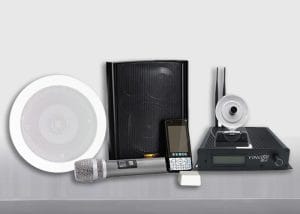
The 4 core applications in the museum
If you assume this system is simply “immediately turning on the horn”, you are ignoring it. Throughout real museum gos to, it can assist us fix numerous particular issues and also make the or else monotonous browse through a lot more fascinating. Currently let’s discuss the 4 most useful applications of this system in the museum, every one of which satisfies the demands of our site visitors.
Automated description
This is one of the most standard and useful feature– you no more need to comply with the tour guide’s speed and “thrill via” the event. Instead, you can walk via the event at your very own rate. As an example, when you come close to a situation of Tang Sancai, the audio speaker will immediately begin to supply a recap: “This team of Tang Sancai is an interment item from the Flavor Empire. It is primarily made up of yellow, eco-friendly, and white shades, and showcases the outstanding pottery-making method of that time …” If you wish to take a much more detailed consider the info, simply stand there and pay attention; when you are done paying attention and wish to leave, simply a couple of meters away from the situation, the description will immediately quit. It will not resemble the standard description where “you preserve talking also when you leave, or you begin talking prior to you get here”.
Moreover, the positioning of this system is incredibly exact, and there will not be a situation like “you remain in the An exhibit hall however listen to the description from the B event hall”. The personnel specified that it uses a “high-precision positioning innovation”. Even if the design of the museum’s event halls is complicated, such as having edges or dividings, the system can properly determine where you are, with a really little blunder. Similar to when you use a navigating system to locate a shop in a shopping center and will not obtain shed, this system will not permit you to “mishear the description”.
Multilingual automated changing
Nowadays, increasingly more global visitors are going to museums. Nonetheless, lots of museums simply supply Chinese descriptions. International visitors either need to locate a translator or can simply review the message summaries, which substantially decreases their experience. The multilingual feature of multi-network tour guide system specifically fixes this trouble.
Similar to the instance of the Forbidden City in Beijing, the system sustains 4 languages– Chinese, English, Japanese and Oriental. International visitors can just pick their favored language in the museum’s mini-program prior to getting in the museum. Once they get to a particular event hall, they will certainly have the ability to listen to the equivalent language description. According to the info, because the Forbidden City embraced this system, the percent of global visitors has actually boosted by 27%. Numerous global visitors specified that prior to going to the Forbidden City, they might simply see the “look” of the structures and artifacts. Currently they can comprehend the historic tales behind them, such as the features of the Taihe Hall and the symbolic significance of the dragon throne. The sensation of gain from going to the event has actually likewise come to be a lot more powerful.
I as soon as satisfied a French pair at a museum in Xi’an. They were paying attention to the French analysis of the Terracotta Military. The gent informed me that when they went to various other museums prior to, they might simply depend on his other half’s Chinese language abilities to “think” the material of the descriptions. This time around, with the French analysis offered, they were ultimately able to plainly comprehend “Each Terracotta Military number has a various expression” and “Exactly how the Terracotta Military was uncovered”. They likewise intentionally invested a little bit even more time finding the event. This “language barrier-free” experience not just helped with global visitors however likewise allowed our Chinese society to be much better shared.
Handbook + Pre-recorded Sound Dual Setting
Lots of visitors have a complication: When adhering to a tour guide, they can listen to fascinating tales, however the professional info might be not enough; when reviewing the textual descriptions, the professional info are adequate, however they are as well boring. Multi-network tour guide system incorporates “hands-on description” and “pre-recorded audio”, specifically satisfying the demands of various visitors.
On the one hand, the tour guide can use a microphone to offer real-time descriptions, such as informing the historic tales behind the social antiques and the fascinating realities regarding historical explorations– these “real-time components” can not be matched by pre-recorded audio. As an example, in a particular red museum, when the overview was discussing “the field glasses used by the Eighth Path Military”, he included that “this field glasses was recorded by the soldiers from the enemy and had actually gone along with the soldiers in 3 battles”, such info made the social antiques revive quickly, which was far more touching than simple textual descriptions.
On the other hand, the system can likewise keep some professional audio material, such as the manufacturing procedure of social antiques, their historic history, and academic research study outcomes. If you are especially thinking about a particular artefact and wish to find out more detailed, you do not need to go after the tour guide to ask inquiries. Simply remain before the situation for a long time, and the pre-stored audio will immediately play. As an example, in the calligraphy and paint event location, the pre-stored audio will certainly discuss “Is this paint’s brushwork ‘precise’ or ‘impressionistic’?” “Are the pigments all-natural minerals or artificial?” These professional understanding can please visitors that such as to “dive deep right into the event”.
I have a pal that likes gathering. Whenever he mosts likely to the museum, he constantly finishes paying attention to the pre-recorded audio. He specified, “Previously, if I intended to find out about the technological information of the artifacts, I might simply look for info in publications. Currently, I can listen to the professionals’ descriptions right in the event hall, which is incredibly practical. Often the tour guide talks as well quick and I do not capture every little thing. Because instance, the pre-recorded audio has actually added descriptions, which is like having ‘dual guarantees’.”
Sound and light synchronization, creating a complete atmosphere.
If you have actually gone to a museum with a multi-network tour guide system, you might have observed an information: when you go into a particular event hall, the lights will gradually switch on; and when you leave, the lights will gradually reduced once again– this is the “sound and light synchronization” feature. Not just is it energy-saving, however it likewise contributes to the setting of the event.
As an example, in the “Old Life Exhibit Location” of a particular museum, when you come close to the recreated scene of a “Tune Empire Research Study”, the audio description begins: “This is the research study of a scholar in the Tune Empire. On the table are the ‘4 Prizes of the Research study’, particularly the pen, ink, paper, and inkstone …” At the same time, the lights in the research study will gradually begin, brightening the pen, ink, paper, and inkstone on the table, as if somebody is “switching on the lights to reveal you” the scene; while the “Flavor Empire Bed room” scene alongside it stays dark, not sidetracking your emphasis. This “the lights brighten anywhere the description gets to” experience is like seeing a little cinema, with an incredibly solid feeling of immersion.
When I took my moms and dads to see the museum, my mommy specified, “In the past, the lights in the museum were either all on or all off. Sometimes, to see the information of the artifacts plainly, one required to locate the appropriate angle. Currently, anywhere you go, the lights switch on as necessary. They are neither stunning neither do they avoid you from seeing the artifacts plainly. It’s truly really thoughtful.” Moreover, this affiliation can likewise secure the artifacts– some artifacts are conscious light and can not be revealed to solid light for a long period of time. The system, via the method of “lights on when people exist and lights off when people leave”, can not just satisfy the demands of visitors’ gos to however likewise lower the damage of the artifacts, accomplishing 2 advantages at the same time.
Comments from actual vacationers.
Having actually stated all that, it would certainly be a lot more fascinating to listen to what genuine site visitors need to state. At the end of in 2014, I went to the old website of the Tax obligation Bureau of the Border Area of Shanxi, Hebei, Shandong and Henan– this is a red education and learning base and among the earliest museums to use the Yingmi multi-network tour guide system. There, I experienced a number of visitors, and their feelings were especially genuine.
Mr. Zhang from Zhengzhou brought his moms and dads and youngsters to see. He specified, “When I made use of to take my senior moms and dads and youngsters to museums, the greatest trouble was constantly ‘falling back’. My moms and dads relocated gradually and the young person was constantly running about. Whenever, I required to take care of this side which side, and had at no time to pay attention to the descriptions. This time around, with the help of this system, my moms and dads paid attention gradually before the situation, while the young person saw the computer animated descriptions in the ‘Youngster’s Interactive Location’. I might likewise concentrate on reviewing the summaries of the social antiques, and the whole family members had a really comfy browse through.”
There was likewise a visitor from Beijing, Ms. Li, that is a museum fan and has actually gone to numerous museums both in your home and abroad. She specified, “I definitely despise using the audio overview. It’s hefty, awkward, and I constantly bother with doing not have power. This system does not call for any kind of devices. You simply require to stroll and you can listen to the audio. Moreover, the sound is incredibly clear. Also in jampacked locations, there will not be any kind of sound. Last time at the Royal residence museum, I invested 2 hours searching in the ‘Prize Hall’. I might listen to the descriptions for every screen plainly. This kind of experience was something I never ever attempted to picture in the past.”
Also the museum personnel specified that because they embraced this system, there have actually been considerably less issues from site visitors and a substantial increase in favorable comments. “Previously, there were constant issues from visitors such as ‘the audio description was vague’ and ‘the tools really did not function properly’. Currently such issues are unusual. Moreover, we can currently fit numerous teams at the same time without stressing over ‘disturbance in between teams’, and our job performance has actually likewise enhanced.”
A wonderful description system allows social antiques and site visitors to “obtain more detailed”.
The significance of going to a museum is not taking pictures, however instead comprehending the background and society behind the antiques. However, if the description experience is bad, even if the antiques are really useful, it is difficult for site visitors to genuinely “get in” background.
One of the most impressive function of multi-network tour guide system is that it does not use challenging modern technologies to “disturb” site visitors, however instead provides “service” to them via mindful design– you do not need to use any kind of tools, you do not need to comply with the team, and you do not need to bother with being disrupted. You can pay attention to the material you desire at your very own rate, genuinely accomplishing “flexibility when going to the event”.
Nowadays, increasingly more museums are embracing this system. As an example, the Royal residence museum in Beijing, the Terracotta Military in Xi’an, the West Lake Cultural Landscape Location in Hangzhou, and numerous others. The following time you see a museum, if you see the indication multi-network tour guide system in the event hall, make sure to give it a shot– believe me, you will certainly locate that going to a museum can be so simple therefore fascinating. And the tales behind the social antiques can be so plainly therefore touching to listen to.
Yingmi Customer Service Hotline: 400-990-7677 Official website: www.it2002.com, always ready to provide you with exclusive tour plans.
FAQ
1.What is the Multi-Network Tour Guide System?
It is a smart system that provides automated, location-based audio explanations in museums without any handheld devices.
2.What are the primary benefits?
No wearable devices, multi-language support, and self-paced touring.
3.Is it user-friendly for children and seniors?
Yes, its hands-free design makes it accessible to all age groups.
4.Can it serve multiple groups without audio overlap?
Yes, independent audio zones ensure no interference.
5.Which languages are available?
Typically Chinese, English, Japanese, and Korean.
6.Is there any cost or risk of losing devices?
No, the system is completely device-free.
7.How reliable is the audio zoning?
It uses high-precision technology to ensure audio is confined to the correct area.
8.Where is this system currently used?
It is installed in museums like the Palace Museum, Terracotta Army, and West Lake Cultural Area.
9.Do visitors need to take any action to use it?
No, it works automatically as visitors move through the exhibition spaces.