

Previously, I heard a friend talk about a European tour group visiting a thousand-year-old ancient town in China. They were originally looking forward to hearing the historical anecdotes of each ancient site, but unfortunately, they had many disappointments throughout the trip – when following the tour guide, it was too crowded and noisy, and the tour guide’s voice was completely drowned out by the noise. They couldn’t even catch a few details about the architectural techniques and historical background of the ancient buildings. What’s worse, there were German and French tourists in the group, and the scenic area only provided English explanations. They could only guess based on simple textual descriptions, and the entire experience was confusing. Later, the scenic area replaced it with an Yingmi self-service audio guide system, and the feedback from the tourists who visited again was completely different: they didn’t have to follow the group in a rush, they could wander around as they pleased, and when they reached a certain ancient site, the equipment would automatically trigger the corresponding explanation. They could choose the language freely, and the sound quality was clear and crisp. In fact, many historical sites have this problem. Choosing the right wireless audio guide device that is compatible with them can truly enable tourists to truly understand the value behind the ancient sites.
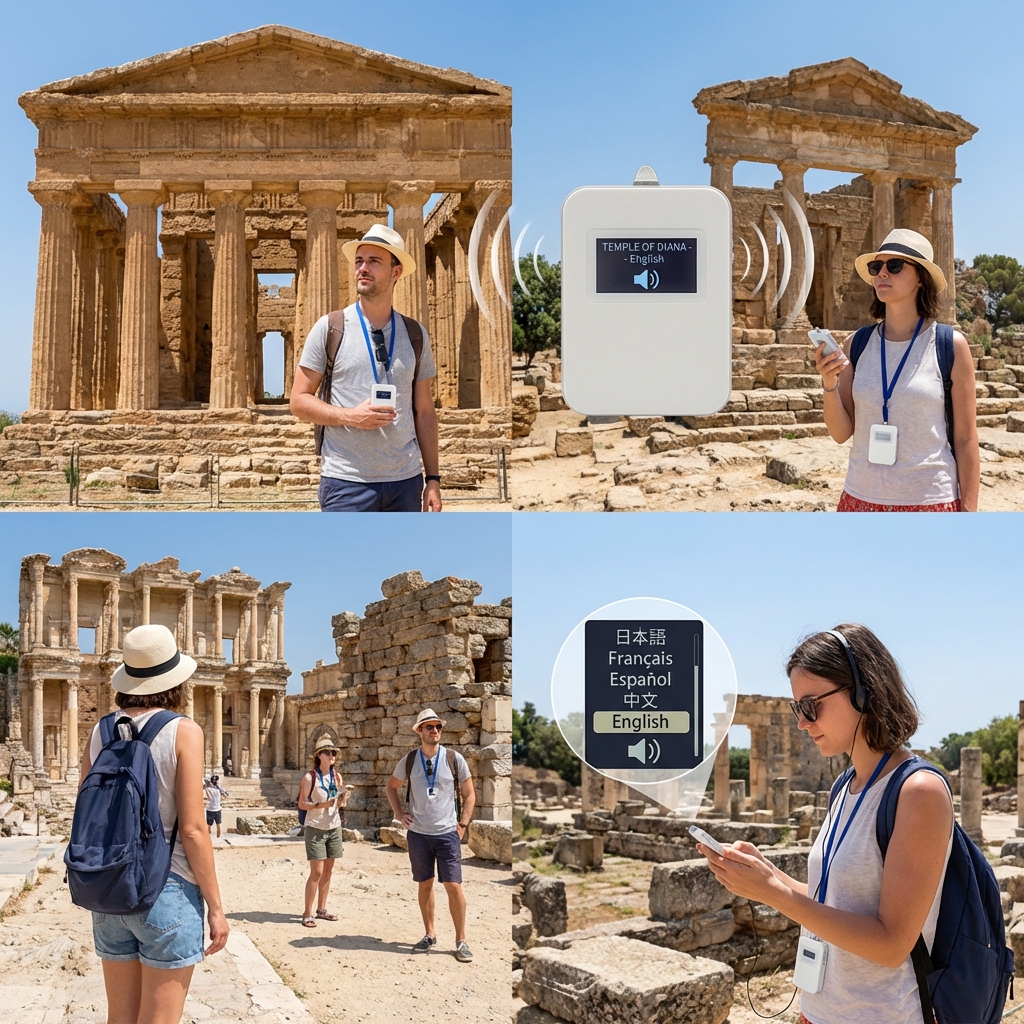
I.Problems in Historical Site Interpretation, These Pain Points Most Affect the Experience
When visiting historical sites, if the audio guide is not chosen correctly, the experience will be directly discounted. Commonly annoying things are quite numerous:
1.Team-led explanations are too restrictive
Tourists follow the tour guide and have no freedom at all. They want to look at the inscriptions and ponder the details of the ancient buildings, but when they stop, they can’t keep up with the subsequent explanations. Moreover, when there are many people, the tour guide’s voice can’t travel far, and the noise is particularly loud.
2.Language adaptation is difficult
The explanations at historical sites are full of professional terms. There are few translators for small languages, and many foreign tourists can only get English explanations. Even if they don’t have English, they can only rely on textual descriptions to guess the meaning, and they can’t deeply understand.
3.Insufficient battery life
Some audio guides run out of power after a few hours. When they are halfway through the tour, the explanation stops, and the good mood is instantly lost.
4.Inaccurate sensing
Some devices either trigger the explanation before reaching the point or don’t react until they are right in front of the ancient site. Key content is missed, and in crowded places or areas with buildings blocking the view, the signal is prone to interference, and the sound quality becomes distorted.
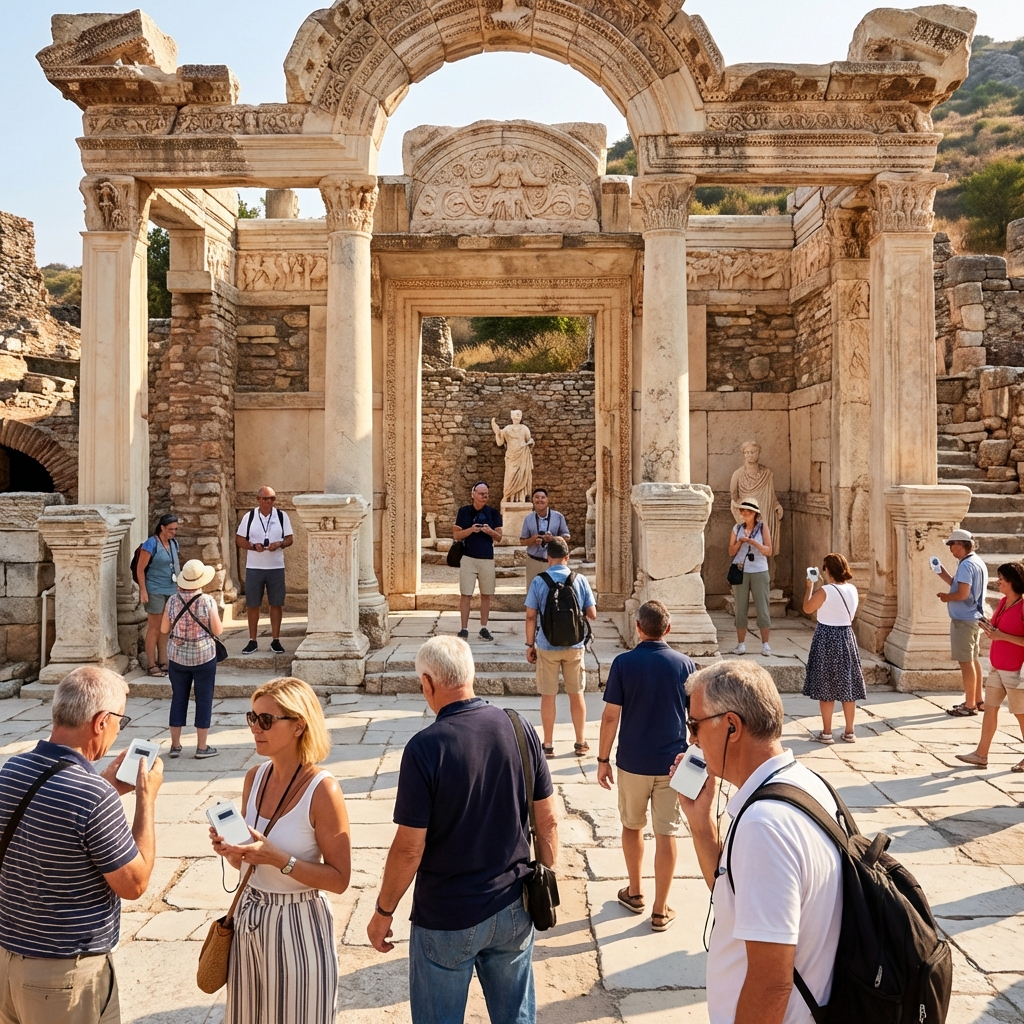
II. The First Choice for Historical Sites, Making the Tour More Immersive
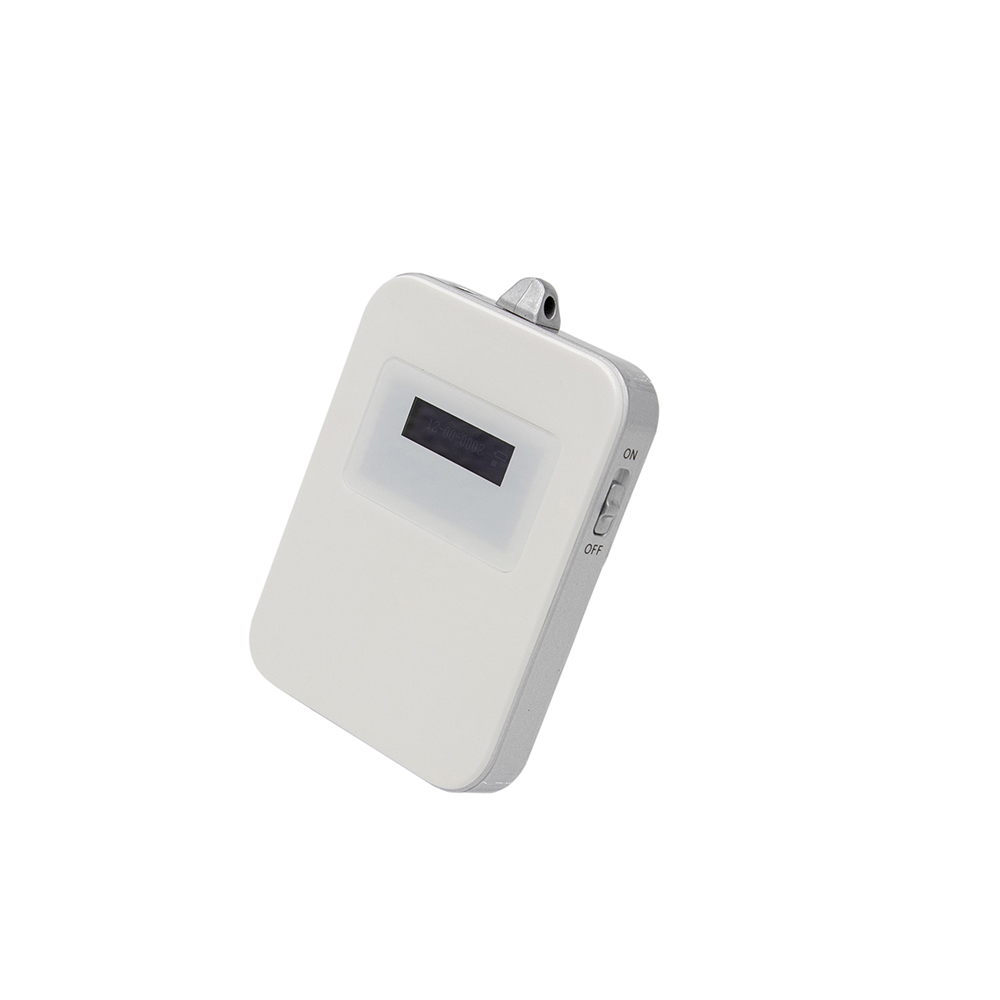
In response to the characteristics of historical sites, “multiple points, free routes, and diverse language needs”, Yingmi’s M7 neck-mounted self-service audio guide system is truly tailor-made. As a manufacturer with 18 years of experience in the industry, Yingmi’s device fully meets the requirements of historical site tours and solves the drawbacks of traditional explanations.
1.Good anti-interference effect
M7 uses advanced RFID modulation technology and 2.4GHz carrier frequency. The anti-interference effect is really good. Even in crowded ancient town streets or ancient temples with buildings blocking the view, it can accurately sense the point – when a tourist reaches a certain ancient site, the equipment will automatically trigger the corresponding explanation, and it will switch only when moving to the next point, without manual operation, and it doesn’t disrupt the free tour rhythm. For the characteristic of multiple points in historical sites, M7’s ability to store explanations is particularly powerful, capable of storing 9999 segments. Whether it’s a large ancient site group with hundreds of attractions or a small ancient building with rich details, the historical background, architectural features, and related anecdotes of each point can be recorded in detail, and there is no need to worry about insufficient content.

2.Multi-language translation
The language problem has also been completely solved. M7 supports multi-language selection. Tourists can choose their native language or a language they are familiar with to listen to the explanation. They no longer have to suffer from the difficulty of small language translation. In terms of battery life, it is also very reassuring. The Yingmi audio guide device has a built-in 800mAh battery, and it can last for more than 16 hours after a single charge, which is sufficient to support the entire tour itinerary of tourists, and they don’t have to go to different places to find a charging spot. The device itself is of a neck-hanging design, weighing only 50 grams. The body is compact and wearing it on the neck is effortless. Even if you spend the whole day exploring, you won’t feel tired.
3.Complete Supporting facilities
For large-scale purchases by scenic spots, the supporting facilities of M7 is particularly practical. The dedicated storage box is made of all-aluminum material, with silicone grooves and sponge inside. 30 devices can be neatly stored in it. During transportation and storage, it can effectively prevent drops and moisture, and there is a dedicated storage area for accessories, making it very convenient for charging cables. The connection-type charging box can charge 32 devices at once, which not only charges quickly but also protects the battery. This is especially convenient for scenic spot management. There is also a 1+10 USB charger, which is small, portable, and plug-and-play, suitable for small-scale replenishment of charging. Additionally, the device can be selected as a single-sided ear-hanging or bilateral in-ear headphones, meeting the wearing habits of different tourists.
Comparison Table:
| Feature | Traditional Guided Tour | Yingmi M7 Wireless Audio Guide System |
| Tour Flexibility | Fixed route & pace; visitors must follow the guide. | Complete freedom; visitors explore at their own pace. |
| Audio Clarity | Often poor in noisy/crowded environments; voice doesn’t carry far. | Clear, direct-to-ear audio; excellent noise isolation. |
| Language Options | Very limited; often only 1-2 major languages via a live guide. | Multi-language support; visitors select their preferred language. |
| Synchronization | Manual; can miss commentary if distracted or lagging behind. | Fully automatic; commentary triggered precisely at points of interest. |
| Battery Management | Not applicable for live guide. | Long battery life (16+ hrs); organized charging/storage solutions available. |
| Content Capacity | Depends on guide’s knowledge and time. | High capacity (9999 audio segments); detailed, consistent content for every point. |
| Management & Logistics | Requires scheduling and managing guide staff. | Easy device distribution/collection; streamlined charging & storage with dedicated cases. |
| Visitor Experience | Can be rushed, impersonal, and frustrating due to crowding/noise. | Immersive, personalized, and informative, enhancing engagement and understanding. |
III. Core solutions for choosing historical site tour guides
1.First,check if the manufacturer has genuine experience
Historical sites’ tour guides need to be used for a long time and stably. The manufacturer’s strength is extremely crucial. A manufacturer like Yingmi, with 18 years of industry experience, not only has its own R&D and production team, but also has passed relevant international certifications, ensuring product quality. Unlike some small manufacturers who only do OEM production, if there are problems, it’s impossible to find someone to be responsible.
2.Technology should be adapted to the actual situation of the historical site
The key is to look at the sensing accuracy and anti-interference ability. Most historical sites have the characteristics of being covered by buildings and having dense crowds. The RFID technology and 2.4GHz carrier frequency of M7 are specifically designed for these scenarios, ensuring accurate triggering of explanations in complex environments, with clear and noise-free sound quality. At the same time, the storage capacity should be large enough to meet the needs of multi-point and detailed explanations for historical sites. The 9999 segments of storage capacity of M7 can fully cover the explanation needs of various historical sites.
3.Multilingual support and battery life cannot be ignored
For historical sites with a large number of foreign tourists, multilingual support is a must-have. The multilingual switching function of M7 can precisely solve the language barriers for tourists from different countries. In terms of battery life, it should be able to meet the needs of an all-day tour. M7’s 16-hour above battery life allows for no frequent charging, avoiding the awkward situation of the tour stopping due to a power outage halfway through.
4.Consideration of after-sales and management convenience
After large-scale purchases by scenic spots, management and after-sales are major issues. Yingmi has a complete after-sales service, and there are dedicated charging boxes and storage boxes for large-scale use, which can significantly reduce the management costs of the scenic spot. Moreover, Yingmi has served over 7,000 customers, and if there are any problems, it can respond quickly and solve them, with no need for subsequent maintenance concerns.
IV.Why are more and more historical site scenic spots choosing Yingmi M7
18 years of industry deepening have enabled Yingmi to understand the core needs of historical site tours – both allowing tourists to freely immerse themselves in the tour and ensuring accurate explanations and smooth language, as well as being convenient for scenic spot management. M7 precisely solves these pain points in terms of technology, battery life, accessories, and after-sales.
If you are choosing a wireless tour guide device for historical sites, it’s better to learn more about the specific adaptation solutions of Yingmi M7. Whether it’s a large historical site group or a small historical building exhibition hall, you can find the suitable configuration. Contact Yingmi now, and you can also get the exclusive customized quotation and product demonstration, allowing every tourist to clearly understand the cultural charm of historical sites and making the scenic spot’s tour service more professional and caring.
FAQ (Frequently Asked Questions)
Q1: How does the wireless tour guide device work at historical sites?
A1: It uses advanced RFID technology to automatically trigger precise, pre-recorded commentary when visitors approach a specific point of interest. This allows for a self-guided, free-flow tour without manual operation.
Q2: What if my visitors speak different languages?
A2: The device supports multi-language selection. Tourists can freely choose their preferred language for commentary, effectively overcoming language barriers, including for less common languages.
Q3: Is the battery life sufficient for a full day of touring?
A3: Yes. With a built-in 800mAh battery, the device offers over 16 hours of continuous use on a single charge, easily covering a full day’s exploration without interruption.
Q4: Will the signal be affected in crowded or architecturally complex sites?
A4: No. Utilizing 2.4GHz carrier frequency and RFID modulation technology, the device has excellent anti-interference capabilities, ensuring stable triggering and clear audio even in crowded areas or sites with obstructive structures.
Q5: Is this system suitable for both large heritage complexes and smaller museums?
A5: Absolutely. Its large storage capacity (up to 9999 audio segments) can accommodate extensive content for large sites, while its flexible setup is equally effective for smaller venues. Different wearing styles (neck-hung or ear-hung) are also available to suit various needs.