

Museums around the world serve audiences from different countries and age groups every day. A good wireless tour guide system connects visitors with the stories behind the exhibits, and it also reflects how seriously a museum takes its visitor experience. But choosing the right system is harder than it looks. Signal problems, poor sound quality, and management headaches come up over and over. Today we will walk through the practical factors that matter when selecting a wireless tour guide system for a museum and how Yingmi addresses each one.
The problems museums actually face
Whether a museum is domestic or overseas, daily operations are shaped by the reliability of its tour guide system. These problems may seem minor individually, but they compound quickly.
Visitors cannot hear or understand the content
When a museum is busy, ambient noise fills the halls. If the tour guide system has weak anti-interference performance, visitors hear a mix of environmental noise and commentary from neighboring groups. Following a human guide means joining a large group on a fixed schedule, which rules out exploring at your own pace. International tourists face an additional layer of difficulty. Many systems support only one or two languages, forcing visitors who speak other languages to rely on text descriptions and guess at the details.
Equipment management is a constant burden
Most museums have dozens, sometimes hundreds, of audio guide units. Each one needs daily charging and battery checks. When a device fails, staff have to scramble for a replacement. Updating commentary content for temporary exhibitions used to mean connecting each device to a computer individually. Lost or broken equipment could take days to repair, directly affecting the museum’s ability to receive visitors.
Unreliable equipment hurts the museum’s image
Imagine a system that drops out during an important international delegation visit, or where elderly visitors complain about inconsistent volume. These details undermine the museum’s preparations. What museums need is a complete solution, not just audio devices that produce sound.
What matters in a wireless tour guide system
Over 18 years of serving more than a hundred museums, Yingmi has found that three factors matter most: stable and reliable performance, clear sound quality, and manageable daily operations. These are not marketing points. They are the baseline requirements that determine whether a system actually works in a real museum environment.
Stable, reliable equipment
Museums receive hundreds or thousands of visitors daily. The system has to handle that volume without signal distortion, battery failures, or sudden malfunctions.
Yingmi’s tour guide systems use UHF digital wireless technology with 4G FSK signal modulation, which blocks interference from mobile phones and other electronic devices. At the Henan Provincial Museum, more than ten tour groups visited simultaneously during a major exhibition using Yingmi equipment, and each group’s commentary came through clearly with zero crosstalk. The equipment maintained stable transmission even in halls with many metal display cabinets that typically disrupt wireless signals.
Build quality matters because museum audio guides are handled by different people every day. Yingmi’s devices use anti-drop, wear-resistant materials with industrial-grade durability. The battery uses PMU safety intelligent lithium technology. A fully charged receiver runs for at least 7 hours with up to 11 hours of standby, enough for a full museum day. The batteries are also explosion-proof.
Clear, consistent sound quality
Audio quality in a museum is about whether visitors can hear the details that matter: the texture of a bronze surface, the story behind a calligraphy stroke. If the sound is muddy, even well-written commentary goes to waste.
Yingmi systems include SOC embedded digital filtering and noise reduction technology that filters environmental noise in both crowded halls and quiet galleries. At the Suzhou Museum, visitors standing at a distance from exhibits still caught every word of detailed artifact descriptions.
High-fidelity digital audio encoding combined with quality microphones and headphones reproduces the narrator’s tone and pacing accurately. The system also supports voice gain and dynamic compression to prevent volume swings, so elderly visitors do not have to strain to hear and visitors with sensitive hearing do not find the audio jarring.
Easy daily management
Museum staff already have full schedules. Equipment management should add minimal overhead.
Yingmi offers a contact-type storage box that charges 36 devices at once, displays individual battery levels in real time, and automatically switches to trickle charging when full. An optional UV disinfection function handles daily sanitization. A separate storage box with an aluminum alloy frame holds 50 units with internal silicone grooves to prevent shifting during transport. For temporary surges, a portable USB charger handles up to 10 devices simultaneously.
Content updates happen through online editing and group push. Adding a temporary exhibition or revising commentary means operating in the back-end, and all devices update at once. No individual device connections needed. The system supports dozens of languages and can customize additional ones. It remembers each visitor’s last language selection and plays a prompt tone when switching.
Equipment uses a modular design. If headphones break or a transmitter malfunctions, staff replace the module in minutes without sending the entire unit for repair. Low battery reminders, return reminders, and anti-theft alerts reduce losses.
Solutions for different museum scenarios
Different museums have different needs. Some serve mostly individual visitors, others focus on group tours, and many do both. Yingmi has developed a range of solutions rather than a single product.
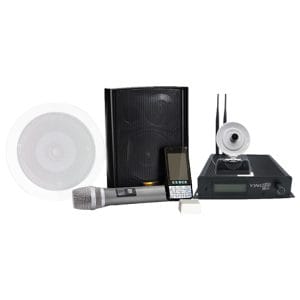
Multi-channel tour guide system
Suited for museums with clear zoning across multiple exhibition halls. Signal transmitters in each hall trigger automatic commentary when visitors wearing receivers enter. The commentary stops when they leave. At the Henan Provincial Museum, which is divided into halls organized by historical period, visitors wander at their own pace and hear relevant content in each hall without manual adjustments.
Team tour guide system
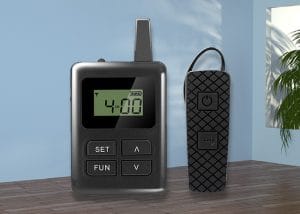
For VIP visits and academic groups that need professional, private explanations. The presenter holds a transmitter and group members wear receivers. Sound stays within the group without disturbing other visitors, and interaction happens naturally. The E8 tour guide system is an example of this category.
Self-service audio guide system
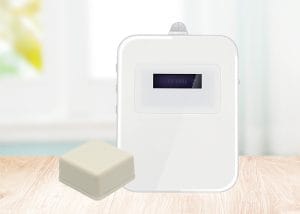
For individual visitors who value flexibility, the M7 self-service audio guide system uses RFID positioning. Visitors pick up a device, and when they approach an exhibit, commentary plays automatically. They can replay segments and switch languages freely. After the museum on Gulangyu Island in Xiamen adopted this system, individual visitors no longer had to wait for scheduled guided tours, and staff no longer needed to monitor them constantly.
Intelligent supporting facilities
Beyond hardware, Yingmi offers a QR code automatic tour system and a mobile app. Visitors use their own phones to view panoramic maps, listen to commentary, and check exhibit information. AR/VR features under development will let visitors view 3D models of artifacts and explore reconstructed historical scenes.
| Dimension | Common Issues | Product Examples |
| Stability | Signal interference, crosstalk; Short battery life. | Suitable for all reception scenarios |
| Sound Quality | Noisy environment; Unclear audio; Volume inconsistency. | Crucial for detailed tours & multilingual guides. |
| Management | Hassle to charge/update; Difficult maintenance. | Daily operations & temporary exhibitions. |
| Flexibility | Different needs for individuals, groups, VIPs. | – Individuals: Multi-channel/Auto-guide – Groups: Team system |
What Yingmi brings to the table
Museums choosing a tour guide system are really choosing a long-term partner. Yingmi has operated for 18 years, and the focus has always been on solving practical problems for museums rather than selling hardware.
For each museum, Yingmi starts by understanding the specific situation: daily visitor volume, the mix of individual and group visitors, and international reception needs. Then the most appropriate solution is recommended. Smaller museums with mostly individual visitors might get a self-service audio guide system. Larger museums with frequent VIP receptions might combine team tour guide systems with multi-channel coverage.
Support runs from initial installation and commissioning through staff training, content updates, and ongoing maintenance. Yingmi provides detailed operation manuals and online training sessions to get staff up to speed.
As global cultural exchanges continue to grow, museums need interpretation systems that are both professional and adaptable. Yingmi continues to invest in areas like AR/VR navigation to improve the visitor experience and expand its overseas service capabilities. If your museum needs a tour guide system, Yingmi can provide a tailored plan.
About us
HEFEI HUMANTEK. CO., LTD. has been dedicated to the research, development, and production of tour guide devices for 18 years. The company primarily manufactures team tour guide systems, self-service tour guide systems, zonal interpretation systems, and intelligent presentation systems. Yingmi Technology holds multiple core patents and technical certifications, backed by H4 national patent core technology, a 7S product guarantee system, and a 9G full-lifecycle service system, ensuring reliable delivery from the first unit to one million units.
Frequently asked questions
How does Yingmi ensure clear audio without interference?
UHF digital wireless technology combined with advanced noise cancellation blocks outside noise and crosstalk, keeping sound clear even in crowded exhibition halls.
Is the system easy for museum staff to manage?
Yes. Centralized charging boxes, remote content updates that push to all devices at once, and modular construction for quick repairs all reduce the management burden.
Can the system work for different types of museums?
Yingmi provides tailored solutions: multi-channel systems for individual visitors, team tour guide systems for groups, self-service audio guides for independent exploration, and supporting digital platforms.