

In the current era of progressively frequent global cultural exchanges, museums, as crucial venues for accumulating history and conveying civilization, have to deal with audiences from different nations and of various ages each day. A properly designed interpretation system resembles a “bridge” connecting the audience and the exhibits—it not only allows the audience to understand the stories behind the cultural relics but also reflects the professionalism and intelligence level of the museum. However, many museums often encounter various troubles when selecting an interpretation system: either the signal is unstable or there is crosstalk when there are many people; either the audio quality is blurry and the audience cannot hear it clearly.
Whether domestic or overseas museums, in their daily operations, they are always held back by problems with the interpretation system. These issues may seem minor, but they directly influence the audience experience and work efficiency.
I.Issues Regarding the selection of interpretation systems in museums
Whether domestic or overseas museums, in their daily operations, they are always held back by problems with the interpretation system. These problems may seem minor, but they directly affect the audience experience and work efficiency.
1.For the audience, the most direct feeling is “not understanding”.
When there are many people in the museum, the environmental noise is already loud. If the anti-interference capability of the explanation system is poor, either all you hear is noise or the explanations from the neighboring team come in, making it impossible to focus on understanding the exhibits at all. When confronted with human explanations, one still needs to make time and follow a huge team. It’s impossible to take your time to explore a certain cultural relic on your own. International tourists are even more troubled. Many systems only have one or two languages, and they can only make wild guesses based on the text descriptions, unable to feel the details of the culture at all.
2.For museum staff, managing equipment is a “big headache”.
There are at least dozens and at most hundreds of audio guides. Every day, each one needs to be charged and its battery checked. If a device runs out of power or malfunctions, a spare one has to be found temporarily. Staff are so busy that they’re in a complete mess. When the exhibition is temporarily changed, the explanation content has to be updated one by one for every device, which takes a lot of time. Sometimes when the equipment is lost or broken, it takes several days to get it repaired, which seriously affects the reception.
3.An unreliable explanation system will lower the professional image.
For instance, when important international visitors come to visit, the equipment suddenly disconnects. Or if elderly visitors give feedback that “the volume is sometimes loud and sometimes soft, making it hard to hear clearly”, these details will all devalue the museum’s meticulous preparations. Therefore, what museums need is not just “audible” audio guides, but complete solutions that can address these practical problems.
II.The core logic of Yingmi: stability, clarity, and ease of management—none of these can be missing
Over the past 15 years, we have served over a hundred museums and concluded a principle: The core of a museum interpretation system is “stable and reliable, clear audio quality, and effortless management.” These three points are not empty slogans but the entire starting point for us from technology research and development to product design and then to service implementation.
1.Stability: Museums must not let down
Museums have to receive hundreds or even thousands of visitors every day. The interpretation system must be able to withstand “high-intensity tests”—it cannot cause noise distortion when there are too many people, cannot run out of power after half a day of use, and must not suddenly malfunction. To achieve this, we have put a lot of thought into the technology.
First of all, the signal is stable. The explanation system of Yingmi uses UHF digital wireless technology and also adds 4G FSK signal modulation technology, which can effectively block the interference from mobile phones and other electronic devices. Previously, there was a major exhibition at the Henan Provincial Museum. More than ten groups visited simultaneously in one day. With our equipment, each group’s explanations were clear and independent, and there was no case of crosstalk. Even in exhibition halls where there are many metal display cabinets and signals are easily affected, the equipment can still transmit stably without sudden disconnection.
Then there is the durability of the equipment. The audio guides in the museum are worn and passed around by different people every day, so it is inevitable that they will get bumped or scratched. The body of our equipment is made of anti-drop and wear-resistant materials and has been designed with industrial-grade durability. Even if it accidentally drops on the ground, it is not easy to break. In terms of battery, PMU safety intelligent lithium batteries are used. Not only do they have a long battery life—the receiver can work for at least 7 hours when fully charged and can stand by for up to 11 hours, which is sufficient for all-day reception. Moreover, they are explosion-proof, eliminating potential safety hazards.
From production to delivery, we are also very strict in quality control. We have built our own SMT assembly factory, and all core components are produced by ourselves, which enables us to control quality from the source. Each device has to go through nine rounds of testing, such as repeated tests on signal, audio quality and battery life. Even the slightest problem will not leave the factory. Museums like the Forbidden City, which have a huge flow of visitors, have been using our equipment for several years and have never been affected by system failures in terms of reception. This is the stable confidence.
2.Clarity: Only by allowing the audience to hear the details clearly can they feel the warmth of the culture
The explanations in a museum are not merely about making a sound; rather, they should enable the audience to clearly understand the details of the cultural relics and the historical stories. If the audio quality is fuzzy, no matter how wonderful the content is, the audience won’t be able to listen. So we have put a lot of effort into optimizing the audio quality.
In the explanation system of Yingmi, SOC embedded integrated digital filtering and noise reduction technology is installed. Whether in a crowded and noisy hall or an empty exhibition hall, it can filter out environmental noise and make the explanation sound clear and transparent. For instance, in the Suzhou Museum, some cultural relics require gentle explanations of details. With our equipment, even if visitors stand a little further away, they can still hear every word clearly and won’t miss any key information.
We have also adopted high-fidelity digital audio coding technology, combined with high-quality microphones and headphones, to restore the true voice of the narrator. For instance, when explaining the textures of bronze wares and the brushstrokes of calligraphy and paintings, the narrator’s tone and speaking speed can be precisely conveyed, making the audience feel as if they are having a face-to-face communication with an expert and giving them a greater sense of immersion.
Considering the needs of different audiences, the system also supports voice gain and dynamic compression technology to prevent the volume from fluctuating. Elderly audiences don’t have to struggle to listen, and those with sensitive hearing won’t find it jarring either. Everyone can enjoy a comfortable auditory experience.
3.Easy to manage: Save staff time and allow them to focus on service
The staff of the museum are already busy. If the interpretation system is too complicated to manage, it will only increase the burden. So we have designed everything from device charging, content updates to daily maintenance to be as simple and convenient as possible.
Let’s talk about charging and storage first. We have a dedicated contact-type storage box that can charge 36 devices at a time. It can also display the battery level of each device in real time. After charging, it will automatically switch to trickle mode without damaging the battery. The box can also be equipped with ultraviolet disinfection function. After each use, disinfect it to keep it clean and hygienic. If there are many devices, there is a dedicated storage box that can hold 50 units. It has an aluminum alloy frame and silicone grooves inside, so the devices won’t shake when placed inside, ensuring safety during transportation and storage. When receiving guests temporarily, the portable USB charger can charge up to 10 devices at a time. Just plug it in and it’s ready to use, which is particularly convenient.
Content updates are also very convenient. Previously, many museums had to connect each device to a computer when updating their explanations, which was both time-consuming and laborious. The system of Yingmi supports online editing and group push. Whether it’s adding a temporary exhibition or modifying the explanation content, just operate in the background and all devices can be updated synchronously without having to deal with each one individually. Multilingual management is also simple. The system supports dozens of languages and can customize minor languages according to needs. There is a prompt tone when switching, and it can also remember the language selected last time. It is also convenient for international tourists to use.
In terms of equipment maintenance, we adopted a modular design. If the headphones are broken or the transmitter malfunctions, there’s no need to take the entire device for repair. Just replace the module and it will be done in a few minutes, which won’t delay the reception. In addition, the device is equipped with low battery reminder, return reminder and anti-theft alarm functions. Staff do not need to keep a close eye on it and can promptly detect situations where the device is out of power or not returned, reducing loss and damage.
III.It’s not just about equipment; Yingmi offers a full-scenario solution for museums
The demands of different museums vary: some serve individual visitors, some frequently receive groups, and some also have VIP visitors. So we do not only produce single devices, but also have developed a set of solutions that can cover various scenarios, allowing museums to choose according to their own situations.
1.Zoned Explanation System (MC200): Suitable for museums with many exhibition halls and clear zoning
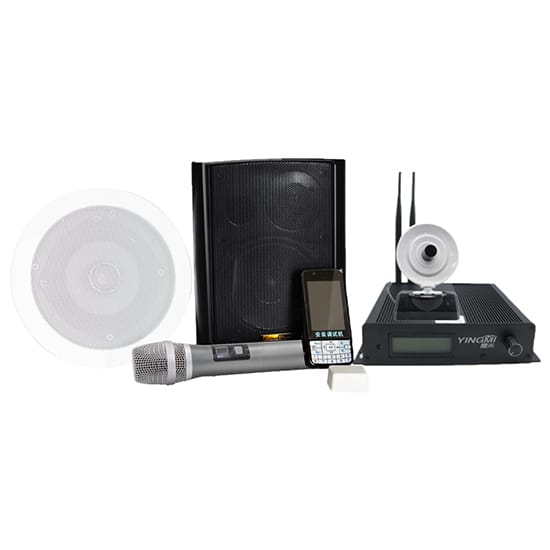
Many museums divide exhibition halls by dynasties and themes, and a zonal interpretation system is particularly suitable for them. The staff have placed a signal transmitter in each exhibition hall. When visitors wear the device and enter, it will automatically sense and play the explanation of this exhibition hall. When they leave, it will stop automatically without the need for manual adjustment. For instance, the Henan Provincial Museum is divided into several exhibition halls by historical periods. Visitors can wear equipment while walking around, listening to the content of each exhibition hall they visit. They can control their own pace and won’t miss any exhibits.
2.Team explanation System: Indispensable for VIP reception and academic exchanges
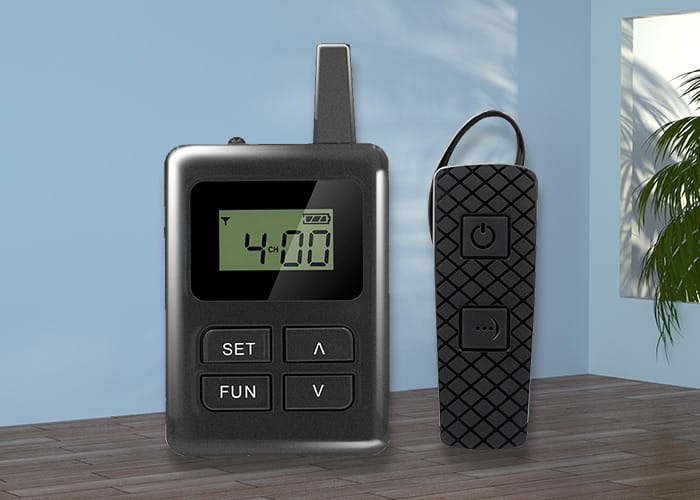
When museums receive important visitors and academic teams, they need professional and private explanations. The team explanation system of Yingmi features a presenter holding a transmitter and others wearing receivers. No matter how many people are in the team, the sound is clear and does not disturb other audience members. Previously, when Huawei received its partners to visit museums, it used this system. During the explanations, they could interact at any time and there was no need to worry about the sound spreading. The experience was particularly good.
3.Self-service Tour guide system: A must-have for museums with a large number of individual visitors
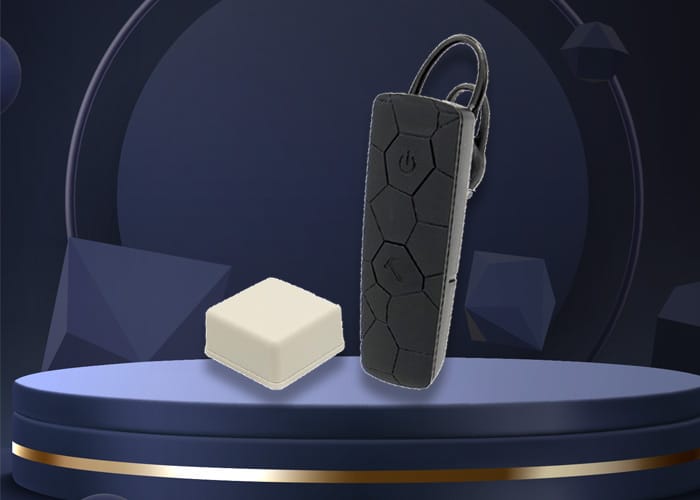
Individual visitors need flexibility the most, and a self-service Tour guide system is very suitable for them. It uses RFID positioning technology. When the audience gets the device and approaches a certain cultural relic, the explanation will be automatically played, and they can also listen to it repeatedly and change the language. After the museum on Gulangyu Island in Xiamen adopted this system, individual visitors no longer need to wait for manual explanations and can visit on their own. Staff members also don’t have to keep an eye on them all the time, and the reception efficiency has been greatly improved.
4.Intelligent Supporting facilities: Helping museums achieve digital upgrades
In addition to hardware, we also have a Tour guide mini-program and an APP. Visitors don’t need to collect equipment. They can view panoramic maps, listen to explanations and check exhibit information with their mobile phones, which is particularly convenient. Currently, we are still developing AR/VR technology. In the future, when viewers wear glasses, they will be able to see 3D models of cultural relics and even “travel” to historical scenes, providing a more unique experience.
IV.For Yingmi, cooperation is not merely about selling equipment.
Many museums choose interpretation systems, valuing long-term and reliable partners rather than one-off transactions. For 15 years, Yingmi has never merely been selling equipment. Instead, it aims to help museums solve practical problems and work together to make cultural dissemination better.
Whether it is a small but exquisite thematic museum or a large comprehensive museum, we will first understand the requirements clearly: How many people are received every day? Mainly serve individual customers or groups? Are there any international reception needs? Then, based on these circumstances, the most suitable plan will be recommended to prevent the museum from spending money in vain. For instance, for some small museums with a large number of individual visitors, we would recommend a self-service Tour guide system, which is cost-effective and worry-free. Some large museums often have VIP receptions, so they will be equipped with team interpretation systems and zonal interpretation systems to meet the needs of different scenarios.
From equipment installation and commissioning, to staff training, and then to subsequent content updates and equipment maintenance, we will follow up throughout the entire process. When a museum first started using the system, the staff were not very good at operating it. We arranged online training and made detailed operation manuals until they were fully proficient.
Nowadays, global cultural exchanges are becoming increasingly frequent, and museums need more professional and flexible interpretation plans. Yingmi will continue to innovate in technology, such as optimizing AR/VR navigation, to provide viewers with a better experience. We will also make our overseas services more detailed, enabling more overseas museums to make good use of our system. Yingmi Customer Service Hotline: 400-990-7677 Official website: www.it2002.com, always ready to provide you with exclusive tour plans.
FAQ
1.What is an audio guide?
An audio guide is a handheld or wearable device that delivers pre-recorded narrations about museum exhibits, allowing visitors to explore independently with clear, informative audio commentary.
2.How does a Tour guide system differ from a standard audio guide?
A Tour guide system is designed for guided tours, where a live guide uses a transmitter to speak to visitors wearing receivers, ensuring personalized, interactive experiences without background noise interference.
3.Can audio guides be used in large groups?
Yes, advanced audio guides support group listening and feature noise cancellation to ensure clarity even in crowded environments.
4.How long does the battery last on Yingmi’s audio guides?
Yingmi’s audio guides offer up to 7 hours of continuous use and 11 hours on standby, sufficient for full-day museum operations.
5.Are Tour guide systems easy for guides to use?
Yes, Yingmi’s Tour guide systems feature intuitive controls, long-range wireless transmission, and lightweight equipment for effortless operation by guides.