

After operating overseas scenic spots and museums for a long time, one often encounters such confusion: there are many group tourists, and using traditional loudspeakers for explanations is both noisy and hard to hear clearly. Individual tourists come from different countries, and the language barrier leads to a poor experience. The indoor venues receive visitors frequently, and the distribution and collection of equipment are too troublesome. With a limited budget but still wanting to quickly enhance the interpretation service – in fact, these problems can be solved by choosing the right interpretation system.
At present, the mainstream scenic area interpretation systems can be classified into four major categories: manual, self-service, zoned, and QR code interpretation systems. We, Yingmi, have been engaged in the production of interpretation equipment for 18 years and have served over 4,000 clients worldwide, ranging from the British Museum to the Taihu Lake Scenic Area in Suzhou, from overseas exhibition halls to rural off-the-spot scenic spots. We have witnessed numerous cases where choosing the right system has significantly enhanced the visitor experience. Today, from a practical usage perspective, we will thoroughly explain the characteristics and applicable scenarios of these four types of systems to help overseas users avoid common selection mistakes.
I. Human Guide System: The “Efficient Magic Tool” for Team Reception
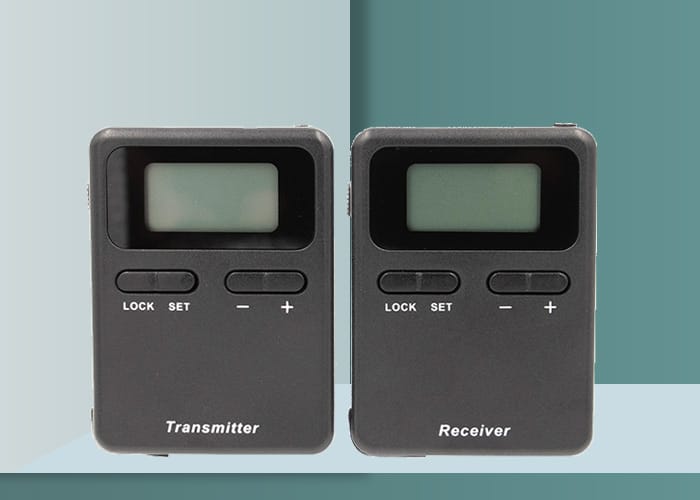
If the scenic area mainly features group tourists, such as those led by travel agencies, government and enterprise visits, and student study Tours, then the manual tour guide system is definitely the top choice. This system is very simple. The tour guide wears a transmitter and each tourist wears a receiver, transmitting sound through wireless signals. Don’t underestimate this simple combination; it solves the big trouble of traditional tour guides.
In the past, when tour guides led overseas groups, they had to shout at the top of their lungs. At crowded and noisy scenic spots, tourists in the back rows couldn’t hear clearly at all. Now, with the manual audio guide, the tour guide speaks softly, and all the tourists within a 300-meter range can hear clearly. Moreover, the receiver is extremely light. For instance, the earphone-style receiver of our Yingmi weighs only 16 grams. When hung on the ear, there is almost no sensation. Tourists can take photos or take notes without any delay.
What’s more practical is that multiple teams do not interfere with each other. Popular scenic spots often have several groups visiting at the same time. For instance, in the Taihu Lake Scenic Area of Suzhou, during peak season, there are dozens of overseas groups in a single day. They use manual tour guides on different channels, with Chinese groups, English groups, and Japanese groups each using their own channels, without any intermingled sounds. The tour guide can also flexibly adjust the content. For instance, when encountering a team interested in history, they can provide more background information. When encountering parent-child groups, add some interesting stories. The interactivity is much stronger than that of pre-recorded audio.
Last time, the Longhu Mountain Scenic Area in Jiangxi Province informed us that after using manual tour guides, tour guides no longer need to shout repeatedly, their physical energy consumption has decreased, and the reception efficiency has increased by 60%. Overseas tourists no longer have to crowd to listen to the explanations, and their satisfaction rate has risen from 75% to 93%. When we receive overseas clients to visit our factory, we also use this system. It is both professional and clear, and the client experience is particularly good.

Ii. Self-service Tour Guide System: The “Personal Guide” for Individual Tourists
If there are many individual tourists in the scenic area, especially overseas independent travelers, then the self-service tour guide system is a “must-have”. This system does not require a tour guide. Tourists can rent a device (available in ear-hanging type and tour guide type). When they reach a certain scenic spot, the device will automatically sense and play an explanation – for example, when a tourist reaches the Hall of Supreme Harmony in the Forbidden City, the device will automatically explain the architectural techniques of the Hall of Supreme Harmony. When you reach the Ganqing Palace, you can switch the history of the Ganqing Palace without any manual operation.
Individual tourists care most about “freedom”, and self-service tour guides precisely meet this demand. Overseas tourists who want to stay at their favorite attractions for a longer time, such as repeatedly listening to explanations of Van Gogh’s paintings at the British Museum or skipping areas they are not interested in, can make their own decisions without having to rush along with the crowd. Moreover, the multilingual function is particularly practical. Our device is pre-set with 8 languages including Chinese, English, Japanese, Korean, French, German, etc. It can also be customized for niche languages such as Arabic and Russian. Tourists can listen in their native language without having to rely on translation software to “guess the meaning”.
Once, the Suzhou Museum told us that 40% of their visitors were individual overseas tourists. Previously, these visitors could only read the text descriptions, and many tourists who learned minor languages couldn’t understand them at all. Since the introduction of self-service tour guides, tourists can rent the equipment to explore independently and listen to key points repeatedly. The satisfaction rate of individual tourists has increased by 85%, and the rental rate accounts for 70% of overseas individual tourists. Large open scenic spots like Disney and West Lake are also particularly suitable for using self-service tour guides. Tourists can visit separately and enjoy their own activities, doubling the experience.
Iii. Zoned Explanation System: A “Worry-free Solution” for Indoor Venues
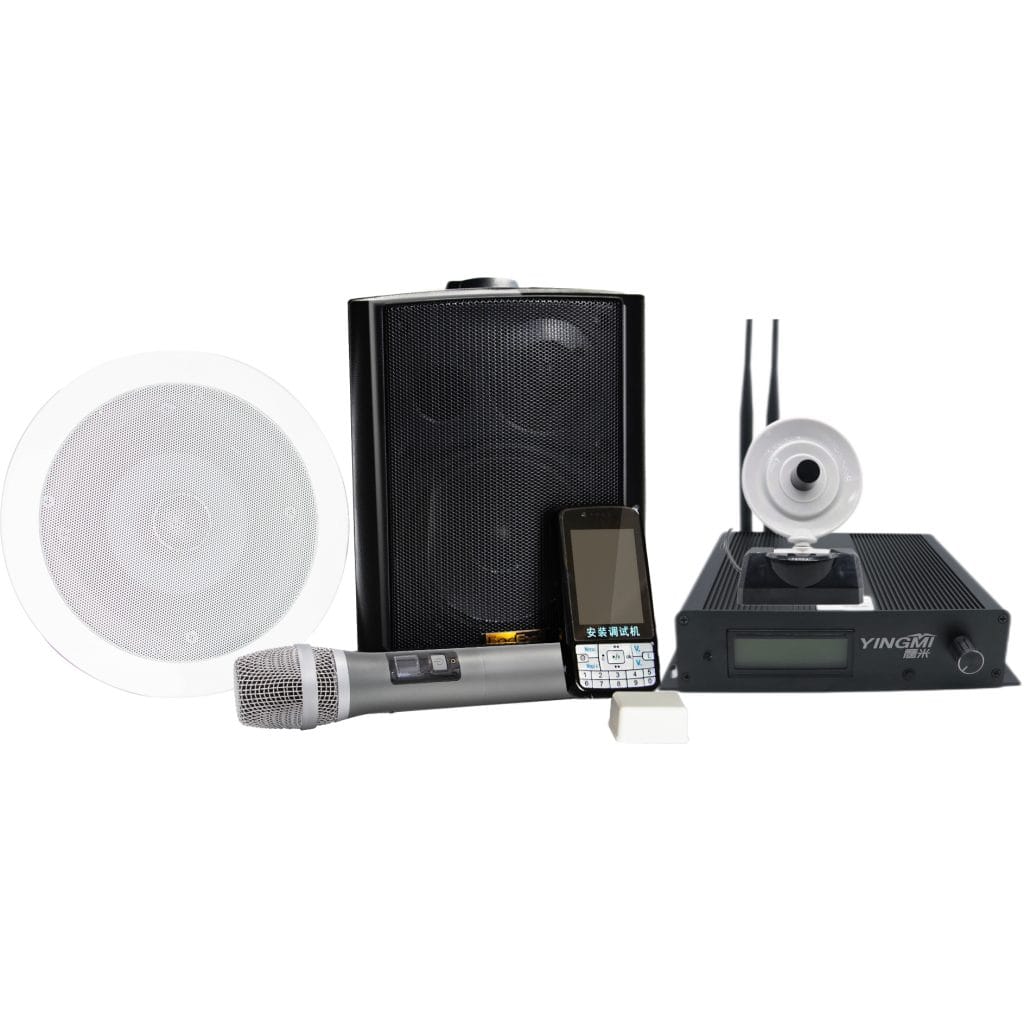
If it is an indoor venue such as a museum, a science and technology museum, or an enterprise exhibition hall, a zoned explanation system can save a lot of trouble. This system does not require visitors to wear any equipment. Instead, it installs audio systems in each exhibition area. The tour guide carries a transmitter. When they walk to any exhibition area, the audio system in that area will automatically sound. Visitors can stand freely in the exhibition area and clearly hear the explanations. For example, when the tour guide is giving an explanation in the “Bronze Ware Exhibition Area” of the Henan Provincial Museum, only the audio system in that area will sound. When you reach the “Ceramic Exhibition Area”, the audio system automatically switches over, which is particularly flexible.
The most headache-inducing issue for indoor venues is equipment management, especially when there are many visitors. Equipment distribution and collection require dedicated personnel to keep an eye on it, and it is also prone to loss. With the zonal explanation system, tourists don’t need to bring anything, eliminating these troubles and reducing the operating costs immediately. Moreover, the tour guides can flexibly switch modes and provide real-time explanations when encountering professional teams. When encountering ordinary tourists, just play the pre-saved audio. There’s no need to repeat it, and the physical burden is much lighter.
Last time, there was a city cultural exhibition center that received several thousand people every day. After using the zonal interpretation system, there was no need to arrange people to manage the equipment anymore, and the labor cost was saved by 30%. Overseas tourists can walk freely in the exhibition area without having to chase after the tour guides, and their experience has also improved. This system is also commonly used in overseas showrooms and display areas of car factories, providing efficient and professional reception.
Iv. QR Code Explanation System: A “Low-Cost Tool” for Small Scenic Areas
If it is a small scenic area, a rural scenic spot, or a temporary exhibition with a limited budget but a desire to quickly enhance the interpretation service, then the QR code interpretation system is definitely a cost-effective choice. This system is particularly simple. Just stick a QR code beside scenic spots and exhibits. Tourists can scan it with their mobile phones to view pictures and text, listen to audio and watch video explanations without any additional equipment.
For scenic spots, QR code explanations cost almost nothing. Just print a few QR codes, stick them on, upload the explanation content and they can be used. Maintenance is also convenient. For tourists, there is no need to rent equipment; they can use it with their mobile phones, which is especially popular among young people. For instance, when overseas tourists visit rural scenic spots, they can scan a QR code to listen to local folk tales. When visiting the botanical garden, you can scan the QR code to learn the scientific names and growth habits of the plants, which is much more detailed than simple textual descriptions.
An overseas rural scenic area cooperated with us. They didn’t have many tourists and had a limited budget. After using QR code explanations, they solved the explanation problem at a very low cost. The scanning rate of tourists reached 60%, and many people commented, “I didn’t expect that such a niche scenic spot would have such professional explanations.” For scenarios like urban pedestrian streets and community exhibitions, using QR codes for explanations is also particularly suitable. It is simple and practical.
V. How to Choose? Just look at these few points
Many overseas users ask us, “Which type of system should I choose?” In fact, there is no absolute good or bad. The key lies in your needs.
1. Select by tourist type
– For large teams (travel clubs, government and enterprise visits, study Tours) : Choose the human guide system, which can provide synchronous explanations and real-time interaction.
– For a large number of individual tourists (independent travelers and those who speak minor languages) : Choose the self-service tour guide system, which is flexible and adaptable to multiple languages.
– Indoor venues (museums, exhibition halls) : Select the zonal interpretation system, no need to worry about equipment, seamless switching;
– Limited budget and few tourists: Choose a QR code interpretation system, which is low-cost and easy to operate.
2. Select by the scale of the scene
– Large scenic spots/museums (with over 1 million visitors per year) : It is recommended to combine manual and self-service methods to accommodate both group and individual visitors.
– Small and medium-sized scenic spots/exhibition halls (annual visitors 100,000 to 1,000,000) : Choose self-service or zoned systems, depending on the type of visitors.
– Small scenic spots/temporary exhibitions (with less than 100,000 visitors per year) : Directly choose the QR code system to save money and effort.
3. Select based on core needs
– For interaction: Choose a human guide. The guide can answer questions and adjust the content.
To solve the language problem: Choose a self-service audio guide and switch between multiple languages at will.
– To save manpower: Choose a zoned or QR code system, no need to send equipment.
– Be free: Choose self-service or QR code systems. Tourists can control their own pace.
Vi. What can we do for overseas users?
Having been engaged in explaining equipment for 18 years, we best understand the concerns of overseas users: worries about language compatibility, concerns about after-sales troubles, and concerns about not knowing how to operate. So we not only sell equipment, but also offer full-process services
1. Customized services
We can produce any language you want. If you want to print the LOGO of the scenic area on the equipment, customization is also available. If you want to add local characteristics to the explanation content, we can also help record it. For instance, if the scenic spots in the Middle East require Arabic language and the customers in Europe need equipment that complies with CE certification, we can meet all these requirements.
2. Flexible cooperation
If you have many tourists during the peak season and few during the off-season and don’t want to buy equipment, we can rent it. If the budget is limited, you can also form a joint venture. There’s no need to spend money first, and the profits can be shared. Many overseas scenic spots are reluctant to make large investments at the beginning. They start with leasing and only consider purchasing if they perform well.
3. Global after-sales service
Don’t panic if your equipment breaks down overseas. We offer a one-year free warranty. If there are quality issues within three months, you can replace it directly. You can have it repaired at your local cooperative service point or send it to us. It will be fixed within 10 working days. If it is urgently needed, we can also send the spare equipment first. If you have any problems on a regular basis, we offer 24-hour online technical support. We can teach you how to operate through video or phone calls.
4. We will help you land throughout the entire chain
You don’t need to understand technology. We’ll handle everything for you, from recording the explanation content, designing the QR code, to installing and debugging the audio system. For instance, if a museum needs to record explanations in multiple languages, we will send a professional team to handle it. The scenic area doesn’t know where to post the QR code. We provide a design plan. The exhibition hall is equipped with zoned audio systems. We will come to your place for debugging to ensure that you can use them as soon as you receive them.
Vii. Conclusion: Choosing the right system means half the success of the service
In fact, whether it is a manual, self-service, zoned or QR code explanation system, the core is to “adapt to your needs”. Overseas scenic spots do not need to pursue the “most advanced”, but rather seek the “most suitable” – use manual labor for large groups, self-service for individual tourists, zoned indoor venues, and QR codes for limited budgets.
For 18 years, at Yingmi, we have been providing team explanations for the Palace Museum, self-service equipment for the British Museum, and QR code explanations for rural scenic spots. We have always been committed to one thing: making explanations simpler and more effective. If you are still not sure which type to choose, feel free to talk to us at any time. Tell us your type of tourists, the scale of the scene and your budget, and we will help you come up with a plan. After all, choosing the right interpretation system can enable overseas tourists to truly understand the story of your scenic area, and this is the core of service.